Blatant Advertising – but of a good kind!

23 03 2010

Red-bellied Woodpecker - Catherine Hamilton

Not really for me. I just wanted to draw your attention to a few cool things that are coming up or occuring in the world of birds right now.

Raptor Conference – Audubon Greenwich – May 7th and 8th

First off Audubon Greenwich will be holding a Raptor Conservation conference at the Audubon Centre in Greenwich on May 7th and 8th (click here for details). It should be a really cool day with a chance to get to hear about raptor conservation projects both locally and continentally. With Guests from Hawk Mountain and Veracruz it’s a dream line up for anyone interested in hawkwatching, raptors or conservation. I’ll be there manning the hawkwatch and hope to get to meet some of the hawkwatchers from the Tri-state area and beyond. It’ll be a great chance to meet up with like minded people and to share some tips, experiences and gossip with your local hawkwatching fraternity as well as to find out how to get more involved in raptor conservation projects. You can register online for the event at the bottom of the page!

What have Lukes friends been up to?

All About Birds

If you have been hibernating this month you might have missed Catherine Hamilton’s online exhibition on the All About Birds website (click here). Go check it out, the artwork is absolutely stunning and I’m not just saying that because I am heavily biased. Move over David Sibley! A few of the pieces were produced right here in Greenwich including one of my particular favorites the Red-bellied Woodpecker – go check it out.

Benjamin Van Dorens Blog

New York birder, Greenwich Hawk watcher, and blogger extraordinaire Benjamin has recently become president of the New York State Young Birders club as well so congratulations to him. Here is a link to his blog from a day we spent chasing birds up in New York State (click here)

Birds of North America Fashion Line

At a recent Chelsea art gallery opening I ran into a nice artist who was telling me about his passion for birding and about his girlfriends fashion line that takes its collection names from birds (check it out here).


Despite everything – birds!

19 03 2010

The Park - West Side Highway NYC

After finding myself sans power on Sunday after the pretty devastating storm which hit Fairfield County on Saturday last week I retreated back to New York City  to stay with my girlfriend for a few days. She lives just a stones throw from the West Side Highway and the Hudson River in what real estate agents like to call Chelsea (it’s a fine line up there!!!). With winter finally appearing to break, I decided to see whether the glut of spring migrants I was expecting to follow the clearing of the ‘blocking weather’ that the storm had caused would even touch down on the little strips of ‘park’ that exist between 30th and 20th Streets just blocks from her house. Amazingly I was not to be disappointed, in what amounts to little more than a smattering of trees, a few patches of lawn and some areas that construe some type of ‘natural’ habitat there were birds to be found.

I’ve always had a soft spot for urban and suburban birding, perhaps because I’ve always been a city boy. There is also something beautiful and gratifying about discovering birds eking out a living in places that just seem so relatively unlikely. I love finding birds wedged between the industrial wastelands of Stratford and enjoy heading into the Big Apple to see the throngs of migrants that touch down in Central Park each year. I think there is something gratifying in seeing these birds making the most of a bad job and carrying on regardless of the obstacles that we have placed in their way. Here on the West Side Highway I’d discovered a Central Park in miniature. This little scratch of ‘habitat’ held a few migrant birds, probably somewhat shell shocked to find themselves flying over an endless concrete, steel and glass metropolis as sun rose they had flocked to what provided a best of a bad bunch choice that morning.

As I turned the corner off of the cycle path and into the pedestrianized area of the park I spotted my first true sign of spring, a lively Eastern Phoebe perched on a chickenwire fence scanning eagerly for flying insects. As I watched it, it flew a few times dipping down to the ground to inspect for morsels before again alighting on a conspicuous lookout perch. Phoebes to me are the real sign of spring – forget blackbirds they are always to be found should one look hard enough in winter, but the chances of a Phoebe making it through a full winter in the Northeast are pretty much slim to none. The bird called a few times as they always seem to do early in the season before the break into their full ‘song’, such as it is. A magical moment as my spring started with the accompaniment of the drone of West Side Highway traffic and the overhead throb of private helicopters touching down on the helipad just a few hundred yards upstream.

For me I guess part of the joy of seeing birds in this kind of environment is the incongruousness of it all. The idea of something completely wild showing up in the most unlikely of places. These migrants aren’t city birds like the pigeons, gulls and house sparrows but mere tourists on their way to something more recognizably home to them. I do sometimes wonder what they are thinking when they find themselves confronted with these somewhat confusing and hostile surrounds. As I arrived in the park I watched one unidentified passerine jump off from the park and head up into the great unknown northwards into the city. I found myself wanting to shout after him to come back and stick it out here from the day as it wasn’t going to find that it got much better. That said though in 30 or 40 blocks it might have spotted the haven of Central Park and spent the day hanging out with some more of its feathered brethren in much quieter and more appealing surrounds than a splash of greenery jammed between the dirty river and the constant cacophony of New York traffic.

Anyway the sight of these few waifs and strays on New Yorks west side made me think that this park might be a fun little place to check out over the spring to see what might possibly turn up. As well as the Eastern Phoebes (I found a second a little further down), the park also held 2 somewhat noteworthy Fox Sparrows, a handful of common sparrows: Junco, White-throated and Song, as well as an American Robin and a couple of Mockingbirds (staking out territory?) On the water as well as the ubiquitous three common gull species and Canada Geese were a flock of over 100 migrating Brant and a couple of American Black Ducks. I see a new bird list forming – West Side Park birds. An adventure to be continued…


Bird Walk Rarity – Barrow’s Goldeneye – March 6th

11 03 2010

Wot no Goldeneye pictures?

It seems to have been quite a while since something exceptional has shown up on the local walks here in Connecticut. We’ve seen some nice birds and enjoyed some great days out but the further removed from a great find one is the more it starts to play on your mind as a tour guide. Sure the Glaucous Gull was a goody a couple of weeks back but a nice rarity seems to have eluded me for a while –  perhaps even since the Mississippi Kites at the hawkwatch all the way back in October.

The day before the walk Brian Webster had seen a female Barrow’s Goldeneye at Penfield Reef in Fairfield and as luck would have it I had already planned to go to Fairfield on the walk (although admittedly inland). A quick change up of plans and we decided to take a run down to Penfield Reef and see what was around and whether we could get lucky with the Goldeneye.

I have to add that Penfield Reef has always been a favorite spot of mine. It’s a one of a kind spot where at low tide you can trek for miles (it seems) out into Long Island Sound on a narrow causeway. It’s always seemed to have some good potential for something rare and even before I relocated Nick and Charlies Sandwich Tern out there a couple of years back I have always had a soft spot for the place.

When we arrived on Saturday, as luck would have it there were still good numbers of Goldeneye out off of the reef. I quickly scanned through a few of the birds and out popped the previously reported female. Now the challenge trying to get the group on a bird that was moving, actively diving and was distant enough not to be able to be isolated in the scope. As I was trying to give directions and explain what to look for on the female the majority of the birds took off for seemingly no good reason (don’t you hate it when birds do that!!!).

As the majority of the flock disappeared into the sun glare off of the west of the reef a small number of the flock returned to the eastern side. In amongst this I picked up the elliptical facial marking  and darker black back of a corking male Barrow’s Goldeneye. Again the excitement of the find was quickly tempered by the need to try and get people on a distant duck that was in a mixed flock of very similar looking birds. As I called out directions, it was good to hear that the group were starting to pick out the bird in amongst its Common cousins. Slowly but surely the group managed to obtain looks at the bird and then were able to relocate it as I moved around trying to get it in various peoples scopes.

Of course it would have been nice had it been about 500 yards closer to us and easier to isolate, but I think this kind of bird gives people a chance to learn from a challenge in the field. We started by looking at the field guide for identification clues and then began to match them up to with what one was observing in the field. Hopefully as you study a bird there is something about it that catches your eye as different and allows you to replicate the confidence in identifying the bird in future. In the end although distant the bird produced fairly good views and we were able to compare the difference in the way it was displaying compared to the surrounding male Commons. I always think that these challenging birds ID’s provide the most satisfaction when you make the identification. If every rarity was as obvious as a male Painted Bunting, then much of the excitement and of going birding would be lost and it is that challenge that I personally find so thrilling.

For me it was nice to add another bird to my Fairfield County list (after absentmindedly forgetting to chase the Eared Grebe a few weeks back) as well as adding another bird to my self found list (how many lists do I have – too many? ). Although we did manage to spend quite a lot of time with the Barrow’s the rest of the trip was not wholly uneventful with the first dribs and drabs of migrating blackbirds passing overhead, a nice collection of Wood Ducks on Aspetuck Reservoir and a few White-winged Scoter slung out in a line off of the western side of Penfield.

ps: Just to give people who believe the old field mark that an all yellow bill denotes a common Goldeneye here’s a picture to give you fits.

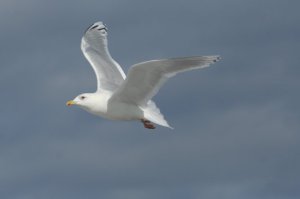
pps: No pictures of the Goldeneye I’m afraid so I thought I’d treat you to a snap of the Iceland Gull from Compo that we saw the other week – as taken by Catherine Hamilton.

Trip Species List: Common Loon, Horned Grebe, Mute Swan, Canada Goose, Brant, Wood Duck, Mallard, Black Duck, Ring-necked Duck, Greater Scaup, Common Goldeneye, BARROW’S GOLDENEYE x2, Hooded Merganser, Red-breasted Merganser, Red-tailed Hawk, Ring-billed Gull, Herring Gull, Great Black-backed Gull, Rock Pigeon, Mourning Dove, Belted Kingfisher, Downy Wodpecker, Red-bellied Woodpecker, Blue Jay, American Crow,  European Starling, Black-capped Chickadee, Tufted Titmouse, American Robin, Northern  Cardinal, Song Sparrow, White-throated Sparrow, Dark-eyed Junco,  Common Grackle, House Sparrow, American Goldfinch.


Bird Comedy!

11 03 2010

There’s never much around in the world of comedy relating to birds, so it’s always nice to dig something out bird related that makes me chuckle. For those that don’t know the League of Gentlemen it’s a British comedy show that has one character that is a rather luckless vet – Mr Chinnery. The sketch is also a nod to a great British movie called Kes about a young working class boy and his pet Eurasian Kestrel. The movie is absolutely fantastic equal parts charming, moving and hilariously funny with many classic scenes that will ring true – especially for anyone who has ever suffered an oafish gym teacher.


Spark Bird – Cedar Waxwing

8 03 2010

Cedar Waxwing - Luke Tiller

Everyone seems to have a ‘spark’ bird, something that grabbed their attention so much that on reflection they realize that it was at that point that they had embarked on the road to becoming an avid birder.  So here’s my ‘spark’ bird. It was March 2003 and I was merrily feeding the birds in my yard with my new feeder setup when a flock of Cedar Waxwings suddenly showed up and started scarfing down the multiflora rose berries tangled in my apple tree. It was then that I realized that I needed to start spreading my wings and heading further afield to track down birds. This week the waxwings were around in my new yard in Greenwich (see picture above) feasting on privet berries.  Not as noteworthy as their ‘Bohemian’ cousins but as pretty and up there with my favorite common Connecticut birds.


Ghost Bird in Greenwich

4 03 2010

Albino Red-tailed Hawk - Jennifer Braverman

Here’s a cool picture of an albino Red-tailed Hawk that was taken here in Greenwich. Thanks to Jennifer Braverman for sending in the photo and for giving me permission to use the image. She relayed to me that it didn’t seem keen to pose for photos, but I think the snap gives a pretty good idea of just how white this particular bird is. A pretty incredible looking individual. Anyway nice to add to the albino bird collection on the blog (see the Double-crested Cormorant pictures here).


Bringing It All Back Home

2 03 2010

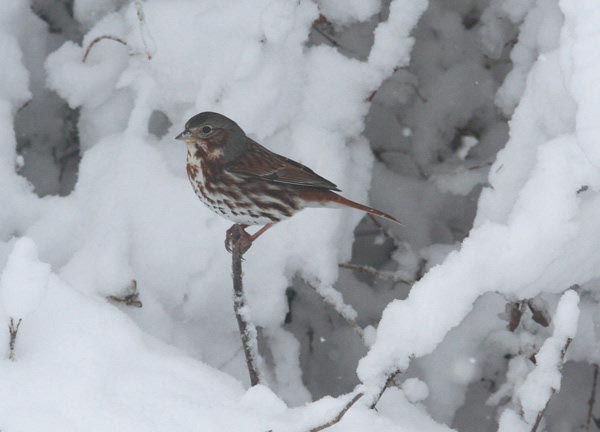
Fox Sparrow - Luke Tiller

Just when I thought winter was likely to be over, Greenwich Connecticut (in fact perhaps only Riversville Rd Greenwich CT from what I could see when I finally got outside!) gets whacked with the toughest storm of the year: 10-12 inches of snow, power cuts, downed trees and loss of internet access (shock horror!) What to do what to do? Well if you are like me you move your office to the rear window and spend the day watching your bird feeders and going a little stir crazy. As much as I love seeing rare and exotic birds, fussing over the intricacies of gull identification (cough!) and getting out and about on tour there is much to be said for the simple pleasures of just watching the birds doing their thing in your yard.

Some birders I know object to the idea of feeding birds, or are at best ambivalent to it and suggest that feeder setups just encourage the spread of disease and encourage accidents associated with window strikes and such. Personally the world of feeders and feeder birds dragged me back into the world of birding and I think it is an entry point for many of us – just look how popular the Great Backyard Bird Count or Project FeederWatch are. It’s also a great way to interest kids as they can actually get to see the things up close and personal. I think as long as one maintains a level of cleanliness around your setup and remembers that feeders are for ones own entertainment and therefore a privilege then you are pretty much good to go.

Having moved to the States in January 2003 and being stuck in Connecticut without a work permit (bureaucracy is the same the world over I guess!) for the first few months I was here left me plenty of time to kill around the house. For some unknown reason I decided one day to drag a discovered pair of pocket bins out of a draw, pop down the hardware store for a bag of Black Oil Sunflower Seed and start creating bird feeders out of a surplus of empty plastic soda bottles. From here an obsession with birds was born anew.

There is much to enjoy about feeder birds as for my money it gives you as good a chance to study their behavior as you are likely to get anywhere else. Plus you start to really notice things that you have taken for granted or overlooked before: the beautiful flash of red in the underwing coverts of a female Northern Cardinal, the amazing vigour of a ‘double-scratching Fox Sparrow, and something new this weekend the amazing threat display of a White-breasted Nuthatch.

I have watched feisty nuthatches at feeders before, all raised tails and spread wings. Here however was something I had never seen before! Cornell refers to it as a nest distraction display (illustrated here) but here was the bird assuming this seemingly highly aggressive posture towards a couple of House Sparrows as the loafed around the feeders. Quite incredible. The bird raised itself up, and unlike the picture illustrated, was definitely directing its bill in the direction of the sparrows. As it assumed this position it swayed somewhat on the branch. With the wing covert pattern it almost appeared like it had two giant eyes, something akin to an owl or hawk bobbing or swaying its head (I assume that this is the impression it was trying to give but maybe it was just trying to make itself seem as big and intimidating as it could?). Incredible stuff to watch and something I had never seen before (of course annoyingly this happened just at the point that I had taken the battery out of the camera to recharge). It just goes to show what great stuff you can see watching common birds right there at ones feeders though.


Peregrines in Port Chester

28 02 2010

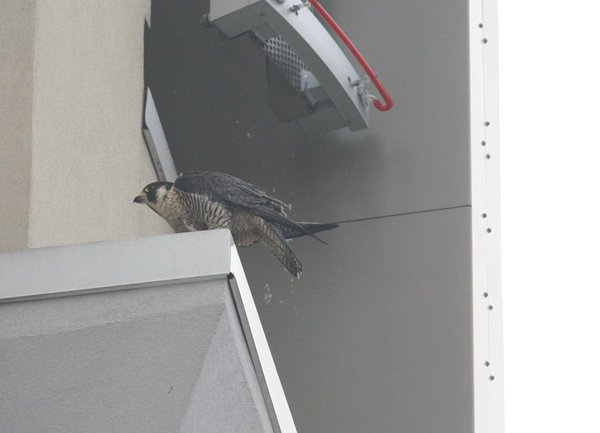
Peregrine Falcon - Catherine Hamilton

Port Chester doesn’t strike one as a birding Mecca, however I pretty much always have my eyes open and my binoculars secreted on me somewhere when I am out and about, as one never knows what you might run into. With a little time to kill on the way to the train station I decided it might be worth having a little scan through the gulls that tend to congregate on the ice/water around the mall in Port Chester. With the ice pretty much all gone, so it seems were the gulls, and it seemed like there wasn’t going to be much to amuse us while we waited for the train. That however all changed with the arrival of the pair of falcons below.

Whilst we were about to scan for the non-existent gulls, Catherine spotted a  falcon alight atop the Loews Cinema (the rather small male) followed by a second much larger bird.  It was amazing to see the amazing sexual dimorphism in size in the birds with the female obviously much larger (they can be as much as a third the size again as males and weigh more than double). Perhaps this was the reason that the male was just waiting for scraps from the females plate as she snacked on a freshly dispatched Rock Pigeon. This certainly looked like a pair so perhaps the mall in Port Chester or some building nearby might find itself home to a breeding attempt. As with the Pigeons, the Peregrines seem to be right at home in cities where they find the ledges of skyscrapers a perfect simile for their natural clifftop home.

For me it’s always a joy to see Peregrines here in the east. Where once they were extirpated, they are now thriving. A conservation success story in action, which are so very few and far between. It does though give one confidence that where there is a will, that we can actually do something positive for species on the brink of disaster. It’s just a shame with Peregrines that we essentially had to lose the eastern population before anything was done about it.


Sunrise Birding Walk – Saturday Feb 27th

28 02 2010

2CY Glaucous Gull - Mike Ferrari

With an incredible amount of snow engulfing inland Greenwich I was wondering whether this weekends walk was going to go ahead. Whereas most of Coastal Connecticut seemed to escape pretty much scot free I awoke on Friday to find the yard covered in a blanket of heavy wet snow. Pretty nasty stuff all in all and the local roads and power scenario wasn’t looking great either. We managed to get by without a brown out but did manage to lose internet activity somewhere along the way. Thankfully a warm Saturday meant that with a slightly delayed start I was able to escape the confines of Greenwich and meet everyone for a much-needed breath of fresh air.

Stratford is probably one of the more reliable spots in Fairfield County to dig up some nice winter birds. Amongst the business parks and industrial development lies a wealth of great birding spots including marshes, ponds, beaches and coastal grasslands. We started the trip at the end of Long Beach Blvd but apart from a few of the regular waterfowl there wasn’t much happening in the highly flooded marshes. Onwards then to Long Beach where we hit our first nice sightings of the day in the shape of a second cycle Glaucous Gull and a couple of distant Northern Gannets gliding eastwards out over Long Island Sound as well as a confiding gaggle of winter shorebirds in the shape of a good few hundred Sanderlings and Dunlin.

Other stops at Frash Pond, Short Beach and Silver Sands didn’t provide too much else of note apart from a couple of Lesser Scaup a Pied-billed Grebe and a couple of Canvasbacks amongst the more regularly occurring waterfowl species. That said though there were a large number of ducks off of Charles Island including large numbers of Greater Scaup and impressive concentrations of  Long-tailed Duck however many of the ducks were just all that bit too far out to go through them what with the heat haze that goes hand in hand with a beautifully sunny and warm winters day. A great day to be out and nice to dig up the Glaucous. Must say I’m looking forward to less snow and some signs of spring soon though.

Trip Species List: Common Loon, Pied-billed Grebe, Horned Grebe, NORTHERN GANNET (Long Beach), Great Cormorant, Mute Swan, Canada Goose, Brant, Mallard, Black Duck, Gadwall, American Wigeon, Canvasback, Lesser Scaup (Frash Pond), Greater Scaup, Common Goldeneye, Hooded Merganser, Red-breasted Merganser, Red-tailed Hawk, Sanderling, Dunlin, Ring-billed Gull, Herring Gull, GLAUCOUS GULL (Long Beach), Great Black-backed Gull, Rock Pigeon, Mourning Dove, Belted Kingfisher, American Crow, Fish Crow, European Straling, American Robin, Song Sparrow, Savannah Sparrow, House Sparrow, American Goldfinch.


Long time…

25 01 2010

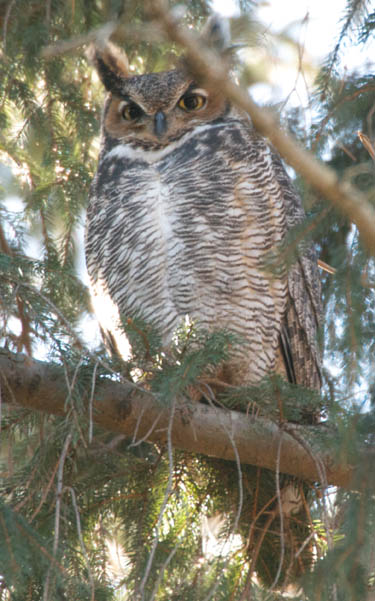
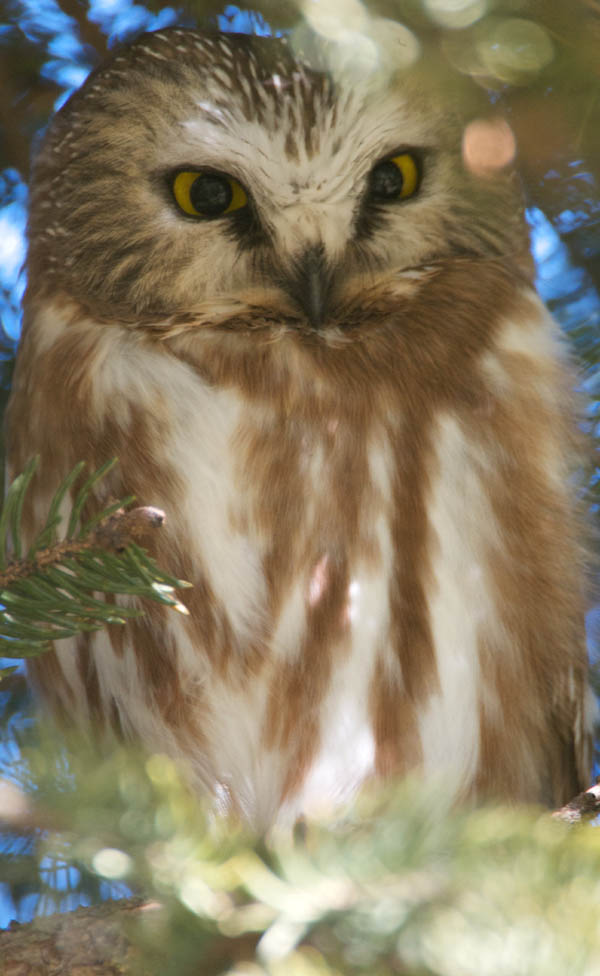
GH Owl- Matt Thomas

Is it just me or is January the most miserable time of year (I am writing this on a day with 30mph winds and steady sheets of rain). It always seems to take me ages to recover from Christmas (a wonderful time spent in London visiting with family and friends old and new, including my friend Peter’s beautiful new baby girl). Anyway there always seems to be a lag in time recovering from being back in the old country and feeling settled back into life here in the states. That’s my excuse for doing nothing with the blog for a while anyway. It also doesn’t help that January is not my favorite time of year for birding. Although I compile the Big January for Connecticut I have to say that having done one once I pretty much vowed never to do it again. I just can’t handle the endless ‘on the go’ pace of the whole thing – more power to those like Tina, Meredith and Sara who throw themselves into the spirit of the thing with gusto – I don’t know how they find the energy!

Anyway this weekend I was back out on the birding trail running a daytime owl prowl. Now as it is owls are hard enough to find even at the best of times but to get to see them during the day it really takes some serious scouting. I basically spent the majority of the week pulling in favors, begging people like AJ who is something of an owl expert and aficionado for tips and traipsing through pine woodlands looking for traces of owl activity. For the most part I was finding a lot of owl sign and not a lot of owls. You also have the misery of owls that you have staked out suddenly deciding to move on just before the day of the walk. Pretty stressful all in all!

It’s all worth it though when you manage to get to the end of a walk with 5 pretty decent owl sightings under your belt. The day started fairly auspiciously when at the first stop a mob of Blue Jays were squawking intimidatingly around the group of pines I was hoping to see our first Barred Owl in. Sure enough these mobbing birds were onto our quarry much quicker than we were and as we watched their frantic behavior a, thus far, hidden Barred Owl dropped out of the trees and flew off for what it hoped would be a quieter pine to roost. Whilst all the time harassed by the baying corvid mob! As I explained to the group, mobbing birds can be your friends and on a number of occasions they have led me towards an owl camouflaged from a mere human’s eye. With a couple more excellent flyby views under our belts as the bird flew this way and that to lose his pursuers (the jays – not us) we left the owl to deal with his tormentors.

A few more stops yielded some successes and some failures: another Barred Owl perched in some coastal tangles ( but not the Long-eareds that had been hoped for) that provided us with the chance to study the contents of one of the owls pellets and to see the tell-tale whitewash signature that denotes a regular roost. A couple of Great Horned Owls were already getting set up for the serious business of starting a new family for the year, and we had beautiful views of the North-Easts most diminutive owl: the Northern Saw-whet, a bird that one only really encounters in the state in migration and winter.

All in all a pretty successful trip and one that though tough to organize, was all the more rewarding in its success. This year has been a fairly tough one for owls it seems, with very few reports of diurnal owls such as Short-eared and Snowy. Although not reportable in CT, the word on the grapevine is that Long-eared sightings are fewer and farther between than recent years as well. Perhaps the abundance of natural food this year has lead to a corresponding boom in their prey numbers to our north and they just don’t feel the same need to roam south. A good thing for the owls but not so good for your prospective owl hunter!

Thanks to Matt Thomas for the kind loan of a couple of his shots from the trip – thanks for sharing.

Trip Sightings: Barred Owl (2), Great Horned Owl (2), Northern Saw-whet Owl (1).

Others: Canada Goose, Mallard, Ring-necked Duck, Red-tailed Hawk, Red-shouldered Hawk, Herring Gull, Ring-billed Gull, Rock Pigeon, Mourning Dove, Belted Kingfisher, Downy Woodpecker, Blue Jay, American Crow, Black-capped Chickadee, Tufted Titmouse, Red-breasted Nuthatch, Golden-crowned Kinglet, American Robin, European Starling, Eastern Towhee, American Tree Sparrow, Song Sparrow, White-throated Sparrow, Dark-eyed Junco, Northern Cardinal, American Goldfinch, House Sparrow.