Braddock Bay Barrow’s

2 03 2011


Barrow's - record shot.

How things seemed to have changed since I last posted. I am now up in Rochester New York for three months carrying out the spring hawkwatch at Braddock Bay for BBRR. It’s a beautiful spot (although cold so far) and bound to be loaded with great birds once the season begins to pick up in a couple of weeks. For now, I am trying to stay warm at the hawkwatch and picking off the first few migrants.

As I now have the luxury of a waterside view just a stones throw from the house, I thought it might be time to relaunch my attempt to do a big green big year (Bigby) that I set off on and abandoned a couple of years back. Anyway more about all of that later. For now I just wanted to stick up a couple of shots of the Barrow’s Goldeneye I picked out on Braddock Bay today, as well as some of the 30 Tundra Swans that were resting up near the shore.

The bay is absolutely loaded with ducks right now and the Barrow’s was hanging out with a huge raft of Greater Scaup (with a few Commons keeping him company). Tundra Swan and Barrow’s Goldeneye, all just a couple of minutes walk from the house. Can’t complain about that!!!!!


Gulls, Gulls, Gulls… Rainham Marshes

21 12 2010

Sunrise Over East London

Back in good old blighty for the holidays I have popped out for a little birding locally and have already picked up a couple of nice birds including Little Owl and Firecrest a bird I hadn’t seen for years. Firecrests probably rate as one of many British birders favorite breeding birds. They are like a really exceptionally intricately plumaged and pretty Golden-crowned Kinglet. The local listserve (here) had come in particularly handy for finding some good birding spots nearby and working out what might be around and there seem to be enough helpful birders  wandering any likely looking spots in town that even out in the field you can pick up a few tips on what is around (thanks to Paul Whitehouse for some info about Walthamstow Reservoirs – contributor to blog here).

I have to say though that being so used to just being able to wander out of my house and find birds in Connecticut, it is a little weird being in London where one has to actively travel to go birding and even then the returns for effort expended can sometimes feel a little poor (perhaps a reason why twitching is so big here in comparison!) Not so much a knock on London but a realization that one has it pretty good being a birder in New England.  This is also coupled with the fact that most/all of these birds aren’t really totally new to me so there isn’t that excitement of being in a truly foreign land.

Still when Dominic Mitchell (who traveled with myself and Joe Bear on the Sunrise Birding tour of Colorado earlier in the year) was kind enough to take a day out of his London Big Year (see details on his blog here) and offered to let me join him at his local patch Rainham Marshes (RSPB Website here)  I jumped at the chance. Not only was it a site that wasn’t even open to the public when I left the UK, but also it was one that held the possibility of a potential lifer in the shape of a Caspian Gull.

I set off with the promise of a cold but sunny day (proof that weather forecasting is as inexact a science across the pond as it is in the US). Running a little late, it was already snowing when I arrived and Dominic informed me I’d just missed a possible highlight bird for the day in the shape of 3 (Bohemian) Waxwings. This is something of an banner year for these stunning birds here in the UK and I had seen reports of them showing up in small numbers across the London area in the last few days. I think these were the first that Dominic had ever tallied at his local patch, which was pretty amazing when I looked at some of the goodies he’d picked up here over the years.

The RSPB, who run Rainham have done a pretty spectacular job on setting up a really fantastic center with a great little cafe, store and some great views of the site and a multitude of feeders. Even on first arrival impressions it seemed like Dominic had picked a good day to meet, the plummeting temps were causing a rather impressive cold weather movement of birds. As we wandered out onto the property we were soon picking up some nice sightings including a Goldcrest, a bird I had seen a couple of times since I arrived here but that had been difficult to find at Rainham apparently so far this year.

Highlight for me though was picking up rather nice flight views of a Yellowhammer overhead. There was plenty of overhead action in general as we walked the wooded area at the start of the trail, including a pretty decent flight of Skylarks. It was then that Dominic heard the distinctive call of 4 Waxwings and along with a beginners birding group we managed to watch them in flight for quite a while as they streamed off to search out and plunder the next patch of berry bedecked shrubs they would come across.

The next stop, a rather rough and ready feeding station, produced our first look at some Reed Buntings (a bird that North American sparrow fans such as myself are bound to enjoy) amongst the usual tit species. Out amidst the muddy fields and pools there was an incredible wealth of waterfowl including a morass of Wigeon and Teal. We scanned through the birds in hopes of turning up a North American version of either bird, however the usual guide tips for identifying female Wigeon seemed to be somewhat confounded by the incredible variation exhibited by these birds in the field! Still we did have one interesting looking drake Wigeon, which seemed to show a very extensive greenish patch through the head, whether this was natural variation or some form of hybridization I couldn’t say for sure – it certainly gave the bird a very distinct appearance in the field.

After picking out a few of the less common waterfowl species we moved on, but by now the snow was coming down hard and the footing was becoming distinctly dangerous. This culminated in something of a disaster when both Dominic and his camera took a slip on the ice. I have to say he dealt with the camera mishap situation better than I would have, if it had been me there would definitely have been swearing and tears involved!!!


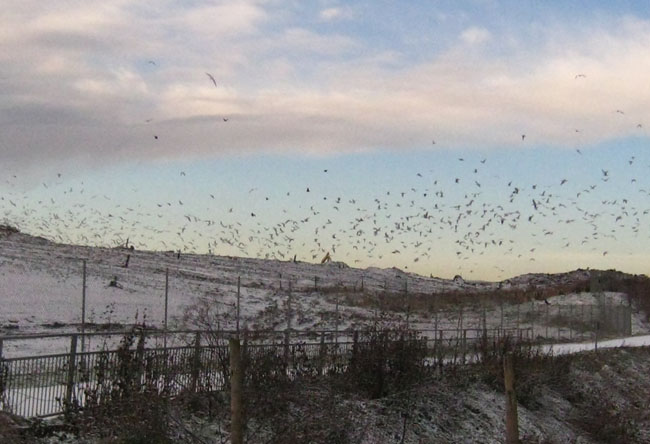
Gulls Over Rainham

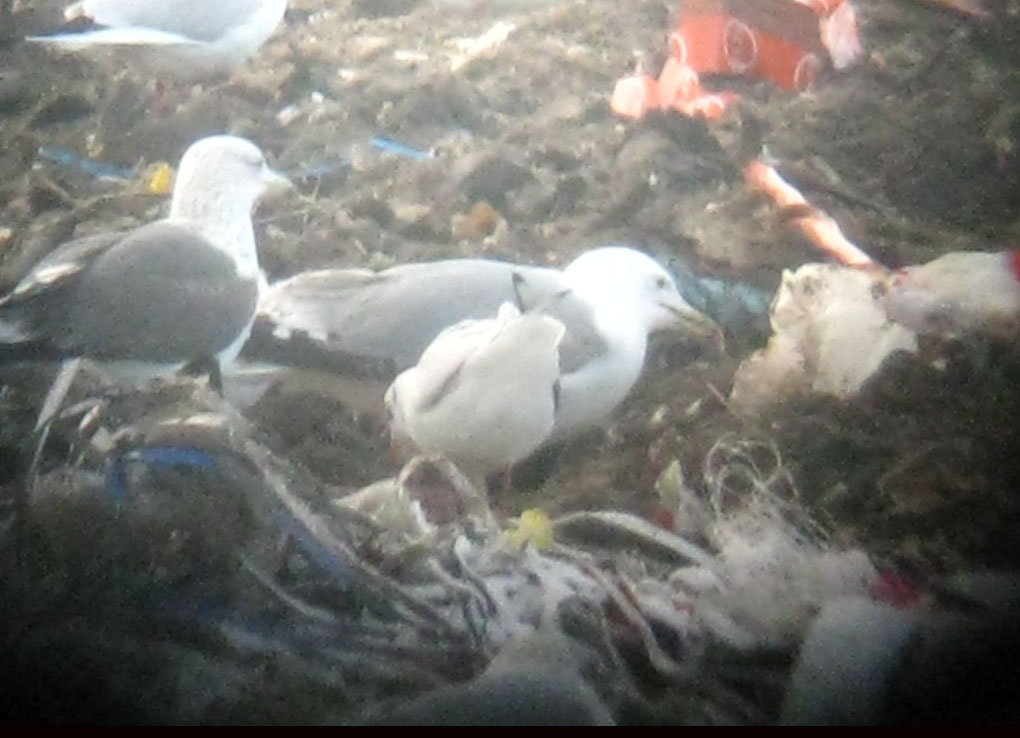
Anyway, with the snow coming down thick and fast now, we decided to go out and see how treacherous the roads had gotten and make our way over to the landfill and see what was around in the shape of interesting birds. I have to say gulls are not my favorite birds but Dominic was doing his best to convince me that they could be fun. Actually it was all quite fascinating discussing how to separate British (argenteus) and Scandinavian (argentatus) Herring Gulls. We then moved onto full species as Dominic picked out a variety of Yellow-legged Gulls for my perusal and then finally he came up trumps with a rather nice looking (4th winter?) Caspian Gull. Once pointed out, the Caspian Gull was pretty distinctive: being pretty darker backed than the Herrings, essentially almost totally white-headed and with a pretty distinctive bill shape and bare part coloration. I even managed to relocate the bird a couple of times – although to be fair it was lingering in about the same area most of the time.

As we sifted through the thousands of Common and Black-headed Gulls and a good number of large white headed gulls I thought of the guys back in CT for who this would have been something of a dream come true – yes I mean you Nick and Patrick!!! I could also start to see some of the appeal of these birds – although their habits and the smell of the places they seem to most enjoy residing are certainly less appealing!!! I have to say the challenge strikes me as being a little more fun here than in CT where the main ‘rarities’ that you are likely to come across are the rather more obvious white-winged gulls and anything else is something along the million to one shot lines. Excuse my crappy digiscoped Caspian Gull below, you can see some better shots of the gulls that frequent Rainham on Dominic’s Flickr site (here.)

Caspian Gull - Luke Tiller

Being without my scope on this trip (always such a pain to pack), I was feeling like a bit of a fifth wheel while Dominic picked stuff out, so I started to scan for possible raptors on the Saltings behind us. No raptors to speak of, but I did manage to pick out the distinctive flashes of a passing Snow Bunting. Unfortunately my descriptions of where the bird was in the sky left something to be desired and Dom never quite got on it. He however did trust me enough to post it to the listserve – probably because they had seen one a couple of days before at Rainham (and I was particularly pleased/relieved that the bird? was relocated by a couple of other birders the next day!)

We ended the day scanning the shores of the Thames and picking up another few decent species for the day including one of my favorite British birds: Stonechat as well as a number of waders including a rather nice Curlew and a favorite duck of mine: Shelduck. All in all it was a fantastic day out at Rainham with a good number of decent birds, including a lifer, but more important for me personally was just to be out somewhere really birdy and to enjoy some really top notch company for the day. Thanks again to Dominic for a great day out. Just gutted we didn’t manage to find him something new for his London Big Year!


Connecticut Young Birders Club Fieldtrip

23 11 2010

The Connecticut Young Birders Club

After a successful inaugural meeting of the club back in October which was lead by Kenn Kaufman the YBC had picked Hammonasset Beach State Park as the next venue for their fieldtrip. Leading on the day were Frank Gallo (who had kindly volunteered his services in advance), Brian O’Toole and myself.

Manuel, Benjamin, Nicole, Zach and Eamon joined us in Greenwich for the trip down and we met Alex, James and Brendan down at the park. Unfortunately a few members had been forced to pull out at the last minute, but a nice sized group was assembled for the day.

Hardly had we managed to get out of the van, when we had our first decent sighting of the day a juvenile Northern Harrier, which was quickly correctly identified and (aged!) by one of the group. Amazing how many relatively experienced birders seem to be unsure of the difference between female and juvie harriers!

As we gathered in the parking lot, we had to wait for a photographer to stop driving around the field where the Horned Lark flocks congregate so that we could go through the collection looking for other goodies. As we waited we quickly picked up some other nice trip birds including a Sharp-shinned Hawk that was darting around the Nature Center and a lingering Greater Yellowlegs that was sat in the small duck pond at the east end of the nature center parking lot. The yellowlegs actually put on a bit of a show as it performed its best phalarope impression by swimming out across the pond a number of times joining in with a little flock of American Black Ducks.
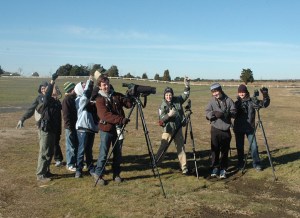
Is it a bird? Is it a plane....

Once the photographer’s car had disappeared, we had time to go through the Horned Lark flock at leisure. We soon picked up a Lapland Longspur as it scurried across the gravel and although it gave the group the runaround for the while as it ducked low and out of site behind grass clumps and little rolling ridges we finally all got decent views of a the bird. As we awaited better views of the Longspur a small group of Snow Buntings put on a better showing than the longspur, fluttering around the fields and putting down in a number of spots allowing for nice binocular and scoped views of the birds. A few of the group noted the distinctly pale appearance of a number of the Horned Larks and some theories about races and subspecies were thrown around without any real conclusions being formed.

After cleaning up on the expected bunting/lark/longspur show we trotted over to scan the sound from Meigs Point. On the way we picked up our first American Tree Sparrows of the trip and a Yellow-rumped Warbler or two.

The sound was a little quieter than expected, however a few Common Loons were close enough to provide nice binocular views and further out a couple of Red-throated Loons floated around. Although there was not much initially out on the water we did a little better with shorebirds along the breakwaters and down below us on the rocks. We soon had Ruddy Turnstones, Sanderlings and Dunlin under our belts as well as a Black-bellied Plover and after a little more patient examining of the groups of birds a Purple Sandpiper was picked out.

Out on the sound there was some movement of waterfowl, mainly at good distance, but a couple of White-winged Scoters were close enough to be able to see their white wing patches in flight. Best however was pretty much saved until last when a group of eight Common Eiders flew in not too far out (including 2 adult males). Amusingly this was a state bird for me, what a friend might describe as a ‘shame tick’ (a bird that is embarrassing to have to add to ones list). We also spotted a single Surf Scoter that was lounging around just off shore so we eked out two of the three hoped for scoter species if only in small numbers.

A stop at Willard’s Island was essentially a bit of a waste of time, apart from nice views of a Hermit Thrush and with other groups that we’d run into essentially decrying the general lack of birds in the park we decided that perhaps a change of plans was in order.

East Shore Park had been producing some pretty incredible records in recent years for both lingering late warblers and Cave Swallow sightings. With both reported the day before we decided to cut our stop at Hammo short and take a trip detour to East Shore. We didn’t regret it one bit as almost as soon as we stumbled out of the van we had picked up great views of a Red-breasted Nuthatch that was mixed in with a little Black-capped Chickadee flock. Before we wandered over to the area we hoped to pick up the swallows we also picked up a couple of lingering Ruby-crowned Kinglets.

Again we had stumbled onto more groups of birders and started to get information about what had been seen at the park so far. As we were chatting first one and then another Cave Swallow appeared overhead. It took a little while, but with a little patience eventually we all managed to get good distant and then close views of these two vagrants from southern Texas or beyond?!? Then we were on to searching out for other birds that might have decided to hang around and make use of this somewhat warm, wet and buggy park microclimate caused by the water treatment plant situated next door.

First up was an incredibly late American Redstart – seemingly a very dull first fall female that was working through the tree tops and vine tangles in front of the water treatment plant. Then we pished up a rather nicely marked Blackpoll Warbler, that proceeded to do a little preening whilst we all got nice views of this bird in the dense low tangles. Finally the last little lingering goodies we managed to dig up were a couple of rather nice and brightly colored Pine Warblers (typically enough working the small pine trees just inside the treatment centers fence).

A great little on the fly stop, and it had fitted into our day perfectly. Pretty special to get four warbler species on November 21st and highlighted the seasonal nature of birding. Three species of warbler that might hardly have garnered much more than a quick glance a month or so back were now vying for star status with the Cave Swallows for most of the birders there!!!

Cave Swallow - Frank Gallo

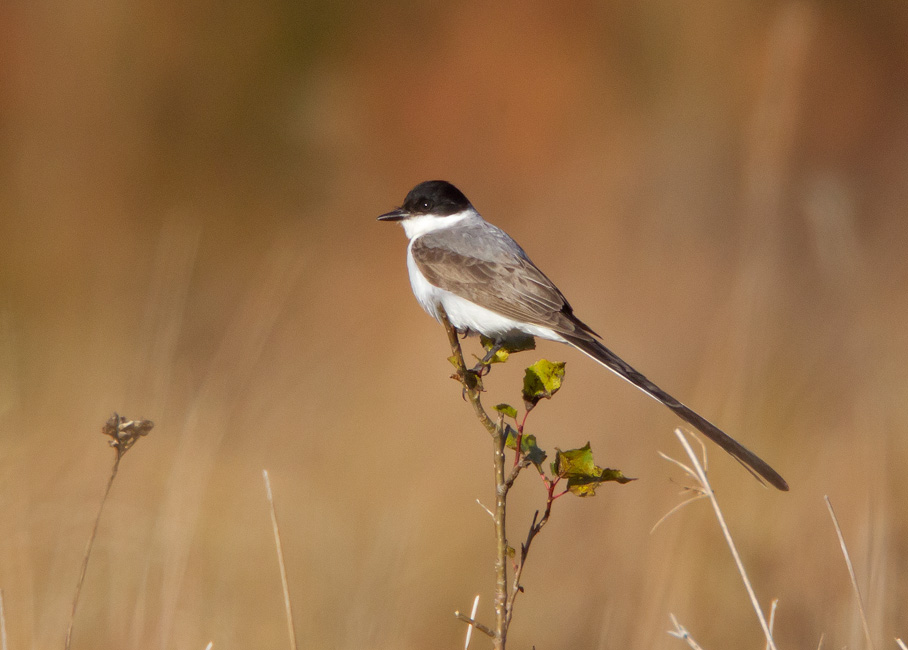
So we left East Shore and said farewells to Frank, Vanessa, Alex, Bredan and James and set off with the remainder of the group for an impromptu stop at the Fork-tailed Flycatcher in Stamford (it would have been rude not to!)

We soon made it to Cove Island Park and were delighted to find that the bird was still putting on quite the show. Two great things about this twitch: firstly that it was being excellently managed and two that it was being used as something of a fundraiser for the park.

Too often twitches descend into chaos where the desire to get better views or photos of the bird descend into the kind of crazy behavior that disturbs both the bird and most of the other birders there. Here a nice taped ‘fence line’ had been stuck up to help protect both the bird and habitat.

It seemed to work perfectly and the unmolested bird and had settled in quite comfortably with his new found fame and was more than happy to provide excellent and almost constant close views. Proof in my mind that if you give birds a little room they tend to just forget all about your presence after a while and just get on with doing what they are doing.

In the van after each stop we had been discussing our favorite birds so far of the day, and after each stop a number of different birds had been picked by participants, however after we left Cove and I asked the same question again the response was unanimous – Fork-tailed Flycatcher. It’s hard not too get excited about such a charismatic and exotic bird whether you are a rarities chaser or not.

To summarize it was a fantastic day out with a great group of keen young birders and on top of that we were treated to an endless array of beautiful and somewhat rare birds. Next month the YBC will be focusing on taking part in their local Christmas Bird Counts, but if they are anything like me they can probably hardly wait for the next trip in January to roll around. Thanks to Brian O’Toole, Frank Gallo and the Audubon Greenwich staff for making it all happen!

More reports from the following blogs floridascrubjay(here), flight log(here) and warblings(here).


Moonwatching

20 11 2010

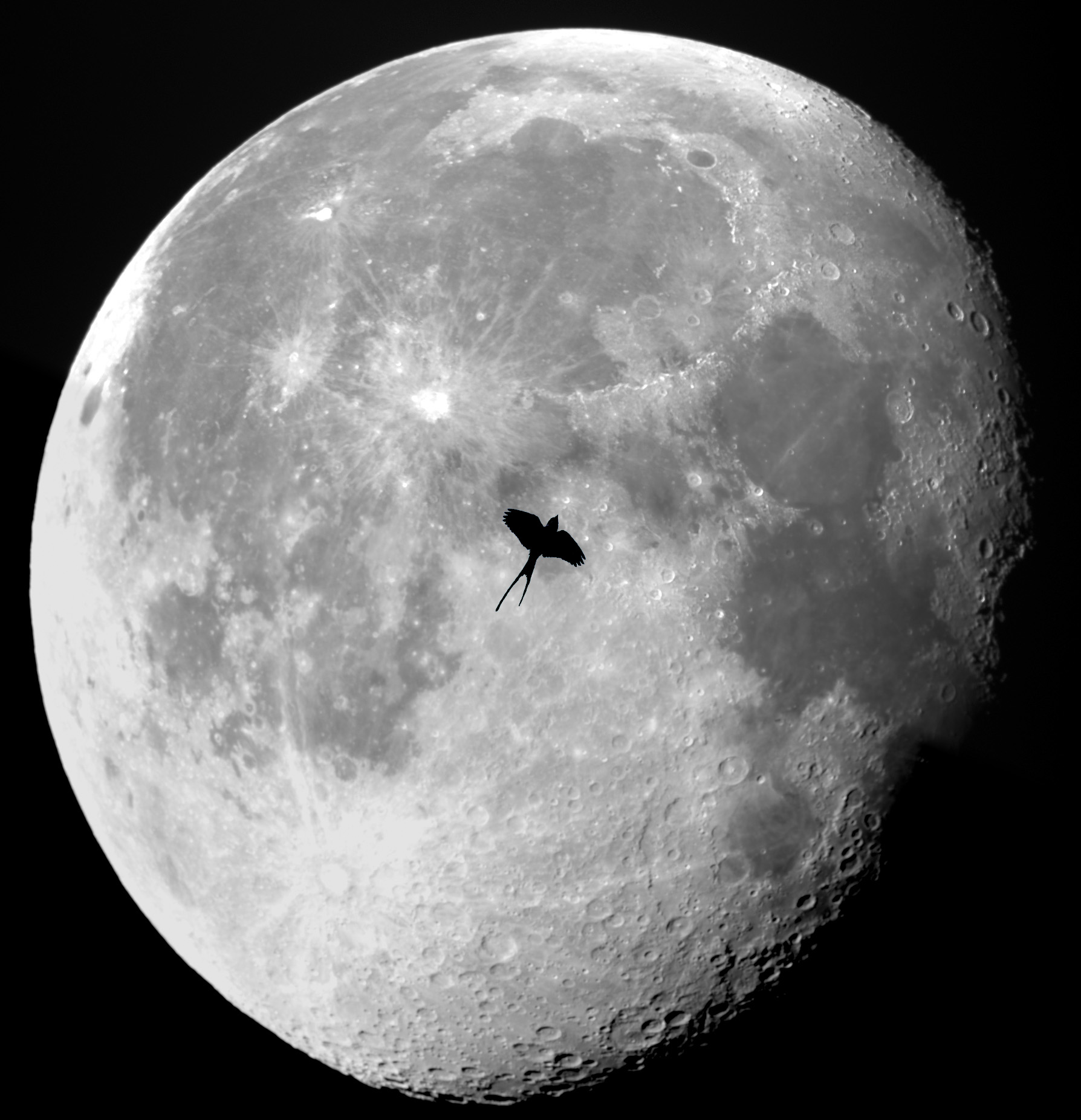
Moonwatching - Nov 20th 2010

Just doing some moonwatching photography tonight. Looks like I captured a little birdie on it, I wonder what it could be?


Born Again Twitcher – Fork-tailed Flycatcher

17 11 2010

Fork-tailed Flycatcher - AJ Hand

After thinking that the twitching bug had been well and truly put to bed, a couple of great finds in Connecticut have seen me heading out to twitch birds this fall. Just call me Mr. Hypocrite! Tina Green found the first twitchable Forked-tailed Flycatcher at Cove Island Park in Stamford whilst waiting for her car to be repaired. Pretty crazy – just goes to prove that there is no bad time to go birding!

Talking of twitching, not sure how many people this side of the pond caught up with the BBC documentary about twitchers in the UK? If not I linked it here. If I ever get like these guys just shoot me 😉 Thanks to AJ Hand for the sending me this top quality picture of the bird!


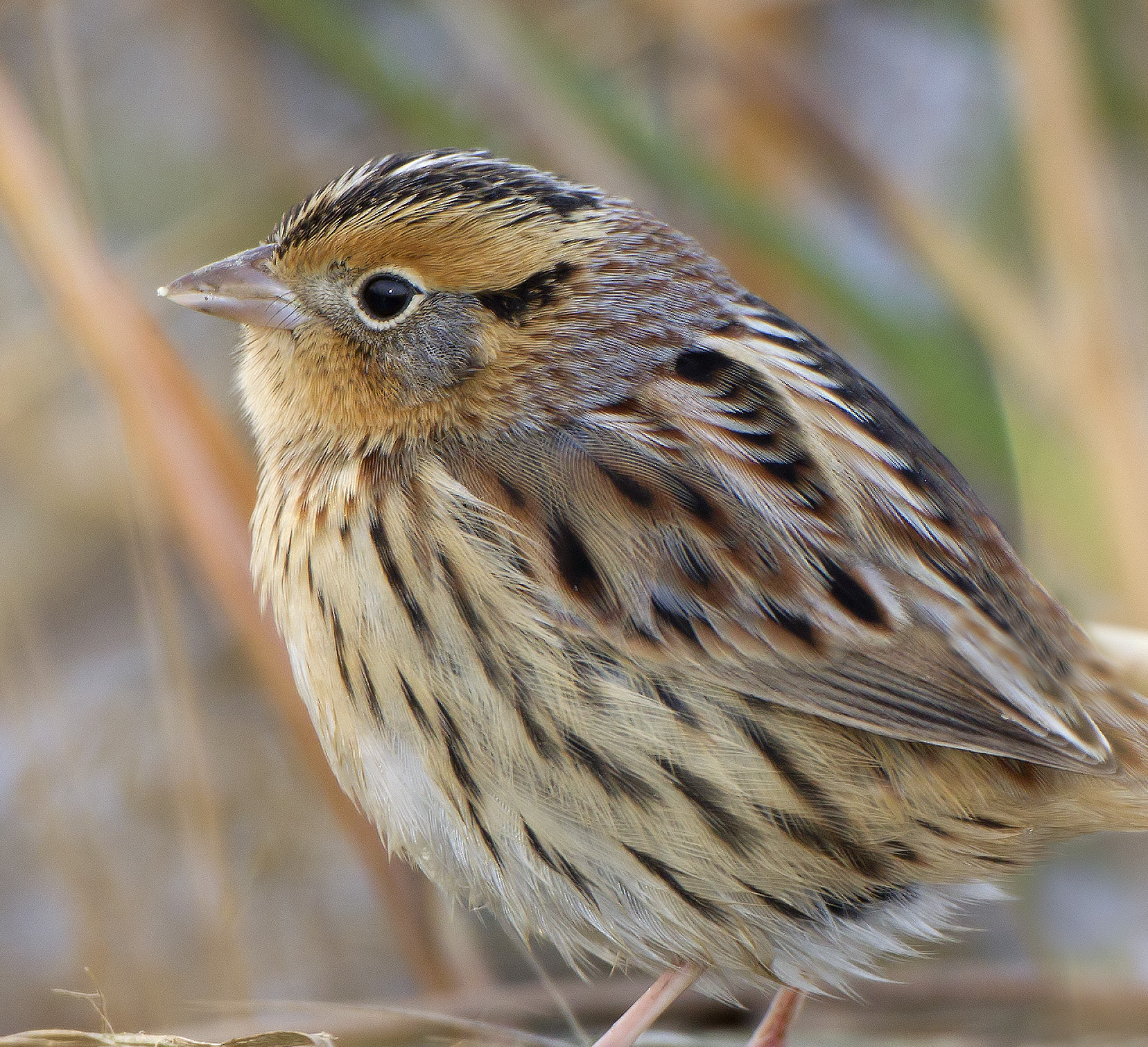
Le Conte’s Sparrow – Milford Point

9 11 2010

Le Conte's Sparrow - AJ Hand

As you probably know I am pretty antipathetic to the whole world of chasing and twitching birds (maybe antipathetic is too strong on reflection but I do like the word so lets leave it in). Apart from my Allen’s Meadows list, I could care a jot for listing in general (nothing wrong with it it just isn’t what excites me about birding). Simply put I’d prefer to spend my free time just looking for birds than sitting in a car driving to look for one someone’s already found.

That said I’ve actually twitched three birds this fall including a Lark Sparrow (thanks to Matt Hoyt) and a Northern Wheatear (thanks to Tina Green, Penny Solum and Mike Warner) at Allen’s Meadows (well I could hardly not chase those could I, they both at my old patch on the same day!!!!).

The third bird was the Le Conte’s Sparrow at Milford Point (as found by Tom Sayers). Although not even remotely related to Allen’s Meadows or even an addition to my county list, I wasn’t going to turn down the opportunity to see a lifer sparrow and a particularly beautiful one at that. Personally sparrows are probably my favorite North American birds. A little challenging, but not like those ridiculous gulls and a secretive beauty that outshines (in my opinion) those gaudy neotropical birds.

Anyway it was a fun day out with fellow Quaker Ridge hawkwatcher Bill Wallace with a couple of nice additions to the days hunt added by Bill and myself including 3 American Golden Plovers and 1 Sora as well as some fairly abundant Nelson’s Sparrows.

I was also pleased to note that the whole thing was pretty stress free. In years passed I might have been fretting about dipping on the bird, but I really just spent the day enjoying the whole hunt and catching up with birders that I haven’t seen in absolutely aeons. Still getting the bird in the gloom at the end of the day certainly didn’t hurt the general enjoyment of the whole experience!

Thanks to AJ Hand for sharing this stunning picture of the bird – simply beautiful., and much better lighting than when I saw it 😉


Quaker Goshawk

7 11 2010

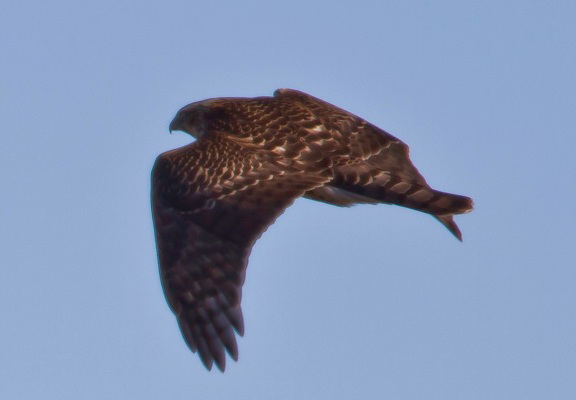
Northern Goshawk - Steve Beal

So the other day at the Le Conte’s Sparrow I was talking with a couple of other experienced hawkwatchers/birders about the trouble that many people seem to have with getting big accipiter ID’s correct. I’m not an expert on them by any means but a good number of sightings at Quaker this year have certainly given me a decent feel for them I think. I thought it might be instructive to post some shots that Steve Beal took of an juvenile Goshawk at Quaker Ridge today and go through some ID pointers.

Northern Goshawk - Steve Beal

It always amazes me how many people don’t seem to look for the relevant features on big accipiters and merely parrot the line that the bird had a big supercilium as if that were some definitive marker (it isn’t by the way, all juvie accipiters can show you a distinct supercilium). It is common knowledge that Sharp-shinned and Cooper’s Hawks can virtually overlap in size but it seems to evade most people that the same is true of small male Northern Goshawks and large female Cooper’s, so large female Coopers seem to throw people a little when they encounter them.

Northern Goshawk - Steve Beal

Anyway these pictures show you some of the key features you should look for in flight and many are noticeable on the deck as well:

Structure:(a) Broad ‘thick-set’ body, (beware Coopers with a full crop as they can look bulkier) look at the bulk of this bird and the deep keeled belly, (b) Tail that just looks like a continuation of a thickly built body (Coopers often appear cinched at the base of the tail to my eye), (c) Broad wings with narrow ‘hands’ (can make the bird almost look falconesque flying away from you).

Plumage: a) Uneven and ‘wonky’ bands on tail, (b) rufous wash on nape, (c) buffy bar on greater wing coverts, (c) dark streaks on undertail (d) streaking much heavier than average Coopers Hawk (juvie coops often look pale underneath at distance- juvie Goshawks look ‘dirty’ like Sharp-shinneds), (e) Goshawks tend to look slightly more washed in buff than Cooper’s on the underside, whereas coops show a pale whitish base color to the streaking (f) as pointed out by Brian O’Toole you can even see the white edging to the dark banding on the tail (probably not something to try look for on in flight birds!!!).

Flight Style: Fairly distinctive in my experience this is a big heavy powerful bird thus it tends to be very steady in the soar and comes across almost as a buteo (why wouldn’t it it’s the size of a Red-tailed Hawk!), it can accelerate very rapidly and the wing beats appear powerful none of this lazy flicky flap flap flap glide malarky you get from smaller accipiters but rather a much deeper and powerful flap that propels the bird swiftly and directly.

We don’t get to see many Goshawks, so just in this past seasons watching I feel my personal confidence with this species as grown considerably. I thought it might be helpful to jot down a few thoughts, so any agreements, disagreements or pointers you think I’ve missed feel free to chime in. Hope it might be helpful to a few.

Thanks to Steve Beal for letting me use the pictures. A picture is worth a thousand words!


Things other people are doing – part 1

27 10 2010

I have been going to some awesome events at Audubon Greenwich recently of which one was the talk given by Brad Josephs about his experiences as a tour guide in Katmai National Preserve. Brad left the world of academia to share his incredible passion for bears with the world. He spends his time switching between guiding in Churchill and Katmai National Park and talking to groups about his fascination with bears and other big mammals.

Talking to him while he was staying here, his main goal is to get people to take a fresh look at how we relate to the big predators we share our continent with. His tours sound (and look) incredible (his careful approach allows for some amazing close encounters with Bears, Wolves and any other number of fantastic mammals) as you’ll see from the film. Brad claims to not be much of a photographer but his amazing collection of youtube footage (here) proves otherwise.

Brad has been leading tours with a locally based tour company in Alaska (here) for a number of years now and has worked with the best wildlife documentary photographers (BBC, National Geographic) sharing his intimate knowledge of the local bears. Hope you enjoy his amazing  film clips!


Bird Music – Eels – Little Bird

14 10 2010

Here’s another bird music gem as sent to me many moons ago by a regular on my bird walks Wendy Knothe. Anyone else got any bird themed music tunes they want to recommend?


Sparrows – gotta love ’em

13 10 2010


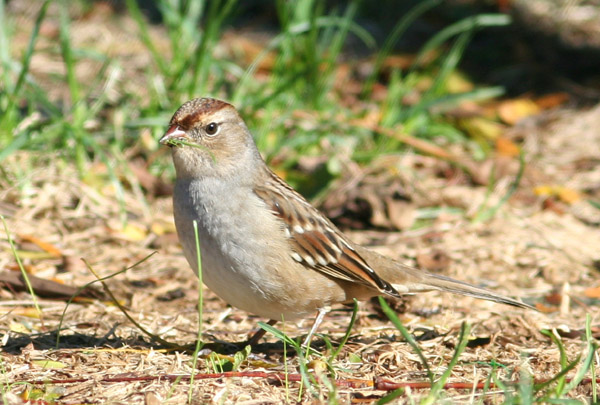
White-crowned Sparrow – Luke Tiller

Finally, sparrow time is here! Warblers are nice and all but now real fall migrations kicks in. Sparrows are my favorite group of birds and they also have some cool friends that tag along with them like the Dickcissel I found at Audubon Greenwich on Monday ( a decent day considering I also found a Orange-crowned Warbler).

This coming week week I am doing a sparrow workshop talk at Greenwich Audubon (October 21) and then looking forward to a trip to my favorite birding spot on the planet (OK outside of maybe the Yanacocha Preserve in Ecuador) Allen’s Meadows on Sunday (Oct 24) . Being involved in helping set up the inaugural meeting of the Young Birders Club this Saturday it’s going to be quite a busy week!