
Juvie Ruby-throated Hummingbird
Hummingbird feeder all set up right next to the window – now to find that Allen’s or Black-chinned.
Juvie Ruby-throated Hummingbird
Hummingbird feeder all set up right next to the window – now to find that Allen’s or Black-chinned.
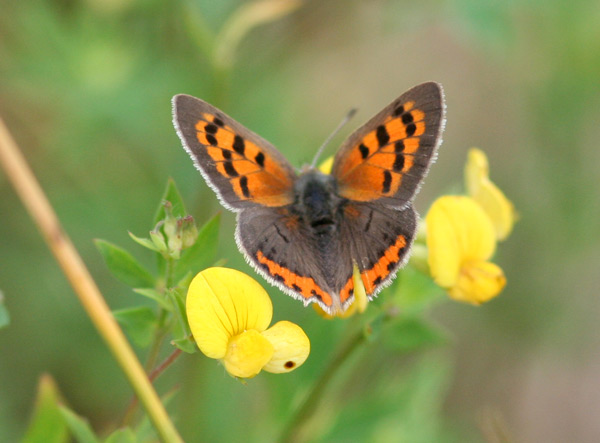
American Copper
Is it just me that finds summer essentially depressing? I’ve always found the season to be somewhat melancholy, but now I am a birder the pain is doubled by the complete lack of anything worth birding for. Once you’ve lived somewhere long enough to get all the usual suspects that breed locally, there hardly seems to be a reason to leave the house in June or July.
For me the main excitement to be found in local birding is that random factor that you get in migration. Even in the depths of winter there appears to be stuff on the move summer however just appears as a dead zone on my birding calendar. Anyway to keep myself even remotely sane I decided that this year I’d at least take a passing interest in the local butterflies. Armed with my girlfriends camera I even managed to get a few nice shots of stuff.
Although butterflies aren’t going to be taking up much of my time once the birds start moving again it has at least given me the impetus to get outdoors for the last month or two. If you haven’t delved into them yet there are certainly worse ways to kill time between migration and if you think shorebirds are tough try getting your head around the world of skippers!

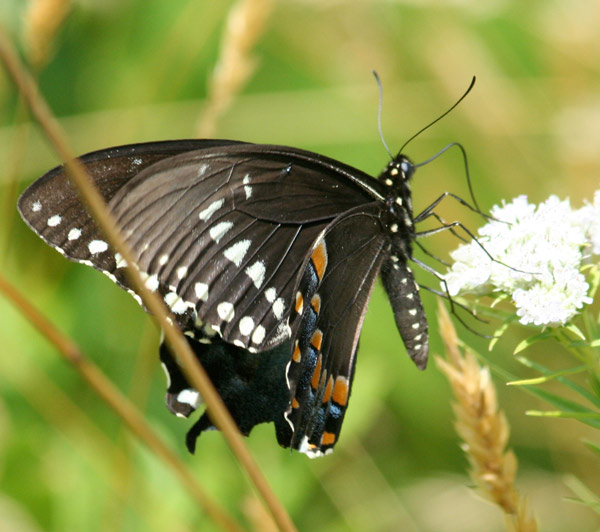

Barred Owl - Saurabh Mehandru
Just thought I’d share this beautiful shot of the Barred Owl that we saw on this weekends walk at Trout Brook Valley. A superb capture, thanks for the loan of the shots Saurabh!

Blue Grosbeak - Saurabh Mehandru
A trip to one of my favorite breeding birding sites in Fairfield County didn’t disappoint as we found a wealth of nice breeding regulars as well as a goody or two on the weekend walk at Trout Brook Valley. There are a couple of approaches to birding the site with the Bradley Road entrance usually being the best bet for breeding warblers and other woodland birds (this is an area where I have picked up migrant Mourning Warblers late in the season as well) including such uncommon local breeders as Acadian Flycatcher and the orchard being better for open country breeders such as Indigo Buntings, Bobolinks and Field Sparrows.
With landbird migration as good as done, and woodland birding usually fairly frustrating at this time of year (lots of hearing very little seeing) I decided to strike out for the orchard area where the birds tend to be a little easier to view.The deciduous woodlands on the hike out to the orchards tend to be of little interest apart from for the usual woodland suspects but on today’s trip we managed to strike it lucky and run into one of the number of Barred Owls that regularly nest at the site – complete with fledgling owl. We managed to observe both the young bird and the adult for a little while, the adult seemed to be somewhat caught between trying to pick off a nearby chipmunk and keeping us away from its baby. With a little bill clacking ensuing from the adult, and with a couple of pictures snapped, we decided to leave the scene and let them get on with it, I didn’t want any of our group ending up like Eric Hosking after all!!!!
Out in the orchard we were soon hearing and seeing some of the regular cast of breeding birds: Indigo Bunting, Baltimore Oriole, Field Sparrow, Blue-winged Warbler and Eastern Towhee. One song however piqued my interest. Having just come back from a rather fun tour of North Carolina (and having spent the last couple of months boning up on southern bird songs) I thought I recognized the rather husky warble of Blue Grosbeak. The bird was not initially showing itself and I wondered whether there was a more prosaic solution to the mystery bird song. However a couple of minutes patient waiting allowed us to eventually see the mystery singer – a young male grosbeak – nicely illustrated by Saurabh’s photo.
Having managed to get good looks at the rather accommodating Grosbeak we spent a little time with a few of the sites more regular denizens, including a number of Cliff Swallows that nest on the nearby reservoir. A nice if slightly muggy morning out on the borders of Easton and Weston, with owls and a nice rarity thrown in for good measure – who says June birding is dull?
Trip species list (includes heard only birds): Great Blue Heron, Turkey Vulture, Accipiter sp (very brief flyby – probably a Coopers), Red-shouldered Hawk, Killdeer, Mourning Dove, BARRED OWL, Ruby-throated Hummingbird, Red-bellied Woodpecker, Downy Woodpecker, Northern Flicker, Pileated Woodpecker, Eastern Wood-pewee, Great Crested Flycatcher, Eastern Kingbird, Red-eyed Vireo, Yellow-throated Vireo, Blue Jay, American Crow, Barn Swallow, Cliff Swallow, Bank Swallow, Tree Swallow, Black-capped Chickadee, Tufted Titmouse, House Wren, Carolina Wren, Eastern Bluebird, Gray Catbird, Northern Mockingbird, Cedar Waxwing, European Starling, Blue-winged Warbler, American Redstart, Common Yellowthroat, Ovenbird, Northern Cardinal, BLUE GROSBEAK, Indigo Bunting, Eastern Towhee, Chipping Sparrow, Field Sparrow, Song Sparrow, Baltimore Oriole, BOBOLINK, Red-winged Blackbird, Common Grackle, Brown-headed Cowbird, American Goldfinch.
Nothing says mid-May birding less to me than a Snow Goose, but that’s what we got on our weekend Sunrise Birding extravaganza to New York State. One of many highlights – some a little more expected including: 25 species of Warbler including 2x Mourning, Bay-breasted, Tennessee, killer Blackburnian views, more Hoodeds than you could shake a stick at, Golden-wingeds and ‘Brewsters’ as well as 2x American Bittern, Virginia Rail, 3x Upland Sandpiper, Olive-sided Flycatcher, Orchard Orioles aplenty, Yellow-billed Cuckoo, 6 White-crowned Sparrow all on the same square yard of road, Lincoln’s Sparrow etc – oh and obviously Snow Goose. Trip report and species list to come.
Just one of the highlights from a wonderful weekends birding in NY State with Sunrise Birding. Is there anything more magical than a calling American Bittern at dusk? One of two seen exceptionally well on the trip. A little shaky hand held to the scope – still could be worse. More to follow from the trip soon!
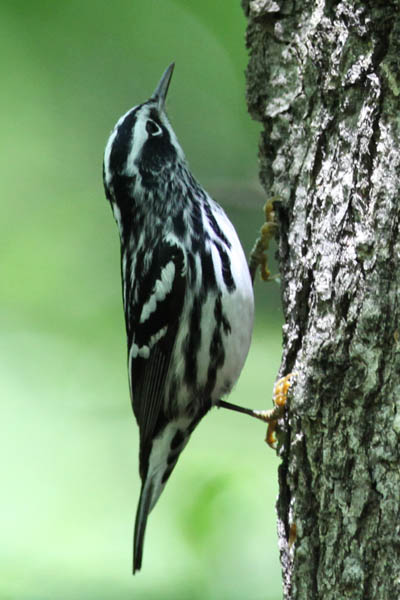
Black&White Warbler - Walt Duncan
Saturday saw me heading off to Central Park for the almost annual Sunrise Birding trip to Central Park. I have to say I love birding Central Park. It is the place that really introduced me to how great spring migration could be and it also fits in with my enjoyment of finding birds in the most unlikely of urban and suburban confines. I have posted before about how to approach birding Central Park on the blog (here). There are a few options but mainly I like to work the west side of the park and the Ramble areas. The forecast for Saturday (scattered thunderstorms and winds later in the day) was not wholly promising and I tinkered with delaying the trip, however a glimmer of hope appeared in the shape of a light southerly wind the night before the walk after a few days of northerly winds which. It was this that I hoped might bring a fresh influx of new birds in New York City.
We picked up the majority of the group at Grand Central Station off of the early Metro North train and then awaited others who decide to meet us at the park itself. Ably assisting on the day as co-leader was Catherine ‘birdspot’ Hamilton (blog here)– crack NYC birder and someone who knows the ins and outs of the parks ramble like the back of her hand. These are two key skills, as although I have visited the park a number of times, there is still the propensity to get turned around whilst wandering the warren that is the Parks Ramble area.
As we stepped into the park I quickly realized that the gamble was going to pay off. The first few trees that we encountered at the 81st Street entrance, although not as loaded as they had been on a previous visit on April 30th, were obviously hopping with recently arrived birds. A stop at a productive clump of trees quickly garnered us views of at least a half dozen warbler species, as Yellow Warbler, Black-throated Green, Black-throated Blues, Parula’s and Black and Whites jostled for position in the feeding scrum. Other highlights included a first ‘Traills’ type flycatcher of the year – if you put a gun to my head I’d have gone for Willow (almost no eye-ring) – luckily though no-one was.
We then swung past a few of the parks hot-spots. The Upper Lobe produced a nice Swainson’s Thrush, and a fairly uncooperative Lincoln’s Sparrow, as well as another mix of more common warblers. We were soon at the Belvedere Castle to pick up a few more warblers but managed to miss out on a Cape May that seemed only to return to the locust tree there whenever we weren’t in sight. After sitting out the only heavy burst of rain under the pagoda at the castle (which annoyingly seemed to drive off or at least shut up the only Tennessee I heard on the day), we were soon picking up more goodies including both male and female Rose-breasted Grosbeaks and Baltimore Orioles.
With a tip to try the point next up, we soon had our only Canada Warbler of the day amongst the usual throng of Magnolias, BT Blues and Parulas. Another treat was getting to see the Common Moorhen that was resting up in the park after having been discovered wandering on Broadway the day before – doesn’t everyone have a NYC story like that 😉 As we wandered away from the point I spotted a Bay-breasted Warbler scuttling through the canopy and people got long although somewhat distant views of the bird. Blackpolls seemed to be everywhere again – reflecting a somewhat early seeming movement for them this year – but at least one male showed particularly well here. Amongst the ever present Ovenbirds we picked up a singing Chestnut-sided Warbler in the area around Captains/Commanders Bench (anyone know the real name – I’ve seen both used recently!)
After spending a little time at the Boat House having a well earned lunch break we were back on the trail of our feathered friends adding a few nice species both to the trip list, including Blackburnian Warbler, and to many people’s year lists. By about 2:30pm most of the group had had their fill and with the wind finally picking up decisively we decided to call it a day after we had shown the group the famous Tanners Spring (number one photography site in the park). A couple of us ventured to the north end to look for a Kentucky that had been reported but almost thankfully it was a no show as I would have hated to have seen it without the whole group. A really nice day in the park with a really fun group of Sunrise Birding regulars and a few new people to my walks – I went home tired but satisfied with another great days birding in Central Park under my belt.
Trip List (67 Species)
Canada Goose, Mallard, Double-crested Cormorant, Great Egret, COMMON MOORHEN, Red-tailed Hawk, Spotted Sandpiper, Herring Gull, Rock Pigeon, Mourning Dove, Northern Flicker, Chimney Swift, Ruby-throated Hummingbird, Red-bellied Woodpecker, Downy Woodpecker, Willow Flycatcher, Great-crested Flycatcher, Warbling Vireo, Red-eyed Vireo, Blue Jay, American Crow, Barn Swallow, Tufted Titmouse, Black-capped Chickadee, White-breasted Nuthatch, House Wren, Carolina Wren, American Robin, Wood Thrush, Veery, SWAINSON’S THRUSH, Gray Catbird, European Starling, Nashville Warbler, Northern Parula, Chestnut-sided Warbler, Magnolia Warbler, Yellow-rumped Warbler, Black and White Warbler, Black-throated Blue Warbler, BLACKBURNIAN WARBLER, Black-throated Green Warbler, BAY-BREASTED WARBLER, Blackpoll Warbler, CANADA WARBLER, Ovenbird, Northern Waterthrush, Yellow Warbler, Common Yellowthroat, American Redstart, Scarlet Tanager, Eastern Towhee, LINCOLN’S SPARROW, Song Sparrow, Swamp Sparrow, White-throated Sparrow, Chipping Sparrow, Rose-breasted Grosbeak, Northern Cardinal, Indigo Bunting, Common Grackle, Red-winged Blackbird, Brown-headed Cowbird, Baltimore Oriole, House Finch, American Goldfinch, House Sparrow

Nashville Warbler - Mike Ferrari
Well it’s been a little while since I posted anything here mainly because life has been hectic what with trips to Colorado (see Dominic Mitchell’s blog entrys from the tour here), a little birding at my mini patch in NYC and a fair amount of birding in Central Park in preparation for this weekends Sunrise Birding tour. Couple that with preparations for a Sunrise Trip to NY State and North Carolina and it’s been a rather busy few weeks. Anyway I’m sure I’ll post some thoughts on all of the above in the not too distant future but for now lets update on the latest walk with Sunrise Birding.
At the weekend we popped over to Trout Brook Valley on the Weston/Easton border and spent our time looking for some early spring warbler migrants. Although predictions for a big movement this weekend were not forthcoming there was a nice selection of quality birds around but nothing in the way of large numbers. Highlights of the trip were an incessantly singing Nashville Warbler which showed down to just a few feet from the group (see Michaels picture above), it was so close it even allowed great views of the sometimes difficult to see chestnut cap. Other highlights included a few first of year birds for Connecticut including a singing Wood Thrush (does bird song get any more enchanting?), an fantastically obligingly perched Scarlet Tanager which picked the one fairly bare tree to parade from (why does everything have to be so leafed out already this year – frustrating!!!!), a brilliant male Baltimore Oriole and one of Trout Brooks breeding specialties Worm-eating Warbler. Thrown in Warbling Vireo, Blue-grey Gnatcatcher and Blue-winged Warbler and you had quite a representative mix of early May migrants but just not the large numbers that one might have hoped for.
Trout Brook Valley really is an exceptional spot in lower Fairfield County with its large size and varied habitats providing nesting sites for a large variety of neotropical migrants. It really is one of my favorite places to bird locally and although I am not going to be around for much of the rest of May I hope that others will avail themselves of this great site for some spring birding. I had helped to put together some information on the site for Frank Gallo’s book on birding in Connecticut and Rhode Island and hope that that publication sees the light of day soon. It’s a great but rather underbirded site which really deserves more attention. After all it’s not every place in the state where you might find a singing Dickcissel and a Mississippi Kite in the same day as I did one June a few years back.
Trip List (includes heard only species): Red-tailed Hawk, Belted Kingfisher, Pileated Woodpecker, Red-bellied Woodpecker, Downy Woodpecker, Hairy Woodpecker, Tufted Titmouse, Black-capped Chickadee, White-breasted Nuthatch, House Wren, Carolina Wren, Blue-gray Gnatcatcher, American Robin, Wood Thrush, Gray Catbird, Black-throated Green Warbler, Black and White Warbler, Yellow Warbler, Blue-winged Warbler, Worm-eating warbler, Nashville Warbler, Common Yellowthroat, Scarlet Tanager, Northern Cardinal, American Goldfinch, White-throated Sparrow, Chipping Sparrow, Swamp Sparrow, Song Sparrow, Common Grackle, Red-winged Blackbird, Brown-headed Cowbird, Baltimore Oriole.

Yellow-throated Warbler - Cynthia Cage
A rather quiet day early in spring passerine migration was definitely highlighted by the discovery of a Yellow-throated Warbler at Sherwood Island State Park on Sunday. After a few stops that had produced a smattering of new migrants: Pine Warbler, Ruby-crowned Kinglet and Yellow-rumped Warbler, we decided to wing it over to SISP for a quick check of the park.
Upon leaving the cars at the Pavilion Parking lot both Katie Rice and I picked up a weird song coming from one of the pines. At first the impression was something almost akin to Black and White Warbler, but it definitely was not that and after a minute or two scanning I found myself looking slap bang at a Yellow-throated Warbler. The song was not quite as usual, with no real sign of the sliding descend to the song more just a flat series of notes (but without the wheeziness of B&W) – here’s the typical song from Cornell:Yellow-throated Warbler
As Yellow-throated is probably the rarest of our regularly occurring warblers, by regular I mean I think there were two reports last year and weirdly enough one of them was found by myself and Joe Bear on a Sunrise Birding Walk which Katie was on (blast from the past report here). This was a fantastic find for Connecticut and for Sherwood Island State Park in particular, as I think it represents the first ever park record, which is pretty amazing when you consider how many species have shown up in the park over the years (see online park checklist here).
Everyone got good looks, including a couple of teenage girls who came over to see what all the excitement was about. The two girls were disappointed they had left their bins at home but the group were happy to loan them a pair or two and probably enjoyed sharing this moment with them as much as they did seeing the bird itself – the world needs more young birders after all and dare I say female ones particularly! Cynthia captured a few decent record shots of the bird that likely indicate that it was of the dominica subspecies thanks to the yellow lores (it was also hanging around a pine after all) that you can see in the link to her blog here
After a few minutes with the bird sallying out to flycatch and singing constantly it clammed up and seemed to disappear, so we wandered into the park trying to both relocate it and see what else was around. Although we added Chipping and Swamp Sparrows and a couple of Great Egrets, the show had definitely been stolen by that wandering warbler. You can find out more about the bird and its general range on the Cornell website.
Trip species list (heard and seen):
Mute Swan, Canada Goose, American Black Duck, Mallard, Double-crested Cormorant, Great Egret, Osprey, Red-tailed Hawk, Ring-billed Gull, Herring Gull, Great Black-backed Gull, Rock Dove, Mourning Dove, Northern Flicker, Downy Woodpecker, Red-bellied Woodpecker, Tree Swallow, Blue Jay, American Crow, Black-capped Chickadee, Tufted Titmouse, White-breasted Nuthatch, Carolina Wren, Ruby-crowned Kinglet, American Robin, Northern Mockingbird, European Starling, Pine Warbler, Yellow-rumped Warbler, YELLOW-THROATED WARBLER, Chipping Sparrow, Swamp Sparrow, Song Sparrow, White-throated Sparrow, Northern Cardinal, Red-winged Blackbird, Common Grackle, Brown-headed Cowbird, American Goldfinch, House Finch, House Sparrow.

Brown Thrasher - Luke Tiller
on the West Side Highway. Well almost! Out today at the mini West Side Highway park a few new additions and a couple of smart birds for the day included incredible looks at a two sub-adult Bald Eagles low heading along the Highway and then circling back south and west. It was kind of interesting to see them this early in the morning and made me wonder where on earth they had spent the night as it was cool and the sun had been up for less than half an hour. Had they stopped off on a city roof somewhere the night before? Perched in a tree along the river? Something of a mystery!
Other nice additions to the now regular loop were a Brown Thrasher, a brief sighting as it disappeared from view before the girlfriend got on it (cue one mad girlfriend – only slightly placated by the fact she spotted the eagles), an Eastern Towhee, 2 Yellow-bellied Sapsuckers and a flyover Common Loon. A cold but rewarding mornings birding – made all the better by warming coffee at Cafe Joe.
The species list thus far (38)- new birds in capitals:
Canada Goose, Brant, American Black Duck, Mallard, Gadwall, COMMON LOON, Double-crested Cormorant, Great Cormorant, BALD EAGLE, Ring-billed Gull, Herring Gull, Great Black-backed Gull, Rock Dove, Mourning Dove, Yellow-bellied Sapsucker, Northern Flicker, Eastern Phoebe, Fish Crow, Blue Jay, Ruby-crowned Kinglet, American Robin, Northern Mockingbird, BROWN THRASHER, European Starling, Pine Warbler, Palm Warbler, Eastern Towhee, Chipping Sparrow, Field Sparrow, Savannah Sparrow, Fox Sparrow, Song Sparrow, White-throated Sparrow, Dark-eyed Junco, Northern Cardinal, Red-winged Blackbird, Common Grackle, House Sparrow
 Under Clear Skies