Birding Central Park NYC

11 09 2009
Pine Warbler - Luke Tiller

Pine Warbler - Luke Tiller

It always amazes me how few birders outside of New York seem to know what a great birding spot Central Park is in NYC. Think about it you are a lonely Cape May Warbler heading to your breeding grounds in Boreal Canada, the sun is rising and you know you have to get down on the ground for the day to rest and feed up. Problem is you are over an ocean of concrete, glass and metal..but hello, there is a large green oasis coming up right ahead – New York’s Central Park.

For this reason spring (and fall) migration in the park can be absolutely superlative. Name me another spot on the east coast where you can get to see 26 species of warbler in just a few blocks as I did one may day in 2005! Who needs Point Pelee or Magee Marsh! The other thing that always amazes me is that the birds in Central Park almost always seem to be exceptionally confiding. It seems like they hit this busy city and figure there’s no way of getting away from all the people so they might as well just relax and get on with it! Ever seen a Connecticut Warbler walking on a lawn? It happens all the time in Central Park.

Birders in Central Park belie the general impression of New Yorkers as unfriendly, too busy to care types. My birding rebirth was very much encouraged by an exceptionally friendly group of birders who allowed me to tag along for the day or even volunteered to show me the ropes of birding the park and some ID pointers when I was just staring out again. A couple of them have a website or two so let me share those here and let you in on some of the delights of Central Park Warblering (David Speiser and Lloyd Spitalnik). In fact if anything Central Parks birders can err on the too friendly sometimes and you spend more of your time chatting than getting any birding done 😉

Now you’ve seen the pictures I am sure you are intrigued – no? Perhaps the most off putting thing for most birders is that they have an image of Central Park as it probably was in the late 70’s, a dark place in the heart of a dying city full of drug dealers, hustlers and junkies. None of that is true these days, it’s a perfectly pleasant place where millions of tourists, families and New Yorkers hang out and spend pleasant days getting back to nature. Now I am not claiming it is all sweetness and light but in 6 years of birding there I have never had what I would consider trouble or unpleasantness (a little qualifier later).

So now you have to work out how you are going to get to all the best spots in the park. That’s the hardest thing to work out. There are two general approaches to the park. One is to hit the North End Woods (where I must be honest I have birded many times and felt perfectly safe but perhaps as a lone female birder you may feel a little more intimidated). The woods are great for birds but they are much quieter and you do feel somewhat isolated from the rest of the park/city and potential help. The other plan is to hit the Ramble. This is essentially the central/south end of the park and is much busier with dog walkers, people strolling and on good days a large number of birders!

Probably the best site for getting information about spots to bird is Phil Jeffrey’s websites section on Central Park (here) .  Here you can even see a map of the notoriously maze like Ramble. As I said in my previous post I always end up at some point during a day in the park where I am in the ramble and am aimlessly wandering around trying to work out where exactly it is that I am. No big deal though, although mazelike, the Ramble isn’t that big and you always find yourself back at a spot you recognize (or a friendly birder you can get directions from). The second qualifier for the Ramble is that the area by ‘The Point’ particularly is a well know pick up spot for gay men and some people find it a little seedy. It takes more than that to put me off one of the parks best birding spots though, and I find a theatrical scan for birds with my bins lets the locals know that I am looking for nothing more than the throngs of birds that are often loitering there.

Ask 10 birders their favorite parts of the park or ramble and you’ll get at least 10 different answers. For me I like to start bright and early at the Maintenance Field which is an open area which is great for catching the early morning sun and the associated early morning birds. The Maintenance Field also has a set of bathrooms which might come in handy if you’ve over indulged in coffee for that early start! Then I like to have a wander through the ramble and then up towards Belvedere Castle and the path that runs behind Turtle Pond to the the Polish Statue. As the day heats up, a good spot to check (or if you are after photos) is Tanners Spring where bathing and or thirsty birds often come during the hotter parts of the day when other spots become less active. Here I have seen a wealth of uncommon birds that have been just a handful of yards from the appreciative crowds of excited birders and photographers.

There are a few books on Central Park birding and nature if you feel like reading further including Marie Winn’s Redtails in Love (about Pale Male, CP’s celebrity Red-tailed Hawk) and Central Park in the Dark. You can also read her blog (here). If birding photography is your thing then check out Cal Vornberger’s book  Birds of Central Park (website here). If it’s film you want then Pale Male documentary might be for you (youtube clip here).

So there you go as promised a little introduction to the world of Central Park birding. Hopefully see you down there at some time! Next time perhaps my favorite NYC bars, restaurants, galleries and whatnot to hit after a days birding!



Continued adventures in the Big Apple

9 09 2009
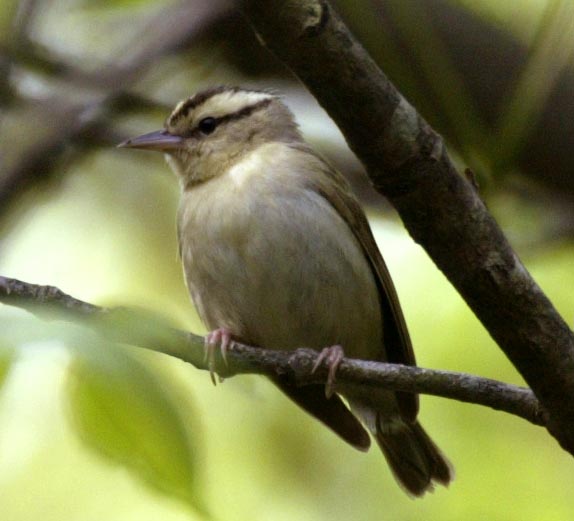
Worm-eating Warbler - Luke Tiller

Worm-eating Warbler - Luke Tiller

Went to Central Park for the day and met up with birdspot who was kind enough to let me join her for a day of ‘edgy’ birding in the Big Apple. Skipping past the usual unseemly detritus of Central Parks Ramble (condoms, used tissue paper – nice!) we were soon on a few decent birds: a couple of Black-throated Blue Warblers were stunning as ever, although a rather subtly attractive Yellow-bellied Flycatcher was probably the early highlight for me at least (somewhat more common in the park than they are in Connecticut – but isn’t everything!). Although certainly not a big day in Central Park terms we managed to unearth a total of 11 warbler species with the highlight being a Worm-eating that although nice for the park (and probably Catherine’s highlight), actually breeds in my yard (a subtle and much underrated warbler in my opinion). The place was also literally alive with Swainson’s Thrushes and Veeries as they skulked through the parks underbrush.

After a few heated discussions of Empid ID’s (ok not that heated, just using a little artistic license) and a rather unpleasant burger at The Boathouse (2 days of stomach aches later!) we stopped to discuss birding and blogging plans whilst soaking up some mud at the Maintenance Meadow. The day had turned into something of a city scorcher and it was nice to be surrounded by open space and take a while to catch our collective breath under the shady umbrella of a large oak. Amazing how far away you can feel from the hustle and bustle of the city once you lose yourself in the Ramble (not that we did get lost for a change).

Although I have been to the park many many times (in fact it was one of my regular forays birding when I first started as it was accessible by public transport and promises a much better days birding than most spots here – sorry to admit that CT birders) I always have at least a few moments in the park where I am just wondering in a vague direction and hoping to see some landmark I recognize again. None of that malarky with birdspot though, she knows where everything is (even if she’s useless at remembering the place names!!!) I have to admit that part of the romance of Central Park for me is those moments of aimless wandering – not so much lost, but rather it not mattering quite where you are (unless of course you are trying to rapidly make your way to where a good bird has been sighted in the park!)

Later I’ll actually get around to posting something useful about how to approach birding the park for those that don’t know I promise, but indulge my ramblings for now please. Anyway after a fulsome day in the park we headed down to the Lower East Side (where else could we go in mudsoaked birding clothes?) for a few beers and conversations that ranged from art, through places to go birding, to birdspots secret love of all things testosterone fueled metal – who knew (not sure my sticking the Smiths on the jukebox went down so well there then)? First port of call for me in the LES whenever I’m out with friends is Mars Bar. To my eye it’s about the only remaining dive bar still in existance in NYC (if you know others tell me) and has one of the best jukeboxes in the city. Just for a laugh I decided to look up the yelp.com posting on the place and the first review started thus: “Where do you go when you just killed a guy and simply need some time to think – maybe even get some professional advice on how to live your life on the lamb? Mars Bar for sure.”  Now if that isn’t a glowing recommendation I don’t know what is?


Tiller family birding – without yours truly!

3 09 2009

Bluethroat in hand - Stephen Tiller

Bluethroat in hand - Stephen Tiller

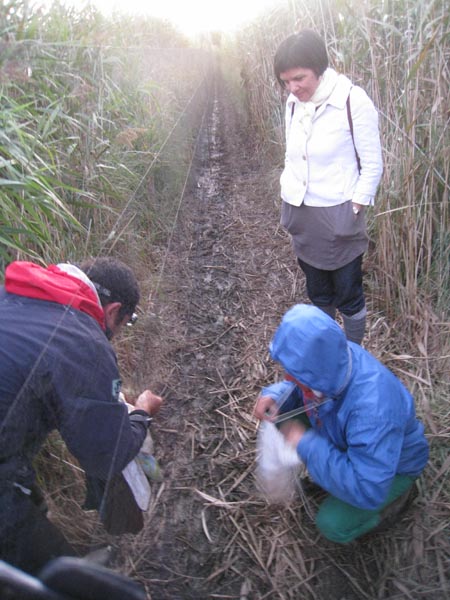
It seems my birding passion has slowly rubbed off onto the rest of my family – next stop complete world domination?! I just got a very nice email from my mum and dad who are on holiday in France and found out that they spent two of their precious days hanging round in a marsh in Northern France watching a ringing (banding) crew doing a banding study on Aquatic Warbler (a rather pretty and cryptically colored old world warbler). Aquatic Warbler are few in number on the planet and seemingly were rapidly becoming fewer due to loss of habitat. They are also quite notable in that much of their breeding population was unknown until fairly recently and equally their wintering range has only just recently been uncovered (see story from 2007 here).

The pictures are of Olivier and his assistant Fabienne. My parents report that the team had caught 40 Aquatic Warblers over the month but that they weren’t lucky enough to get to see one themselves the days they were there. They did however get to see Reed Warbler, Sedge Warbler, Cetti’s Warbler, Willow Warbler, Wryneck, Blue Throat and Pied Flycatcher. It seems like the amazing Wryneck (a bizarre looking and amazing member of the woodpecker family which can turn it’s head almost 180 degrees) somewhat stole the show as far as they were concerned. Good to see the family out birding even without my pressurizing them! Even better, I note that my mum still manages to look chic (in her white coat) even whilst trudging round a marsh in France (note the same glamorous stylings in the photo that constitutes my banner).

In similar news my brother sent me a message on facebook asking to identify the cool birds that he is seeing down in Malaysia. At this rate birding is going to be turning into a family obsession – perhaps I need to start sharpening my skills so as to stay ahead of the Tiller pack!!!!


Sherwood Island Birding Talk By Tina Green

1 09 2009

Sunrise Birding regular participant and good friend Tina Green will be giving a talk on becoming a birder at Sherwood Island Nature Center on Thursday September 3 (details here). Of course many of you will know Tina from Sherwood Island and her famous find of the first Western Meadowlark for the state, and to think I remember her first walk with Sunrise – talk about rapid development. I’m sure her talk will reflect her great passion for birding and her fun personality and I look forward to seeing a few of you there. With things exceptionally busy since my return from the Bird Fair and my participation at the Greenwich Hawkwatch as well as organising more successful Sunrise trips (Cape Cod report soon) I haven’t had much time for the blog – more regular service soon though I promise.


Freaky!!!!

17 08 2009
Cicada Escape - Luke Tiller

Cicada Escape - Luke Tiller

Cicadas sure are weird looking! Strange to think that this little thing has been hanging round in its nymphal stage for a couple of years before hatching out of its shell to annoy me with its constant droning through the hot and humid days of August. Pretty cool to see the thing popping out of its shell though. Anyway I found this rather cool time series animated gif on Wiki of one bursting out of it’s shell (here). Anyone have any idea which species it is? I am assuming it’s one of the Tibicens?


Birdspotting with Birdspot

16 08 2009
Shadow Birding - Luke Tiller

Shadow Birding - Luke Tiller

After meeting on the BwBTC meetup in July I cajoled artist extraordinaire, avian fiend, blog star and all around birding world cutie Birdspot (Catherine) to join me for a days birding at Jamaica Bay the other week. Surprisingly for someone based in hipster central Williamsburg BK she hadn’t quite made it out to Jamaica Bays renowned East Beach shorebird Mecca (some mumbled excuse about allergies). Anyway after a good but somewhat species poor trip a couple of weeks back (see her much better description of the day out there than I could ever manage) we decided to meet back up for another stroll through the filth and the fury that is a scorching hot summers day at Jamaica Bay.

Keys to birding Jamaica Bay are: 1) to have worked out the tide times and be there for high tide in the bay (which pushes shorebirds into the confines of the East Pond), 2) to not be at completely the wrong place at the wrong time. Well we managed to mess up on both counts Saturday, arriving just after low tide and happily wandering the birdless shores of West Beach whilst everyone else was enjoying killer views of Wilson’s Phalarope (my professional tours run much more smoothly than this, I swear!). No big loss for me having seen hundreds of the beggars in Colorado, Wyoming and Montana this year (trip reports online here and here) but I think Catherine might have missed out on a target bird for her aborted New York Big Year list – oops.

Jamaica Bay is really one of the best sites for shorebirds on the Northeast coast, only really being threatened for the title by the incomprable South Beach in MA (want to go?  Sunrise is going there in under two weeks!). The bonus though is that Jamaica Bay is easily doable in a day from Southern CT and South Beach most definitely isn’t! As much as reading books can help you prepare to identify birds there is nothing like spending time in the field with them. Whether it’s CT’s lack of oceanside shoreline or it’s weird east/west running coast (both regular excuses) it is hard to find the variety and numbers of shorebirds even at our best known hotspots to quickly become proficient at these tough little group of birds. Milford Point can be good, but views are often distant which doesn’t help close study and what has happened to Sandy Point is currently a mystery – there is simply nothing there this year!!!

Jamaica Bay on the other hand is the perfect spot to earn ones shorebird spurs. American Golden Plovers mix with Black-bellied, Long-billed and Short-billed Dowitchers can be seen and compared and peeps of all shapes and sizes are possible. The variety is fantastic and species that are considered uncommon in Connecticut are all to be found readily by those with a discerning eye. The species list was pretty impressive with all of the usual suspects putting on a show. Long-billed Dowitcher, Stilt Sandpipers aplenty, White-rumped, Western and Pectoral were all on show and somewhat to be expected. Compare that to my own fair state and it would have been a killer day in the field. Add to that Gull-billed and Forster’s Tern and you have a host of species that it would be tough to get on a days shoreline scouring in the Nutmeg State.

Anyway after running into some of the glitterati of NY birding and completely baking our brains in the hot sun for six or seven hours without any form of sustenance we decided to go wash off some of the funk at the visitors center and escape to New York. Another top tip for Jamaica Bay birding, is making sure you wash the stinking black sludge off of your clothes and shoes at the end of the day using the conveniently placed hose at the  left of Visitors Center building – otherwise you’re gonna be stinking like Swamp Thing for the rest of the day.

Post birding we decided to head over to Williamsburg for a quick bite, a couple of beers and some interesting conversations about life, the universe and the finer points of dowitcher identification. Strangely we seemed to know all of the same bars and restaurants in the greater New York area, which is weird! A great days birding followed by a couple of fine ales and Jameson’s (pick your poison), who can ask for anything more – although we did find the Karaoke Bar a little too late for the day to be completely perfect – maybe next time 😉


Sunrise Bird Walk – Aug 8th

11 08 2009

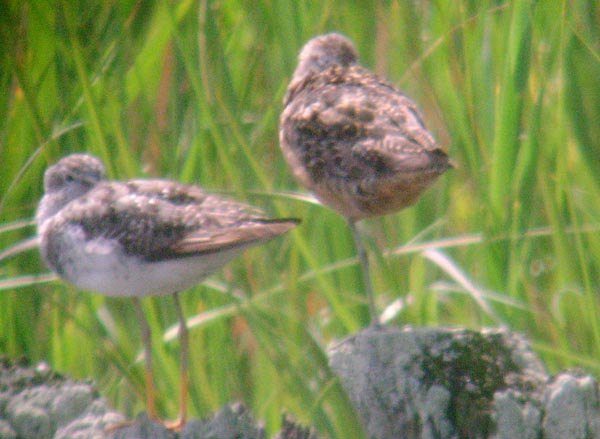
Possible Long-billed Dowitcher - Luke Tiller

Possible Long-billed Dowitcher - Luke Tiller

Spent a delightful day out in Westport on Saturday searching for shorebirds with a nice group of folks who came from as far away as Florida, not specifically for my walk I might add – my reputation hasn’t reached that far…yet. First bird of the day was almost certainly the highlight as we picked up a Wilson’s Snipe sat out on the model airplane field at Sherwood, a somewhat surprising out of place bird that is quite rare at this time of year in Connecticut.

Although there was plenty to enjoy there wasn’t much in the way of rarities and when we got to Grace Salmon it appeared that the birds this year are concentrating much of their time up near Gorham’s Island (see my birding map), which isn’t the best site for viewing the birds if they are just roosting in or around the marsh there. It also seems to be that the reported late summer in much of the arctic has lead to a somewhat delayed return migration for a lot of these birds although I did finally see a juvenile Least Sandpiper on Saturday (a first for the year).

After the walk we popped up to Milford via Stratford Marina where I took the snap of this probable Long-billed Dowitcher (noted upright stance at rest, long legged look as well as plumage). Things seemed to be heating up a little there with nice numbers of peeps and a good mix of other more common species. Highlight were three stunning Red Knots in worn breeding plumage and a couple of White-rumped Sandpipers I was pleased to pick out of the throngs. One of the Knots was banded and had a couple of colored flags on its legs. At such distance the letters on the flags weren’t visible (in fact it was hard to even decide what the colors were in the harsh light).

I’ve stumbled on a few banded shorebirds before and they have always been from the Delaware Bay, less glamorous than one might hope. Anyway if you send in a report they generally get back to you with a nice thank you email and sometimes even a spiffy little certificate. Reports can be sent here.

EDIT: Just thought I’d throw up this interesting article on Dowitcher ID. It has some helpful pointers. From a few offline comments it seems that the majority are coming down on the side of Long-billed.


Sunrise Bird Walk – TBV – Aug 1st

2 08 2009

Red Admiral - Juliet Balian

Red Admiral - Juliet Balian

Trout Brook Valley is really one of my favorite birding sites in Fairfield County. The site was saved from development 10 or so years ago now, and it really offers a fantastic opportunity to birders from spring through fall. A mix of habitats provides great birding with good migrant action in both directions and I have had a few memorable days and birds at the site.

Summer at the site can also be interesting with a good mix of interesting breeding birds including both cuckoos and Acadian Flycatchers and a nice variety of warblers. Summer highlights can also include rarities and my personal tallies have included singing Dickcissel and Mississippi Kite. Of course this year there famously was a very elusive Scissor-tailed Flycatcher.

One of the highlights at Trout Brook during the year is when the blueberries are ripe in the orchard. It seems as if the blueberry patch suddenly becomes alive with a wealth of birds as they tuck into the veritable feast. The bounty draws in large numbers of orioles, woodpeckers, waxwings, flycatchers and others looking for an easy meal.

Saturday was no exception with Baltimore Orioles of all shades hitting the berries as well as at least four Orchard Orioles, a number of Cedar Waxwings, Scarlet Tanager, Great-crested Flycatcher and five Eastern Bluebirds all perched on the same crook to name a few. Other neat sightings included a number of brilliant blue Indigo Buntings, many Field Sparrows with young, Eastern Towhees and other scrub/edge specialists such as Blue-winged Warbler and House Wren.

It was nice to see a pair of American Kestrels on site but although I hopes they bred they might just have been wandering? Another possible wanderer was a female American Redstart that just seemed to give the feel of being a migrant. Down by the farmhouse there were two young Red-shouldered Hawks showing their distinctive primary crescents in flight and we also found a Solitary Sandpiper in one of the many puddles from the recent heavy rains to add to the two flyovers early in the day. A lovely warm day and although nothing incredibly rare to be seen it’s always a heartwarming trip out there to see these birds scoffing down blueberries, we even nabbed a few ourselves!

ps – The picture is of a Red Admiral using my arm as a salt lick – never had that happen before!

Trip List Birds:

Double-crested Cormorant, Red-shouldered Hawk, American Kestrel, Wild Turkey, Killdeer, Solitary Sandpiper (3), Mourning Dove, Rock Pigeon, Ruby-throated Hummingbird, Chimney Swift,  Northern Flicker, Red-bellied Woodpecker, Downy Woodpecker, Great-crested Flycatcher, Eastern Phoebe, Barn Swallow, Tree Swallow, Northern Rough-winged Swallow, Black-capped Cickadee, Tufted Titmouse, White-breasted Nuthatch, House Wren, Eastern Bluebird, American Robin, Gray Catbird, Northern Mockingbird, Blue Jay, American Crow, Cedar Waxwing, Red-eyed Vireo, American Redstart, Blue-winged Warbler, Common Yellowthroat, Scarlet Tanager, Northern Cardinal, Eastern Towhee, Indigo Bunting, American Goldfinch, House Finch, Chipping Sparrow, Field Sparrow, Song Sparrow, Common Grackle, Red-winged Blackbird, Orchard Oriole (4+), Baltimore Oriole, Brown-headed Cowbird, European Starling.

Some Butterflies: Monarch, Common Wood Nymph, Pearl Crescent, Eastern Tiger Swallowtail, Red Admiral, Cabbage White,


Sherwood Island State Park – Photography Exhibition and Talk

29 07 2009
Wall OF Prints - Sherwood Island Nature Center

Wall OF Prints - Sherwood Island Nature Center

Many of you who live locally (or came on my last walk) will know that the new Nature Center at Sherwood Island State Park is now open. If you didn’t, and or haven’t been yet, it is well worth a perusal if only to get to see some of the stunning photos donated by local photographer (and amigo of yours truly) AJ Hand. There is more about the Nature Center here and the kind of exhibits and activities that they have there (last Saturday they were about to dissect a shark on our arrival – having just eaten I declined the opportunity to view the spectacle). AJ will be giving a presentation at 6:30pm on August 6th on the basics of bird photography at the center which is bound to be a popular event amongst local birders. I hope to see you there!

I have a couple of AJ’s pictures on my blog. If you click the AJ Hand categories tag below you can see a few of his great pictures on my posts. Also check the link to his photos from Sherwood in the links section.


Bizarre looking gull!

29 07 2009
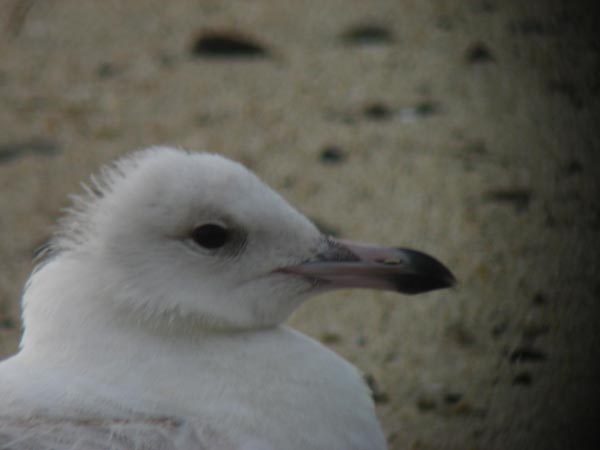
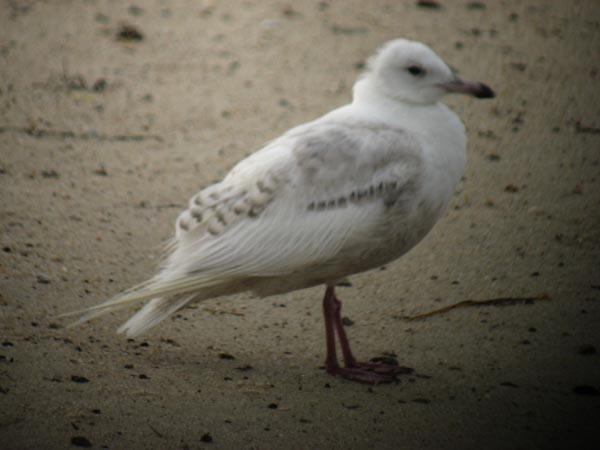
Mystery Gull - Juliet Balian

Mystery Gull - Juliet Balian

Hey gull fans here’s a few pictures for you to puzzle over. These digiscoped pictures were taken in Provincetown MA today of a gull found by Tina Green recently. This is one well and truly worn and beaten up gull (note lack of feathers on the nape and back of head.) So the bird itself seems a little less bulky in the field than a Herring gull, the deep pinkish legs, dark eye and head shape (what you can make of it) seem to point towards a possible first summer Kumlien’s Gull to my eye. Anyone else got any thoughts?

EDIT: The voting thus far seems to be two and two halves for leucistic Herring (a couple of people hedging bets?) and one and a half votes for Kumlien’s Gull. My vote for what it’s worth was that initially the previous pictures I was sent had me leaning towards a  Herring (as others pointed out the heavy feather wear is in line with leucistic feathers) but did wonder about the leg coloration and a bill and bird overall that apparently seemed smaller in the field to nearby Herrings. Perhaps noteworthy that no-one is being drawn into an online ID so I’m not naming names on how the voting went 😉 Any more thoughts appreciated. Man I hate gulls – especially ones that look like this one!!!!

EDIT 2: Nick of Shorebirder blog fame and king of rare gull finds in CT dug up some pictures from Rick Heil’s photstream from earlier in the month that has the bird tentatively ID’d as a Kumlien’s Gull (see more pics here).