Fishing for owls!

20 11 2008
Canned Owl - Chrissy Guarino

Canned Owl - Chrissy Guarino

Last Friday my friend Chrissy Guarino invited me over to New York to help her and her friend Glenn Proudfoot band Saw Whet Owls. Those of you traveled up to New York last February for the amazing Hoary Redpoll/Rough-legged Hawk/Short-eared Owl/Red-headed Woodpecker extravaganza will remember Chrissy being the local birder extraordinaire who helped us track down most of the great birds on the day (a trip hopefully to be repeated again later this winter).

Regrettably the weather was absolutely stinking on Friday evening and unfortunately the banding was cancelled. Double unfortunately is was also the last weekend that they were putting up the nets for the season. To make me feel better about missing out (or perhaps to rub it in) she sent me a video from earlier in the season of her untangling one of the little cuties from the net they use to catch them in.

Banding of migrant birds allows us to gain insight into their migratory movements, population size and trend, geographical distribution, annual breeding effort, the condition of their breeding and wintering habitats. Catching these migrant owls is an interesting process which requires setting up mist nets and then audio-luring them in with their monotonous territorial calls (basically playing a looped tape of their calls loudly and constantly with a portable stereo). Chrissy goes on to describe the process thus:

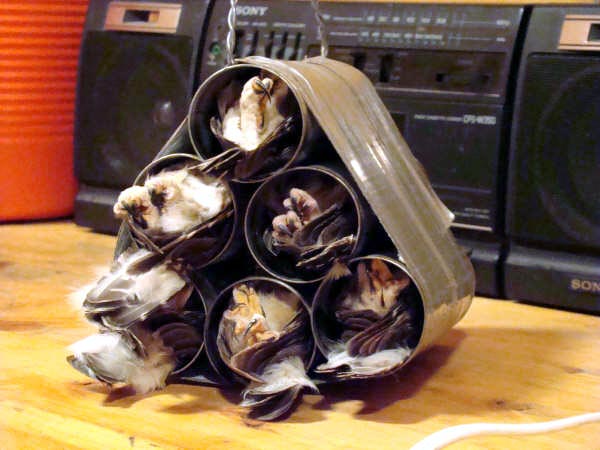
“Every 45-60 minutes the nets must be checked so the birds don’t get too tangled or too cold, and also to prevent the Barred Owls from finding them and, uh, I’d rather not say what would happen then. The tiny owls, which are SMALLER than an American Robin, are carefully untangled from the netting while keeping a firm grip on their little feet, which pack quite a formidable set of talons. The little owls are then unceremoniously stuck head first into a tube constructed of two 6-ounce tomato paste cans taped end-to-end. The cans are taped together into a pyramid with the 12 cans forming a 6-pack, with a handy carrying loop (see picture above). “What if you catch more than six,” I asked Glenn. “I stick the rest in your pockets,” replied my new best friend.

The nets are cleared of any debris and the owls are whisked into the little shed where they are measured, weighed, and basically treated as humans are when they are abducted by aliens, minus the probe. Well, except usually there is a DNA swab taken of the inside of their mouth. The birds’ molt pattern of the flight feathers is recorded, a few wing measurements are taken, a few feathers are donated to science, and the owls are again unceremoniously stuck head first into a tomato paste can to be weighed. The little owls patiently put up with this somewhat inconvenient treatment, occasionally snapping their bills to remind you who is boss, receive their new metal leg bands with dignity, and are ready to be released.”

Hopefully next year I’ll finally get over to see this process for myself. I guess it’s always good to have something to look forward to although I must admit I am not very good with delayed gratification. Oh well patience is a virtue as they say. You can find out more about Saw-whet and other US owls at this fantastic website.

Starling Ballet

18 11 2008

On Sundays walk we were ‘treated’ to the sight of a number of European Starling flocks over I95 and along the coast in Westport. As an invasive species Starlings are not much loved in the US, however their formation flying is really something to behold. Here is a link to video of Starlings back on their home turf, so you can enjoy them without ‘political’ considerations. Just amazing.


Next Walk – Correction

17 11 2008

Hi All,

The next Sunrise Bird Walk will be on SUNDAY 23rd NOVEMBER not Saturday as it says on the website. Unfortunately with Gina away on tour I can’t access the Sunrise Website to correct this. Thanks to everyone who spotted the error.

Luke


Possible “western” White-crowned Sparrow – Sherwood Island 11/16/08

17 11 2008

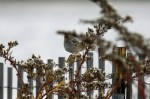
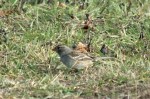
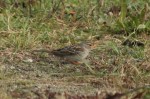
As promised here are the pictures of the possible “western” White-crowned Sparrow as photographed by Michael Ferrari. As noted in the field: pale lores, grayer overall tones, yellow/orange bill. The apparent slighter build/smaller size feel that I had is not so evident in the pictures so maybe I just imagined that?


Cave Swallow Connection

17 11 2008

Snow Bunting - Walt Duncan

Snow Bunting - Walt Duncan

The Sunrise Walk

Dame Fortune smiled on this weeks Sunrise Birding Trip again (forthcoming trips here). My plan was to have a northwesterly wind and try and pick up some migrants overhead including some much sought after Cave Swallows. With Saturday being pretty much a washout and westerly winds predicted Sunday I decided to  postpone the walk and boy did that ever pay off.

We started Sunday at Compo Beach in Westport and quickly started to rack up a few birds although I was somewhat disappointed to find that the usual bunting, lark, longspur stop was devoid of birds. Out on the sound I had one interesting looking loon which was disappointingly just too far away to make any definitive ID on although with the wind blowing up a storm it would have almost have to have been sat on the beach to have felt comfortable to call it anything other than a regular Common Loon.

As we scanned the sound I turned to check on a couple of members of the group who were arriving late and quickly spotted some pale throated swallows screaming over the lot towards us. As they dashed past I spotted the pale rumps and there we had our first Cave Swallows of the day, they were not to be the last. As we scanned the bay we started to pick up a rather large flock of swallows out over the water and through the bins and later with the scope I managed to ascertain this was another group of Cave Swallows. A nice collection of Caves but the looks for most of the group were far from definitive.

In the hope that the Swallows might be a little more co-operative there we hot-footed it over to Sherwood Island to try and get some better views of our quarry, again we were getting to see good numbers of swallows but they always seemed to be in the part of the park that we were not. After much amusing to-ing and fro-ing up and down east beach, the ‘goddess of birding’ eventually relented and we finally had great views of a number of swallows as they hunted the dunes and the east beach parking lot.

There was quite a nice accompanying cast of birds at Sherwood to keep us entertained while we tried to pin down the swallows. Highlights included a nice male Kestrel (perched in the east beach parking lot which allowed for amazing scoped views), 3 Black Vultures soaring over the park and then meandering west in great light, 50+ Snow Buntings – including a small flock that posed perfectly for pictures (see documentary proof from Walt Duncan above). All this time there were plenty of birds streaming overhead making their way south and westward including a half dozen American Pipits, an assortment of blackbirds, Cedar Waxwings, and some very large flocks of uncooperative finches which steadfastly refused to call.

Highlight of this westerly flow of passerines was the one western vagrant we found on the deck today in the shape of a probable immature “western” subspecies of White-crowned Sparrow. The “western” subspecies of White-crowned Sparrow have bills that range from bright yellow in nuttalli to what I have often heard termed ‘candy corn’ colored in gambelii. This bird seemed to have a fairly yellow/orange bill, and also was much grayer looking than your average eastern White-crowned to my eye. It also seemed a little slighter and smaller than your average White-crowned but it was hard to judges this with little to directly compare it to. Anyway if it is what I think it is it’s proof that there are probably more western vagrants to be uncovered out there somewhere in Connecticut. Interestingly I found and later one of my walk participants photographed the first documented record of Gambel’s White-crowned Sparrow here in Connecticut at Allen’s Meadows last year (local paper article here).

Trip List:

Common Loon, Red-throated Loon, Northern Gannet, Double-Crested Cormorant, Great Cormorant, Great Blue Heron, Mute Swan, Canada Goose, Brant, American Black Duck, Mallard, Gadwall, Bufflehead, Turkey Vulture, Black Vulture, Coopers Hawk, Northern Harrier, Osprey, Red-tailed Hawk, American Kestrel, Killdeer, Greater Yellowlegs, Ring-billed Gull, Herring Gull, Great Black-backed Gull, Rock Pigeon, Mourning Dove, Monk Parakeet, Belted Kingfisher, Northern Flicker, Downy Woodpecker, Blue Jay, Fish Crow, American Crow, Cave Swallow (30+), Black-capped Chickadee, Tufted Titmouse, White-breasted Nuthatch, Carolina Wren, Golden-crowned Kinglet, Eastern Bluebird, American Robin, Northern Mockingbird, American Pipit, Cedar Waxwing, European Starling, Yellow-rumped Warbler, Northern Cardinal, Field Sparrow, Song Sparrow, Swamp Sparrow, White-crowned Sparrow (plus possible “western” subspecies), White-throated Sparrow, Dark-eyed Junco, Snow Bunting, Red-winged Blackbird, Brown-headed Cowbird, Common Grackle, House Sparrow, American Goldfinch, House Finch.

More on Cave Swallows

There are two distinct populations of Cave Swallows in the US, one in Florida which is of a Caribbean subspecies and one from the Southwest – range map here. It has been suggested that these may in fact even be two separate species of birds and they are at least readily identifiable in the field and well illustrated in Sibleys and Nat Geo. About 20 years ago it was discovered that in late fall that these Cave Swallows were showing up on the east coast in Cape May. It seems incongruous when you look at the map to imagine that these birds would show up in Connecticut but as the pattern of their dispersal from breeding grounds up into the great lakes region and then west and down the east coast became better understood more and more seem to be regularly found by birders actively targeting this species in early through mid-November. There have been a couple of great posts about the history of Cave Swallows and their patterns of vagrancy on the Ohio listserve – here and here.


You have to start somewhere…

5 11 2008
snowy_owl_bf2

Snowy Owl - Walt Duncan

After a lovely but all too short break back in London, where my parents insisted that I start this blog, I arrived back in the US just in time to start my winter walks for Sunrise Birding.

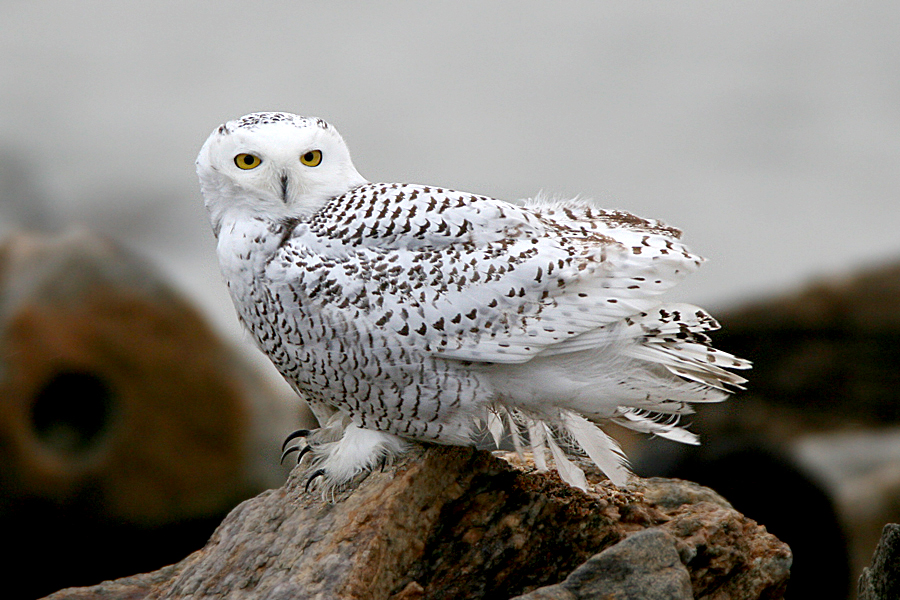
It was really great to be back in the USA and to catch up with everyone again after a couple of weeks off. The walks are at the point now where it just feels like a load of good friends meeting up for a weekend excursion. Of course as leader the pressure is always on to find something exciting on the day. This weekend however, thanks to my fortuitous selection of Norwalk as the spot to hit, I knew that there would be a magnificent Snowy Owl at Calf Pasture Beach awaiting us. The bird couldn’t have been much more accommodating if it had tried, perched as it was just a few feet away on one of the jettys that surround the pier.

On the day we discussed the age and sex of the bird and my current understanding is that though generalities can be made on assigning gender to Snowy Owls in the field that it is a little more complicated than just heavily barred = female, lightly barred = male. There is an interesting Cornell page on the topic which can be seen here: http://www.birds.cornell.edu/crows/snowy.htm Here you can see that immature males are not always so easily separated from females in the field. The key features to look for seem to be the amount of barring on the nape and tail as well as the appearance and size of a pale ‘bib’.

Post walk Walt Duncan one of the walk participants sent me the above picture. What a cracker of a bird and what a great capture by Walt. It is easy to see why this stunning and charismatic arctic bird is probably one of the most sought after species by birders (and Harry Potter fans) across the globe.

Hard to really trump that special bird but it was fun to scan through the flocks of passerines looking for something else of note. Also nice to find a good selection of ducks starting to congregate at 14 Acre Pond.  14 Acre Pond is a great place for ducks in fall and winter and is always on my list of stops when I am in the neighborhood (see my Fairfield County Birding Map in the links).

Complete Trip List: Red-throated Loon, Common Loon, Great Cormorant, Great Blue Heron, Snowy Egret, Mute Swan, Canada Goose, Brant, American Black Duck, Gadwall, Mallard, Northern Pintail, Wood Duck, Green-winged Teal, Bufflehead, Red-breasted Merganser, Turkey Vulture, Falcon sp (probable Merlin), Wild Turkey, Killdeer, Greater Yellowlegs, Herring Gull, Ring-billed Gull, Great Black-backed Gull, Mourning Dove, Rock Pigeon, Monk Parakeet, Snowy Owl, Belted Kingfisher, Northern Flicker, Red-bellied Woodpecker, Downy Woodpecker, Black-capped Chickadee, Tufted Titmouse, Carolina Wren, Ruby-crowned Kinglet, American Robin, Hermit Thrush, Blue Jay, Fish Crow, American Crow, Cedar Waxwing, Yellow-rumped Warbler, Northern Cardinal, American Goldfinch, House Finch, Purple Finch, White-throated Sparrow, Swamp Sparrow, Song Sparrow, Dark-eyed Junco, European Starling, Brown-headed Cowbird, House Sparrow