New Bird to science – News from Birdlife International

12 03 2009
White-eyes - Birdlife International

White-eyes - Birdlife International

There has been a new bird to science discovered on the Soloman Islands. The Vanikoro White-eye. As with the Galapagos (where I was lucky enough to travel last year with Sunrise) the Soloman archipelago has a host of bird species that have evolved  (in this case from white-eyes, in the Galapagos from finches) to fill niches that might otherwise be filled by competitors. You can read much more on this exciting find on the Birdlife International website (here).  From the report it appears that white-eyes seem to evolve particularly rapidly to create new species which probably partially explains the numbers of seperate species to be found on the Solomans. Pretty cool.


Sunrise Bird Walk – March 8th

9 03 2009
Northern Pintail - Lionel Stringer

Northern Pintail - Lionel Stringer

Spring has finally sprung in Connecticut, although it’s been more of a trickle thus far than anything resembling a spring. Last weekend I lead a tour around Fairfield County and we were all pretty happy with a productive day (maybe less happy with the hour change and the early start!). Highlights of the tour were 6 Wilson’s Snipe, including one sat out very nicely on the airfields at Sherwood Island and a group of six which went skittering away with their usual raucous croaks from the ditch alongside the fields. We got into a quick discussion on how to separate Common Snipe (the very closely related Eurasian species) from Wilson’s Snipe (our one) probably the best article I could find online to reinforce this difficult identification process was this article on identification of a Wilson’s Snipe in France which gives some clues on what the differences are (many are somewhat qualitative). From our side of the pond check Martin Reid’s section on Snipe ID on his website.

Other highlights included a regular Lesser Black-backed Gull (which we did a little impromptu ‘workshopping’ on as its telltale yellow legs were firmly tucked beneath this lounging bird), a cracking adult male American Kestrel and a flock of 4 Northern Pintail. Pintails has always been a favorite duck of mine so it’s sad to read how badly they are doing in the US (although this particular year in CT thee have been a good number of them showing up even in decent sized flocks (proof that localized observations aren’t that helpful when trying to give context to bird populations).  I note that Ducks Unlimited even have a specific initiative targeting this bird (here), my wife asked if this included not shooting them.In all seriousness though the hunting fraternity here in the US plays a massive role in protecting important habitat that support waterfowl, and as a byproduct any number of other species. Birders are often encouraged to buy duck stamps in order to support land preservation (details here). I do however wonder whether the introduction of a similar ‘Birders Stamp’ might let us gauge the support that birders provide to this preservation process.

Apart from that there appeared to be a few hirundines flying way off inland that I scoped from parking lot but couldn’t be certain of ID they were so many miles away, almost certainly Tree Swallow though. A beautiful day that certainly got me thinking about spring for sure though. Not long now until we have singing warblers and all those goodies streaming back to join us. I spoke to my friend EJ in Louisiana and he is already starting to see stuff that’s on the move. Making me look forward more and more to my first big spring trip in May over to NY State (details here – just a few spaces left). Post walk we went to the unbeatable Blue Bird Cafe in Easton (perhaps I need to update my local birding map with my favorite diners!). From there I was kidnapped and taken to go find the Cackling Goose that Charlie Barnard ad spotted at Trap Falls reservoir. I relocated it on the far side of the reservoir and although views were distant one could make out the stubby bill and the very boxlike head of the Richardson’s subspecies. Steep forehead, almost flat top to the head. The bird was generally very light and the upperparts silvery but one has to be careful reading too much into this due to the harsh light (Cackling Goose ID Tips). Nice bird though and probably a good addition to the boys Stratford Big Year. A great day out with a nice group of birders and 60 degree temperatures- can’t complain about that in March!

Trip Species List:

Horned Grebe, Common Loon, Red-throated Loon, Mute Swan, Canada Goose, CACKLING GOOSE (with some of group at Trap Falls), Brant, Mallard, American Black Duck, American Wigeon, Gadwall, Green-winged Teal (TF), NORTHERN PINTAIL, Ring-necked Duck, Bufflehead, Ruddy Duck (TF), Hooded Merganser, Red-breasted Merganser, Common Merganser, Long-tailed Duck, Turkey Vulture, Red-tailed Hawk, AMERICAN KESTREL, Killdeer, Ruddy Turnstone, WILSON’S SNIPE, Wild Turkey, Herring Gull, Great Black-backed Gull, Ring-billed Gull, LESSER BLACK-BACKED GULL, Rock Pigeon, Mourning Dove, Downy Woodpecker, Black-capped Chickadee, Tufted Titmouse, American Robin, Blue Jay, Fish Crow, American Crow, Yellow-rumped Warbler, White-throated Sparrow, Song Sparrow, Common  Grackle, Red-winged Blackbird, Brown-headed Cowbird, American Goldfinch, European Starling, House Sparrow


Pretty quiet – well bird wise at least!

6 03 2009
Blurry Chickadee in Hand - Toni Tiller

Blurry Chickadee in Hand - Toni Tiller

Well this week has been a pretty quiet one for me on the blog and out in the field wise. Just had too much to do working out the details of a whole load of exciting trips for the next year amongst other things. Apart from popping out into the yard to fill the feeders there hasn’t been any chance to do any birding. I still have Pine Siskins around of course, probably 20 or 30 of the little cuties. It really has been the year of the Siskin with unbelievable numbers of them showing up at the hawk watches earlier in the season including days at Lighthouse Point with 2000+ birds. If you haven’t ever looked at Hawk Count it’s a great website with daily updates when watches are in progress and lots of interesting data in monthly and yearly summaries, how to get to the sites etc etc (see here).

Interesting to note that although there was a heavy fall movement there were only a couple of Christmas Bird Counts where Pine Siskins put in a significant appearance in Connecticut (see data here) however by January they seemed to be everywhere again. Recently on Massbird there was a post saying that we should be looking for these birds showing signs of breeding. Apparently in these irruption years they often hang on to breed (fairly early in the year) further south than they would regularly be occurring. This made me hazily recall having Pine Siskins hanging around the SoNo Reservoir’s pine stands in late May or early June one year and I remembered wondering about possible breeding. Just a reminder  that one needs to make better notes on stuff like this as I can’t for the life of me remember the right year let alone the exact month.

It has been interesting to keep track of the Pine Siskins this year and two things I have particularly noted are, the amazing variation in individual birds and the change in the vocalizations throughout the winter. Obviously with plumage some is influenced by the age and sex of the birds but the heaviness of streaking seems to be highly variable, with birds that look almost black-breasted, so dense are the streaks, to birds with just a couple of light diffuse streaks on the upper breast and flanks. This variation also seems to show up in other ways and there has been note of rare ‘green morph’ birds on CTbirds. The Stokes blog has some great pictures of a green morph (here) but I have noted that there is a deal of variation in the mantle colors of individual Siskins with many that seem to show a green back (although I have not seen one that shows such a deep yellow wash on the underside as in this picture.)

As far as their vocalizations, at first I was mainly picking these birds up in flight in fall through their simple flight calls, the ‘kleeyu’ call being particularly helpful as an ID until you got used to the difference in tonality with Goldfinch. These simple flight calls appeared to dominate vocalizations for most of the winter. However, by mid to late February I started to note that their calls seemed to be becoming much more complex around the feeders with some definite ‘singing’ going on. Today was different though and was the first time I spotted one doing one of those goldfinch-like  display flights in which they fly in loops around and around a little area (this time my yard) singing as they go – a pretty cool little exhibition. Anyway this year I’ll keep my eye’s open for more possible breeding behavior (carrying nest material, food carrying etc) and make sure to keep proper notes on it this time. I have made a little vow to make sure I stick all of these sightings on eBird as well from now on (eBird).

Just for fun today, as the feeders were empty this morning, I decided to see if I could lure some Chickadees down for a spot of hand feeding and for the first time in my life it actually worked! Pretty neat to have these little birds come land on your hand to grab a sunflower. I wondered if it was just because they were used to me filling the feeder that they trusted me enough to come in to land (I assume it was different birds some times although it might just have been the one hungry/brave one) but I quickly dispelled that idea by letting my wife have a go (which she did successfully).  Anyway, a cool little experience  feeling those little chickadee feet gripping your fingers as they grab a snack (talk about getting in ‘touch’ with nature). A couple of times they just sat there fairly nonchalantly for a while before moving on to crack open the seed. My wife took the above photo – not very good I’m afraid – I’m sure we’ll try again tomorrow.

Give it a go if you haven’t tried it before. To me, as a novice at this, the key seems to be a) have empty feeders – I doubt they’ll come to you if safer options seem available b) stand close to a safe perch that they can tee up on while they decide whether to come check out the food c) don’t look directly at the birds as they come in – this seems to scare them d) prepare for tired arms – it seems to work best if you hold your hand flat out so they can see the seed and you’ll need to hold your arm outstretched well away from your body. There are a few sites on the web that have suggestions of how to take a more systematic approach to this (here’s one) but I personally am not very good with delayed gratification so I was pleased it worked straight off .


Sunrise Bird Walk – Norwalk Feb 28

28 02 2009
Saw-whet Owl - AJ Hand

Saw-whet Owl - AJ Hand

An enjoyable mornings ‘work’ in Norwalk with some of the regular gang. Nothing majorly exciting  on the day but it always seems to be a fun morning out. Amongst a wealth of ducks, a couple of LESSER SCAUP were a bonus in Norwalk Harbor.

We had a few more cool ducks on the day and I assume there must be some staging up going on pre-migration, as the harbor in Norwalk was packed with Bufflehead.  Over on 14 Acre Pond we had great looks at a few Green-winged Teal and a rather novel (for the site) Common Merganser sitting on this shallow little pool.

Probably the highlight of the walk though was a Pileated Woodpecker over in Weston that put on quite the show for us as it flew in and proceeded to drum on an obviously favored dead branch for some minutes in absolutely perfect light, just a few feet away from us (see Mike’s photo below). It was either that or the glimpses we had of a nesting Great Horned Owl that we came upon.

To round off the walk we stopped for lunch at the rather fantastic SoNo Bakery for sandwiches, soups and cakes. It’s always a nightmare to get a seat in there but the food is well worth the wait.

Pileated Woodpecker - Michael Ferrari

Pileated Woodpecker - Michael Ferrari

Post walk I took Tina’s offer of a ride up to Watertown to see the Northern Shrike that Greg Hanisek found. This was a particularly handsome adult bird and although we had to wait a while for the bird to put in an appearance, there was plenty to enjoy while we waited including an adult Bald Eagle, a few calling Pheasant and some newly arrived? Killdeer.

I have to say shrikes in general are high up on my list of favorite bird species. I also love those northern boreal birds  as they just seem so romantic, so it’s always cool to see a Northern Shrike as it combines both elements. It was a life bird for Tina and a year bird for me so there were high fives all around. It seems like they have been particularly thin on the ground this season after last winters irruption so it was cool to get one in the bag.

After the Northern Shrike, we were all set to head home when we decided on a whim to swing by Westport and just see what was around. We managed to find one of the Eurasian Wigeons down on the Sherwood Island Mill Pond, (Frank Mantlik had reported two earlier in the week) in amongst a raft of 100 or so Gadwall and American Wigeon. Another quick stop produced probably the highlight bird of the day and a most unexpected surprise, a Saw-whet Owl!

Last year I had convinced myself that I had become gods gift at finding these super cool little owls but this winter I had completely struck out thus far. Owl finding is a great leveler in that no matter how good you think you are getting at finding them, it is never easy and always seems to need a little luck. This one was a case of looking in just the right spot,  following the white-wash trail and there it was. A quick call to my friend AJ Hand produced the stunning photo above.

A neat bird and a real thrill to find. Plenty of discussion on owls on the CTBirding list but in keeping with the current rules there are no details on the location. Today though was proof positive though that there is nothing better than the thrill of stumbling on your own owl discovery, spinetingling!

Trip Species List: Horned Grebe, Red-throated Loon, Mute Swan, Canada Goose, Brant, American Black Duck, American Wigeon, Gadwall, Green-winged Teal, Mallard, LESSER SCAUP, Ring-necked Duck, Hooded Merganser, Red-breasted Merganser, Common Merganser, Long-tailed Duck, Turkey Vulture, Red-tailed Hawk, Herring Gull, Great Black-backed Gull, Ring-billed Gull, Rock Pigeon, Mourning Dove, GREAT-HORNED OWL, Downy Woodpecker, Hairy Woodpecker, PILEATED WOODPECKER, Black-capped Chickadee, Tufted Titmouse, American Robin, Blue Jay, Fish Crow, American Crow, White-throated Sparrow, Song Sparrow, Common  Grackle, Red-winged Blackbird, European Starling, House Sparrow


No More Sharp-taileds…

26 02 2009

At least in the name. It seems like the American Ornithologists’ Union has decided to remove the Sharp-tailed portion of both the Nelson’s and Saltmarsh Sparrows names. The plus side is that when you are drawing someones attention to a sparrow hopping around in some coastal grasses it doesn’t take 5 minutes to get the name out of your mouth. The downside: the ability to call out  Sharp-tailed Sparrow and give yourself the extra few seconds to clinch the ID of the bird before having to plump for Saltmarsh or Nelson’s.

In the same committee vote, those hoping to get a few ‘armchair ticks’ from the possible split of Savannah Sparrow into four separate species are going to be disappointed. It seems likely that we are going to see a few new species come out of the split of Savannah Sparrow, but I guess there is still some work to be done yet. More details on the proposal committee votes ( here)

There is an interesting thread on this topic right now on birdforum pointing out the particularly amusing situation whereby we have the AOU deciding to use the name Little Plover (instead of Little Ringed Plover) for Charadrius dubius apparently to keep in line with ‘the Brits’ (see comments) especially as the British Ornithologists’ Union decided to drop that name change and return to Little RingedPlover! Confusing these bird names! More stuff for Greg to discuss at the COA Annual General Meeting in March I guess! (details here).


More interesting bird pictures – Greylag Goose

25 02 2009

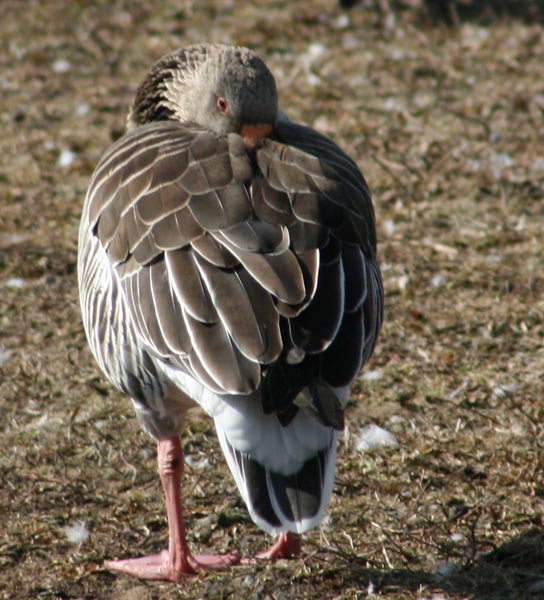
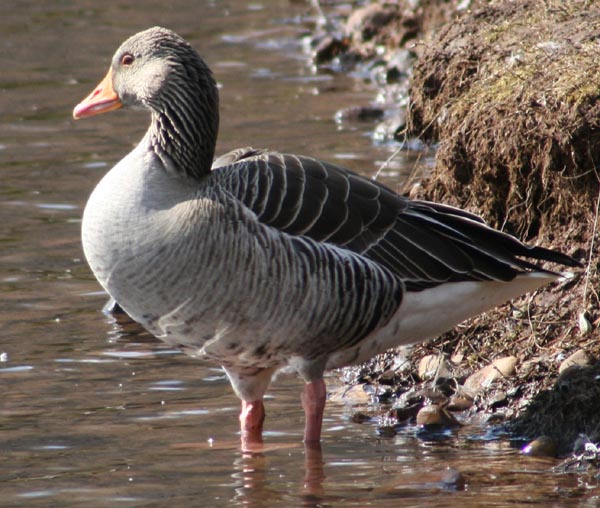
Just thought I’d stick up the pictures of the Greylag Goose as found by Greg Hanisek that Bill Banks kindly sent me so that people can have a look at the bird in question. You can read some discussion on the bird (here). Obviously not going to comment much on the bird itself (not my place) apart from to say that it’s all intact and not showing the revoltingly bloated look of your average farmyard domestic Greylag.

Waterfowl are a real quandary which is the reason I guess the ARCC (latest report here – which includes a couple of birds I had a hand in finding) came up with the ‘origin uncertain’ tag on their recent reports (back in the UK they generally tend to reject rare waterfowl reports unless there is some really strong evidence otherwise to assume the bird is of wild origin). You should have a look how long it took to get Hooded Merganser accepted onto the British List (here) it might help when reading the article to have some idea of how the category system work in the UK (here).


Possible Thayer’s Gull @ Windsor Landfill – Patrick Comins

23 02 2009

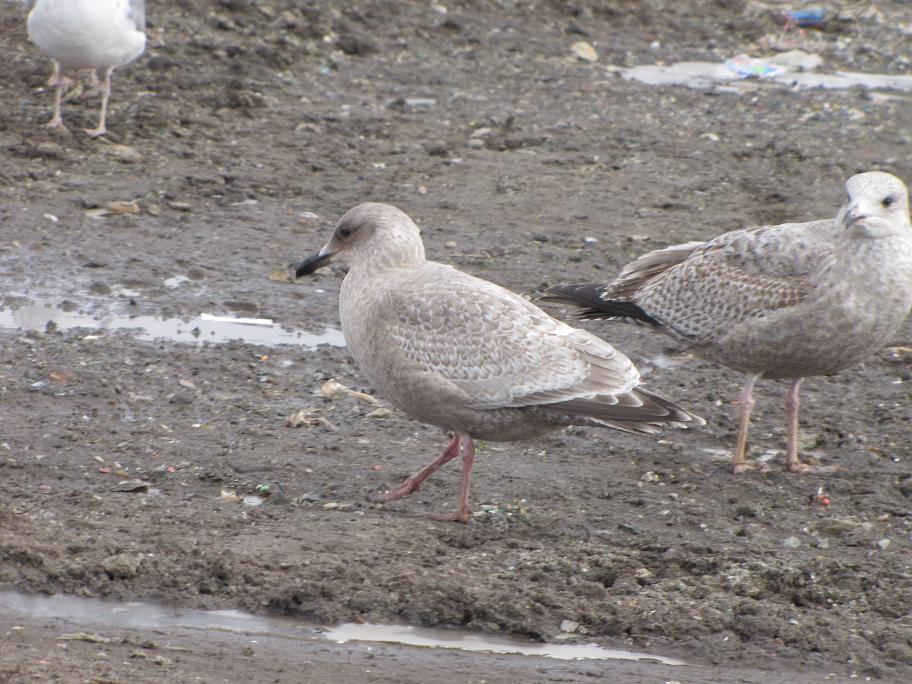
Patrick Comins found this possible Thayer’s Gull up at Windsor Landfill. Just putting these photos up for him for so that CTbirding listserve members can have a perusal of them. The pictures look pretty promising for Thayer’s to me, but I am basing this more on booksmarts than field experience with this particular species. I’m sure Patrick would be happy to see any informed feedback. Below are Patrick’s initial postings on the bird from the Connecticut Listserve:

Feb 20

I have some decent photos if anyone would like to have a look. I’d say Iceland
is pretty much ruled out but there is thoughts that it might be a recessive
form of a hybrid HerringXGlaucous since the bird isn’t especially small. It
appeared to be smaller than the surrounding Herring Gulls in the field, but
certainly not appreciably smaller. Some features that aren’t typical of
HerringXGlaucous include a nearly all black bill and a smudgy hooded appearance
around the eye, much like a Thayer’s. I have had some funky Thayer’s-like Gulls
in the past so I am always a little hesitant to make that call. In any case,
maybe I can get the shots posted online somewhere or I’d be happy to email a
bunch if anyone wants to venture an opinion.

I also caught a brief look at an adult or near adult black-backed gull with
marked head streaking, and pink legs, but it was a very brief look and I’d only
put it in the ‘something to keep your eyes open for’ category.

Feb 23

For anyone who might be considering going up to the Windsor Landfill trying to
add Thayer’s to their CT list, the ID pendulum seems to be swinging back
towards Thayer’s for the bird found on Friday. A hybrid HerringXGlaucous just
doesn’t make sense to me for a bird with a bill that is blacker and with more
extensive black than a typical smithsonianus at this time of year. There is
some fading at the base of the lower mandible, but otherwise very black. In
addition, while the bird is larger than the Thayer’s that have been
photographed in CT, it is still smaller than your average Herring Gull and well
within the range of variation I think (there is overlap in size between the two
species). Bill structure also looks better for Thayer’s than Herring or
Glaucous or in between the two. The open wing pattern looks pretty good to me
for Thayer’s and atypical of ‘Nelson’s’. If anything, perhaps the bird is a
hybrid HerringXThayer’s, but that combination is unrecorded as far as I know.

Another Thayer’s feature is the uniform color and lack of blotchiness on the
breast and back, those diffuse streaks on the neck and fine pattern of
streaking on the crown, all of which say Thayer’s to me. The black face mask is
also good for Thayer’s, but not Glaucous nor Herring and the retained juv Scaps
would also fit Thayer’s. Legs are also deeper pink than most smith, another
Thayer’s feature. One feature that was troubling me was the relatively short
primary projection, but after looking at many photos of Thayer’s Gulls I think
it is fine. Birds with longer primaries are sometimes thrown into the dark
Iceland Gull bucket, so maybe it is even good. At least we know this bird isn’t
an Iceland Gull.

I am hoping to find a way to post some of the photos so we can get some input
from the west coast, but for now the bird is still worth chasing down if you
want a Thayer’s for CT. While I wouldn’t be totally stunned if this bird isn’t
a Thayer’s and I am still open to good arguments as to why it might not be, I
would be surprised. It is certainly an interesting bird in any case.


Save The Albatross – good news coming?

22 02 2009
Black-browed Albatross

Black-browed Albatross

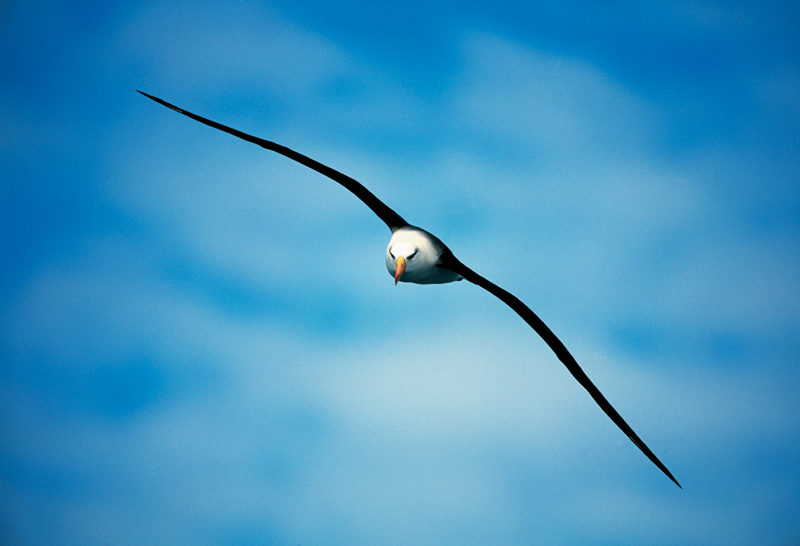
I note that the Independent Newspaper in the UK is saying that the Birdlife International Albatross Task Force seems to have had some considerable success with the methods that they have been piloting in the southern hemisphere to prevent albatross ‘bycatch’ during longline fishing. It seems like full findings will be presented at an event this evening. For details of the story visit the newspaper (here) or check the Save the Albatross Campaign website (here).


What’s new in Connecticut?

22 02 2009

Annette Cunniffe - LE Owl

Annette Cunniffe - LE Owl

With spring migration noticeably underway for blackbirds (a half million plus of them being noted in the center of the state this week in one giant flock) I thought I might start to make some weekly notes on what might be showing up locally in the form of either migrants or rarities during spring migration. The last week of February and leading into March spring migration is only just underway so the only real signs of northbound movement tends to be blackbirds in the shape of Red-winged Blackbirds, Common Grackles and Brown-headed Cowbirds. As the month draws to a close we might even get to see the first few Tree Swallows winging their way north but it’s still very slow on the migration front although of course there is still the chance of something being found heading in the other direction with Bohemian Waxwings seemingly often arriving in the state in February (on the odd occassion that they do arrive!)

On the topic of rarities here are some possibilities of rarities that have a history of showing late in February in Connecticut: Tufted Duck, American White Pelican, Thayers Gull (as evidenced this year up in Windsor), Tundra Swan and Western Tanager. Extralimital sightings over the last couple of years locally have included such goodies as Ivory Gull (Piermont Pier NY), Scott’s Oriole (PA) and Smith’s Longspur (Jones Beach NY). So like the owl in the above picture my friend Annette sent me keep your eyes peeled for interesting late February birds.


Warmer winters = more birds

22 02 2009

National Audubon has released a report saying that almost 60% of 305 species that overwinter in North America have shown a significant shift northwards in their use of wintering sites.  This seems to show a fairly direct correlation to long-term winter temperature increases. Have a look at the report (here) Must say that I wish this winter could have been a little warmer!!!!