Blue Grosbeak vs Chinese Mantis

18 10 2012

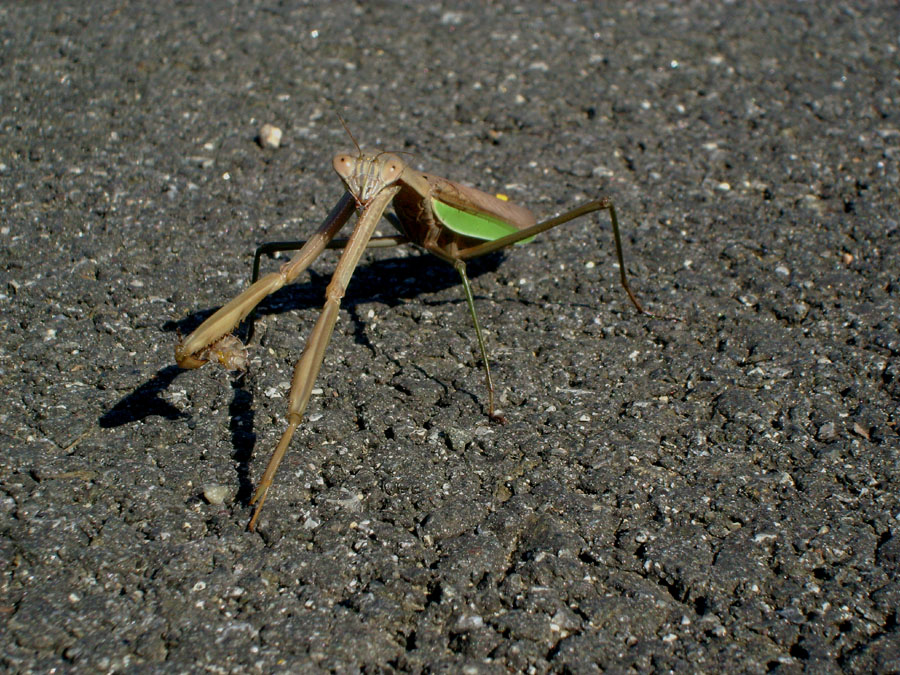
Chinese Mantis – Luke Tiller

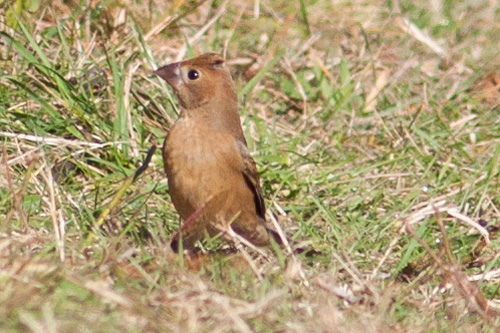
A nice start to the day when Catherine Hamilton and I picked up the distinctive metallic chip of a Blue Grosbeak out in the field here at Quaker Ridge Hawkwatch. After spending a while  tracking the bird down, to get at least a couple of record shots, we finally found it hanging out on a grass stem at the edge of the main path.

Blue Grosbeak – Catherine Hamilton

As we were watching the bird, a Chinese Mantis flew in near to the bird and landed on the ground. The mantis is an introduced species used here for pest control, although in my experience here they seem happiest munching honey bees as they are any particular pest species.

Blue Grosbeak – Catherine Hamilton

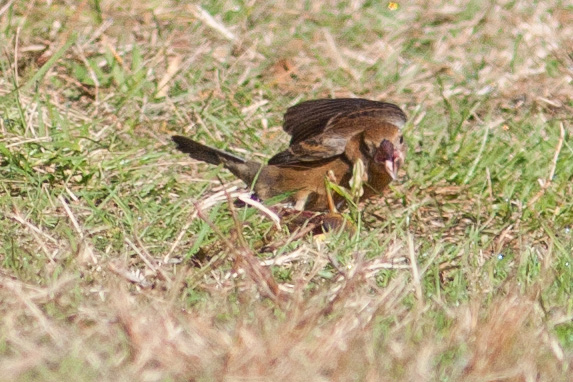
The grosbeak seemed to size up the mantis for a couple of seconds before diving down and striking the insect with its rather impressive bill. The Grosbeak took a few careful lunges, backing up each time to carefully assess this unusual prey item (I’ve seen pictures of mantis eating hummingbirds so it might be a good idea not to get tagged by the thing).

Blue Grosbeak – Catherine Hamilton

Although not NatGeo quality, we got a couple of record shots of the action. In a couple of pictures you can even see the nictitating membrane coming down over the birds eyes to protect itself whilst it makes its attacks. A pretty sensible course of action I would think! After knocking the mantis down and stunning or killing it, the grosbeak grabbed the mantis and then flew off to devour it somewhere away from prying eyes.

Blue Grosbeak – Catherine Hamilton

Pretty cool watching this bird that I usually associate with munching down on weed seed heads taking quite such an active role in getting itself a decent meal. It almost reminded me of a shrike the way it used its rather heavy, clublike bill to take on this somewhat formidable prey item.

Blue Grosbeak – Catherine Hamilton

The last shot was taken just before the bird flew off to have a late breakfast. A Blue Grosbeak in Connecticut is still pretty good in and of itself, but the battle royale with the Mantis was really what made the experience an exciting one. I hope you enjoyed the series of shots.


More bits and bobs

17 07 2012

Ash-throated Flycatcher – Luke Tiller

A few photo’s from the California trip before I wend my way back to Connecticut. As tempting as it was to play a few tricks on friends back in the Nutmeg State about where I had snapped the Ash-throated pics, I decided that the Canyon Live Oak backdrop probably wasn’t going to double very well for any spot in Allen’s Meadows. I guess i’ll have to see how the Elegant Tern at ‘Grace Salmon’ works out 😉

Checkered White – Luke Tiller

As well as the birds there were plenty of other cool things to photograph including bugs of various kinds, lizards and butterflies. I haven’t even worked out how many ‘lifer’ butterflies I saw but it was safely into the lots category. Most hoped for, but not achieved, was an encounter with a Mountain Lion (preferably from inside a car), a good reason to come back I guess. I knew the odds were long, but they are up in the San Gabriels somewhere.

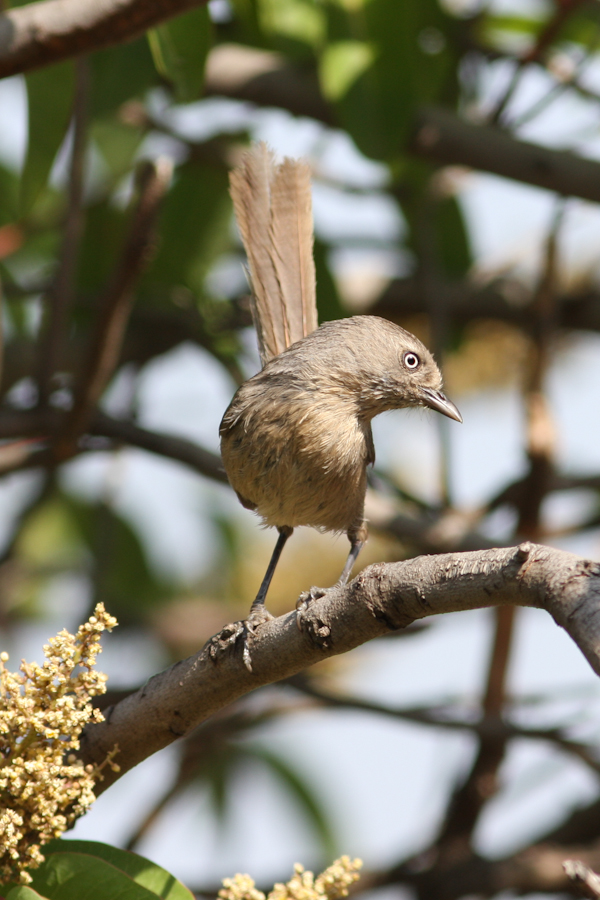
Wrentit – Luke Tiller

Favorite birds of the trip were the owls in general and the Western Screech in particular for putting on a good show a few times. Pushing the screech hard though would have to be the lifer Spotted Owls, which sound like Barred, but to use the cliche, on LSD. Now back to Connecticut for shorebird madness. There have been plenty of Ruff’s and Stints around so far this year – perhaps it’s time to go find one…


Hummers 2

14 07 2012

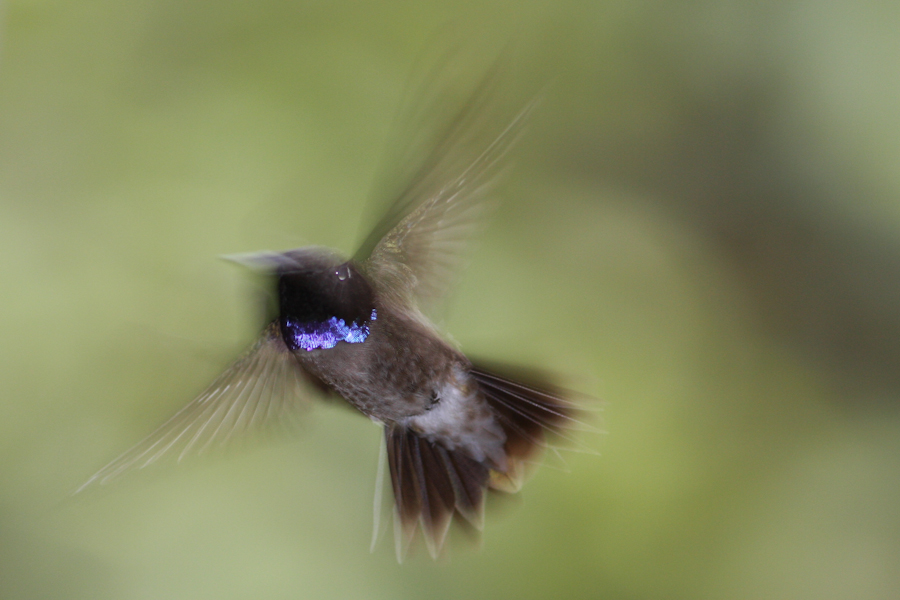
Black-chinned Hummingbird – Luke Tiller

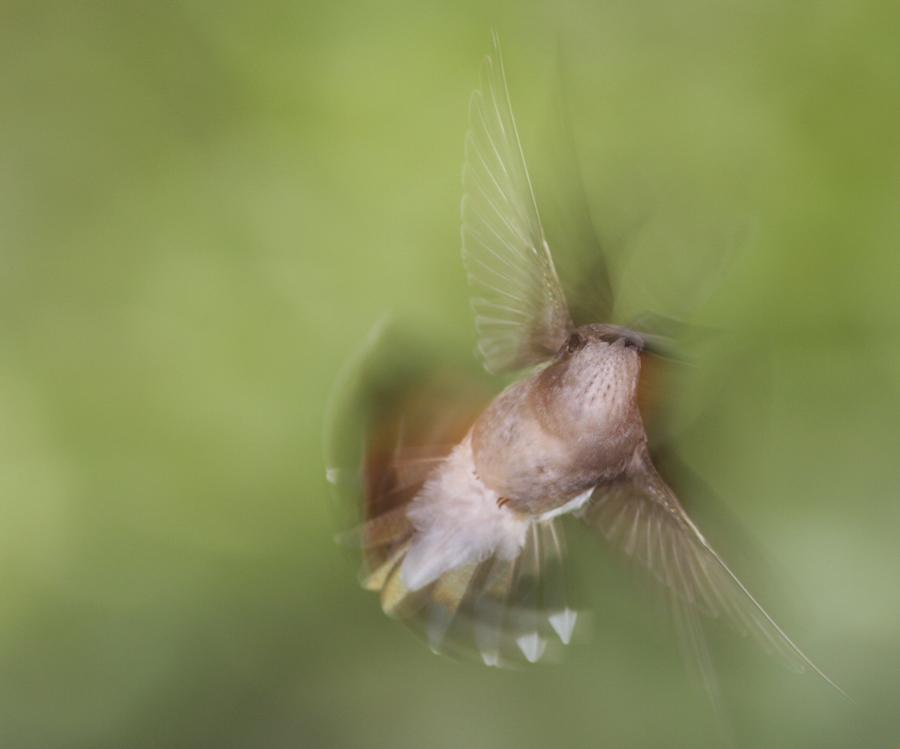
Yesterday was cloudy and overcast, not great for photography in a traditional sense, but there were lots of hummingbirds milling around the feeders so I decided to switch on the patio lights and try use that light to get some snaps of them. After the first shot I realized I wasn’t going to get anything in the way of your standard ‘bird porn’ shot, but had stumbled upon something kind of beautiful in and of itself.

Hummingbird – Luke Tiller

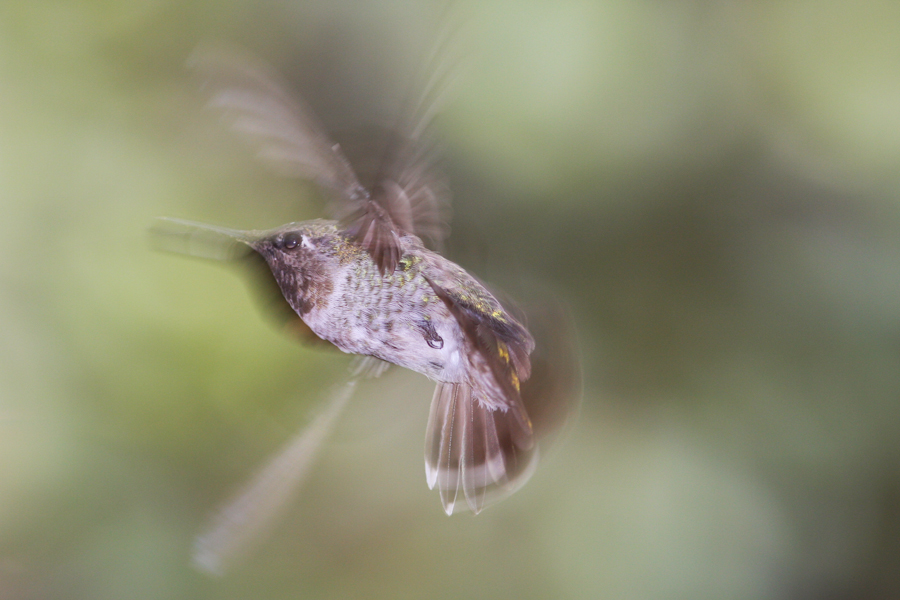
The combination of outdoor lights and flash was creating some really cool images, so I just kept snapping away. I love the etherealness and movement the ghosting of the image captures in the bird. Quite lovely, even if I do say so myself.

Hummingbird – Luke Tiller

Towards the end of shooting the light had improved enough that I was starting to capture more of a ‘standard’ bird photograph, so I gave up. I’m not sure quite how I would recreate the conditions that created these pictures but it was nice to have something so beautiful come out of something essentially going ‘wrong’.


Hummers

7 07 2012

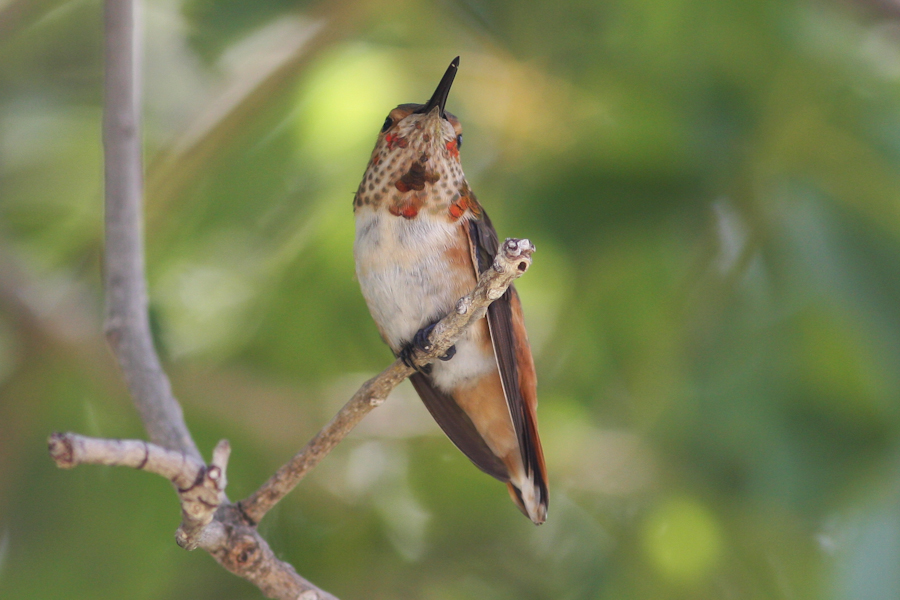
Allen’s Hummingbird – Luke Tiller

Spent a morning wandering the rather beautiful Los Angles County Arboretum. With all the amazing plantings the place seems to be a hotbed for humming bird action. It’s also pretty good for butterflies as well it would seem. If it’s introduced species you are looking for there are plenty of tame Indian Peafowl meandering around the grounds, a few Mandarin Ducks on the lake and a host of cheeky Red-whiskered Bulbul. It’s weird to see birds that seem to essentially be thriving but aren’t actually ‘worth’ anything list wise (like the bishops at Bolsa Chica). I guess the local birding community is feeling pretty burned by the currently ‘countable’ but rapidly declining Spotted Dove. It’s a conundrum when a seemingly naturalized species starts to disappear, something that British birders are all too familiar with Lady Amherst’s Pheasant.

Anna’s Hummingbird – Luke Tiller

I can see why this spot is a favorite during migration – who knows what the Madagascar Garden might attract as it flies over the LA area? With a couple of lakes and an abundance of amazing plantings it is apparently a great spot to find waif and stray eastern warblers amongst other things. For me personally it’s fun to be in a part of the world generally where there is more than one possibility hummingbird wise. It gives you an appreciation of how tough ID’ing fast moving hummers can be though. Even when they aren’t moving so fast the females aren’t always easy. I’m still not 100% on this one that we found perched on a nest yesterday – leaning towards Black-chinned but not certain it isn’t an Anna’s.

Hummingbird nest – Catherine Hamilton

The Arboretum has a useful website and even a checklist of birds that have been seen in the park (about 230 – none too shabby) which you can check out on their website here. For the film buffs out there, Los Angeles County Arboretum has been used in any number of movies, probably the best of the bunch the Alfred Hitchcock flick Notorious. Cool to think of Hitch once roaming the same paths as you currently are. I might have to watch the movie again just to see if I can recognize the arboretum!


Eaton Canyon Randoms

5 07 2012

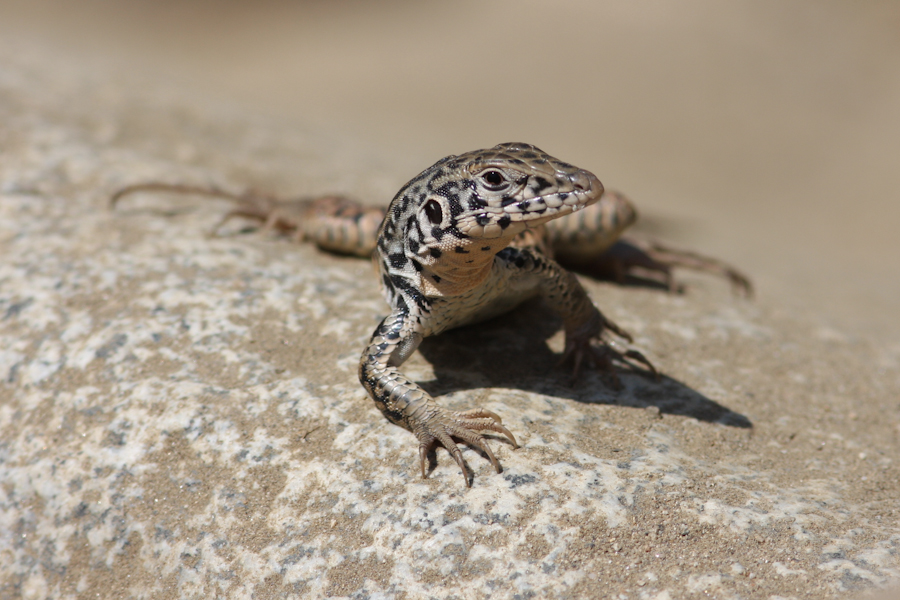
Western Whiptail – Luke Tiller

Whilst kicking back in LA my local patch has become Eaton Canyon (great website here). It’s a beautiful little spot with a nice mix of Californian bird specialties and some other cool breeders (Canyon Wren, California Thrasher, Wrentit). Catherine (Birdspot) Hamilton was lucky enough to grow up just a stones throw from the place and it feels like the kind of thing every kid should have access to as they grow up. Although now heavily trafficked (which can make bird (or anything else that moves) photography tough some times it’s great to see so many people getting out to enjoy some nature.

The Eaton Canyon site was mentioned in the LA Weekly blog post about birding in LA that did the rounds a month or so ago (here). It’s great to see such a diverse mix of people in age, ethnicity and interests hitting the spot to just get out and enjoy some nature. It seems like we in the birding world are always banging on about recruiting new birders, but to be honest birding is my thing. I care not whether anyone else at Eaton Canyon is there for the birding, more important is that they are outside and seeing the value of saving these kind of places from development, even if it’s just so they can get out and enjoy a walk on the 4th of July. I think Ken Kaufman once said something along the lines of that we don’t need thousands of people who can age gulls we just need an army of people who recognize the value of having open spaces for people to enjoy for whatever reason be it birding, horse riding, hiking or whatever.

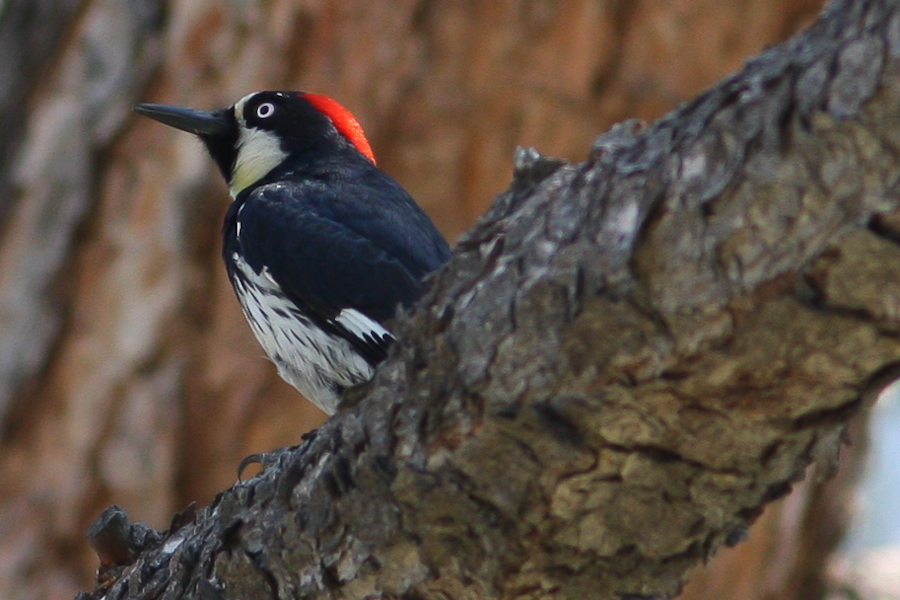
Acorn Woodpecker – Luke Tiller

In the canyon there’s a great nature center, which has a nice shop (but maybe needs a coffee stand as well to make it just perfect) and just beyond it below the freeway is a weird arroyo/flood management site which I haven’t quite worked out if you are allowed to hike through or not. For that reason I couldn’t possibly tell you that there are cool Blue Grosbeaks or bizarrely introduced Nutmeg Mannikins and Red Bishops hanging around in there. It’s also home to some neat butterflies and lizards and all kinds of other critters. A great little patch and one that I’d really like to explore in migration.

Recently I’ve been spending more time looking at butterflies that I have looking at birds. I guess the thing I like most about birds is the randomness of it all. The not knowing what you might see when you head out. I guess that explains my antipathy towards twitching and birding in summer (when all you are really finding is expected breeding birds at any one site). It’s the surprise that I love about birding and I guess not knowing that much about butterflies means that virtually everything I find when I go out is a surprise – especially here on the west coast.

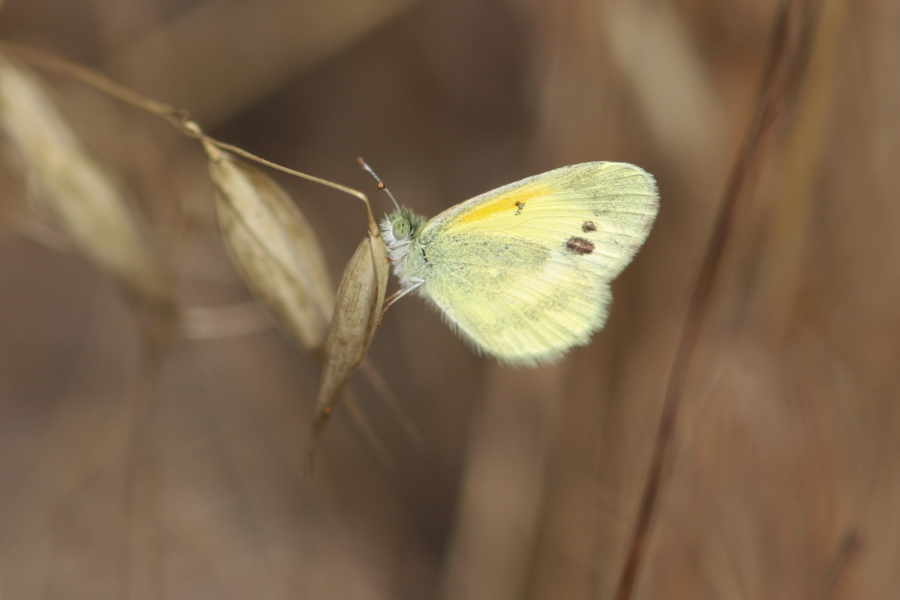
Dainty Sulpher – Luke Tiller


Bolsa Chica

4 07 2012

Long-billed Curlew – Luke Tiller

With LA being a nightmare to traverse traffic wise on normal days we used the holiday to scoot across town to do some birding down at Bolsa Chica. It was actually the second time I’ve been but the last time we didn’t quite make it before the sun had essentially set. A sweet idea of Catherine’s post arriving at LAX, but  it just didn’t go quite as planned due to traffic. Still after getting a flavor of the place I was desperate to get back and have a rummage through the shorebirds and stuff.

Obviously a couple of lifers in the form of Reddish Egret and Elegant Tern were a big highlight but to be honest I think my favorite birds (beyond the abundant and accommodating Marbled Godwits and Long-billed Curlews) were the Western Sandpipers. These birds were in such spiffy breeding plumage and marked such a contrast to the generally ratty versions we get out east as ‘strays’. Absolutely stunning little guys. Hopefully there will be some opportunity to do some more shorebirding before I head east – at the moment my eye is on Imperial Beach in San Diego.


Swapping birds for butterflies?

3 07 2012

Gulf Fritillary – Luke Tiller

Summer tends to be a bit of a doldrums for birding, even when you are on a whole new coast. The number of new things you can go look at or for tends to run out rather quickly when you are limited mainly to breeding birds. Of course there are always exceptions to the rule but between the beginning of June and the end of July I often find it hard to get motivated to go out birding. I guess that’s why butterflies have become popular with so many birders. They are out in summer when there isn’t much to look at bird wise, they sure are pretty and some of them offer the same challenges to identify them as birds, but with the bonus that they usually sit still long enough to get a photograph (well mainly).

Fiery Skipper – Luke Tiller

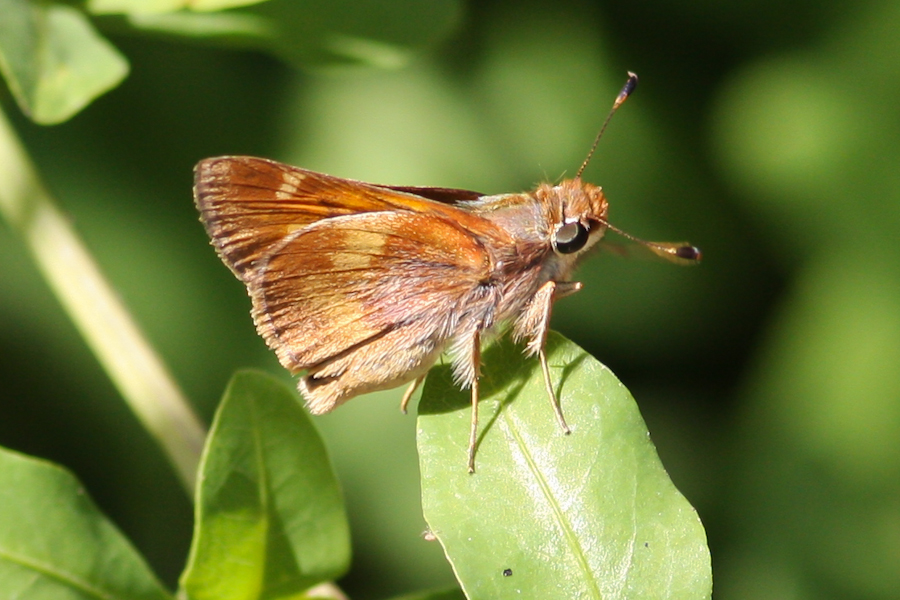
Talking of difficult to identify butterflies I spent an hour or so shooting mainly skippers yesterday at Lacy park in San Marino. Fiery Skipper  is a species I have seen in CT and has to be one of my favorite skippers as it is so brightly and distinctively marked. It’s all kind of relative though. According to Wikipedia there are 3500 skipper species across the globe and most of the seem to be a couple of centimeters long and be some variation on black, brown and orange. They are pretty much the shorebirds or gulls of the butterflying world: at times interesting and frustrating.

Umber Skipper – Luke Tiller

As with anything new there is always an element of learning process where you realize that you spent ages looking at something and still didn’t actually pick up on the salient field marks, the good thing about butterflies is that they usually give you enough time and allow close enough approach to get a decent reference photo. Although they aren’t going to surplant my love of birds any time soon butterflies at least make for a welcome summertime distraction.

Marine Blue – Luke Tiller


Owl’s about that then?

24 06 2012

Western Screech Owl – Kelly Whitney

It seems like I just couldn’t get away from owls in California. One evening whilst just going on an aimless evening stroll around the neighborhood we stumbled upon a group of people staring intently up into a group of trees. Sure enough they had found not just an owl but a little family of recently fledged owls of the Western Screech variety.  Whilst the parents busied themselves fetching an almost constant stream of food the little ones sat around on branches chirruping and tooting their little hearts out, whilst every now and then clumsily flapping their way from one perch to another. At one point one of the little guys seemed to bounce off of a stationary car on it’s way to the next perch but was seemingly no worse for wear.

While we were waiting a local birder showed up and took a few shots of the owls (see the above evidence) and she also put up a post on her own blog with lots of other cute pictures of both the babies and the parents. You can check out more of her excellent pictures on the Rogue Woman blog (hit the link here). We also ran into a couple of other local birders and shared a fun half an hour chatting and enjoying the owls. A fun and unexpected end to an evening stroll.

That evening we’d also run into Nancy Strang who had somehow recognized Catherine and I through our ebird posts. Thanks to that maybe, and also some contact with Lance Benner via email about our Northern Pygmy Owl at Chilao, we ended up finding ourselves being invited to spend an evening owling in the San Gabriels with the two of them as Lance did some scouting for a Pasadena Audubon owl trip.

Allen’s Hummingbird – Luke Tiller

We started the evening at the base of the Los Angeles Crest Highway. Just to prove that the world of birding is a small one, we ended up car-pooling with Dick Norton, the brother of renowned Connecticut and Rhode Island birder Fred Norton. Catherine and I had both birded independently with Fred in years past , so it was cool to run into his brother out here.

We started off the evening checking the Chilao camp ground looking for the Pygmy Owl that we had found the week before, but it being a weekend the campground was buzzing with human activity and there was no sign of the owl, not a great start to the evening. The Black-chinned Sparrows a small consolation for some I guess, but Catherine and I had already had good looks at them the week before.

As with all the stops (it was a scouting mission after all) we cut our losses quickly and headed onwards to see if we could be more successful somewhere else. Another stop further along the highway found us stopping to connect with our first calling Common Poorwills and excitingly our first Flammulated Owl, which was calling softly somewhere from a steep slope at a roadside pulloff. The voice of the Flam is surprisingly low for a teeny tiny owl (listen here) and it like many nocturnal birds is a great ventriloquist.

Happy hearing our first Flams we moved on quickly in order to try to connect with a rare Mexican Whip-poor-will that has shows up fairly regularly in the San Gabriels. The idea was to try and hear the bird at a time it had been heard vocalizing on previous nights. We arrived and had soon tuned our ears into the calling Whip. Although down a steep slope and possibly some distance away we managed to hear it pretty well between wind gusts, and Lance even managed to record the bird on his shotgun microphone (listen to the evenings recording here).

Two heard only lifers on the evening – definitely nothing to sniff at! We weren’t done there though. Another stop provided us with great looks at a Common Poorwill. I picked up the bird lifting up over the ridge line and flying across the road and its little call note was immediately identified by Lance. Some great flashlight co-ordination from the group soon had us getting extensive and rewarding looks at this neat goatsucker!

California Quail – Luke Tiller

Other stops gave us more time to appreciate the first Flammulated Owl and hear a second and maybe a third as they duetted – although we never quite could find the birds as they sang a few hundred yards up a rather dangerous looking slope from us. We had discussed hiking up slope to try and visually locate the owls, but it all looked somewhat precarious and I think everyone was happy to settle for just enjoying hearing these neat little birds.

A final stop also produced a rather unexpected Northern Saw-whet Owl that although at some times was probably only singing a few yards from us was never actually visible to anyone in the group.  The bird had apparently been around in the area since April but hadn’t been located for a couple of months so its reappearance was some thing of a surprise. A couple of people also heard a Great Horned Owl at the same spot, which would have rounded out the evening nicely, but I personally missed hearing it.

A great evening out for Catherine and myself with Nancy, Lance, Dick, John Garret and Darren Dowell. Thanks to Lance for inviting us to join him. I’d recommend joining Lance on his tour with Pasadena Audubon Society but it sounds like he has about 20 people already on his standby list. Still worth joining the club if you are in the area, nice people and skilled tour leaders if this evening was anything to go by (club field trips here).


Los Angeles, I’m yours.

10 06 2012

San Gabriel Mountains – Chilao

After a long and productive season over at Braddock Bay I decided to take a couple of weeks off and head for Sunny California. Considering my aversion to shorts possibly an interesting choice for June, but when you get the opportunity to go pick up some life birds and have the offer of room and board in the L.A region a little sun isn’t going to get in the way.

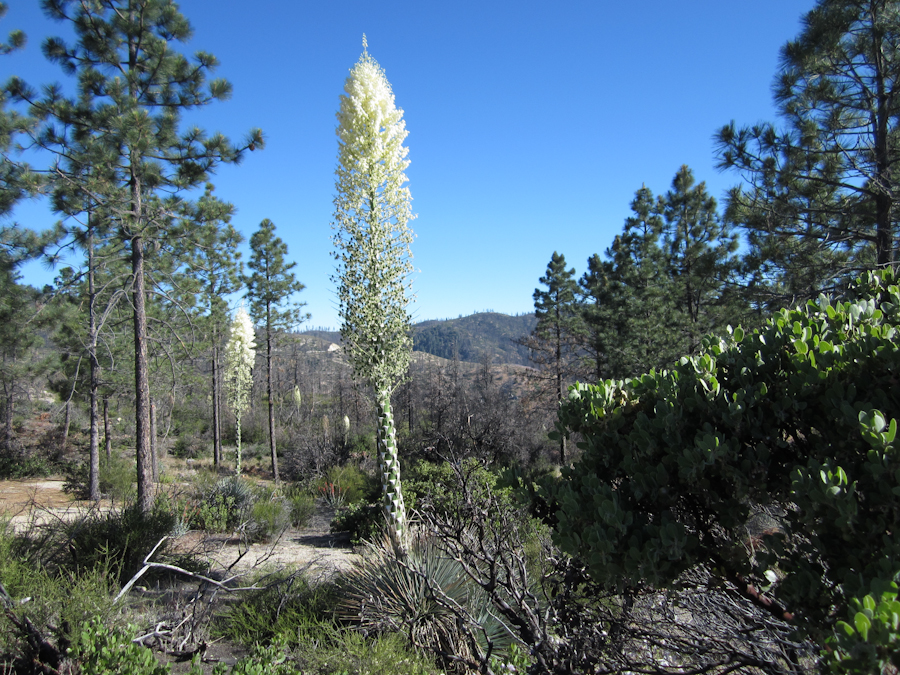
Of course most people don’t really associate L.A County as a birding hotspot, but beyond the fake punks on Melrose and the fake boobs of Hollywood there are some areas of incredible natural beauty (there was a nice article about birding recently that was doing the rounds on L.A birding and includes the spot that is nestled just two minutes walk from my current residence: Eaton Canyon). My favorite spots so far have been up in the San Gabriel Mountains. Although the sun is somewhat relentless the temperatures are actually quite pleasantly bearable and get even better if you hang on into the evenings for owls and other goodies.

Steller’s Jay – Luke Tiller

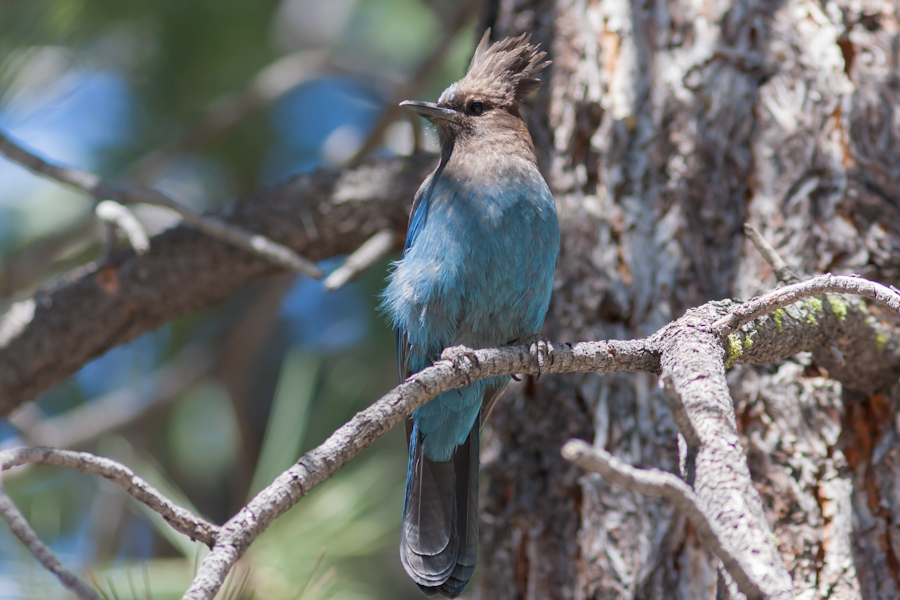
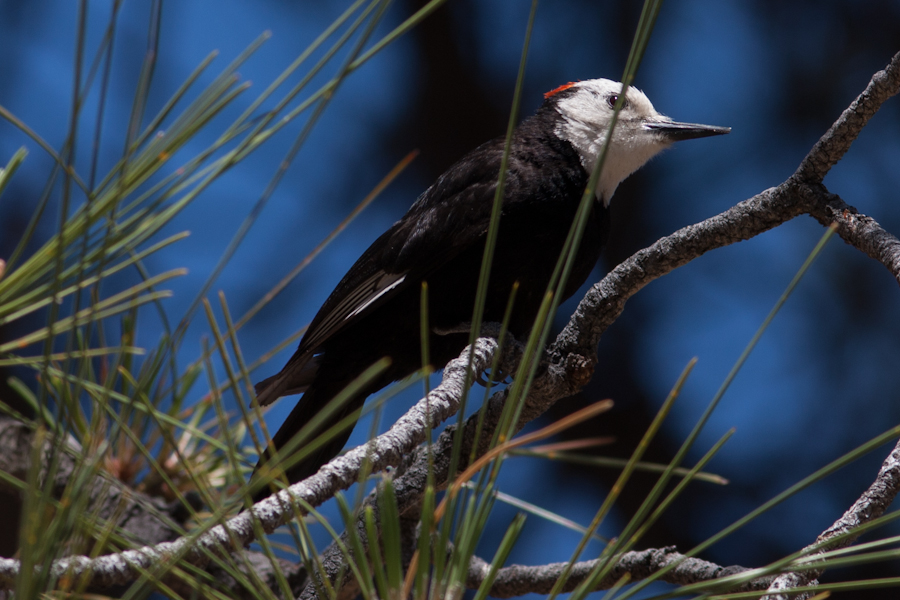
The mountain stops we explored range from 4-7000 feet above sea level and this means a slew of cool montagne specialties including Steller’s Jays, White-headed Woodpeckers and Mountain Quail. Talking to most of my friends it seems that there is currently some discussion as to whether Mountain Quail really exist or are the figment of west coast birders imagination. I can now, however, happily confirm thanks to the sharp eyes of my host Catherine Hamilton that they do exist, but only like you to see their backside as they disappear up a valley escarpment, a better view desired at some point before I head east.

Seeing as they have always been my favorite group of birds, it has been fun to discover that there are plenty of sparrows to keep me entertained up in the mountains. These include potential splits, interesting subspecies conundrums and just the totally cool looking. Favorites so far have included ‘Thick-billed’ Fox Sparrows, birds that exhibit features consistent with both coastal and interior type Sage Sparrows, Green-tailed Towhee and best of all a little pocket of breeding Black-chinned’s. Future trips beyond the mountains promise Belding’s and Large-billed Savannah Sparrows as well as Abert’s Towhees as possible Emberizine highlights.

Black-chinned Sparrow

Friday night was nocturnal bird night up in the San Gabriel Mountains. After stopping off to enjoy some of the previously encountered species Catherine and I hung around until dusk to pick up a lazily tooting but rather uncooperative Northern Pygmy Owl at Chilao Camp Ground. Further stops further up the mountains produced good numbers of Common Poorwills (listen here) but not much else. As we were about to hightail it out of there (after a brief stop at Mt. Wilson Observatory to marvel at the lights of L.A) we hit pay dirt with at least two very cooperative Western-Screech Owls that both sang (voice here) and put in a couple of appearances and a couple of extremely rare Spotted Owls that sang gloriously from the valley below us (like a confused Barred Owl). I have loved mountain owling after my first experience of it in Colorado looking for Boreal Owl. There is something kind of magical about that whole mountains at night thing!

Anyway after a rather poor success rate early in the evening we had done rather nicely over all. Still, there are reports of Mexican Whip-poor-will and Flammulated Owl to follow up on I guess we are just going to have to go back again – it’s a tough life 😉

White-headed Woodpecker


Another Braddock Bay Big Day – So near yet so far

21 04 2012

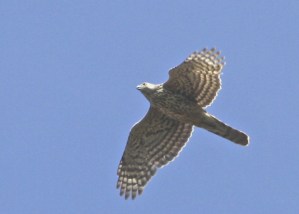
Northern Goshawk – Greg Lawrence

I’ve spent a little time reminiscing about the season at Braddock, as I wrote up my season report and wanted to capture some of the experiences for posterity, starting with our big day in 2012 – here she is…

It was one of those mornings where things felt right, but the start of the day was actually somewhat slower than expected. Wherever the Broadies were coming from, it was far enough away that the first couple of hours saw nothing in the way of these dinky little buteos. Right from the start though there was a healthy little flight of Sharpies zipping out over the bay as is their wont on these kind of mornings. That kind off flight soon becomes hard to keep track of unless you have more than one counter though, as the birds are almost a mile away as they jump off of the spit and scoot eastwards. The birds can also be almost anywhere on that line with some literally skimming the waves as they motor through.

Luckily local birder Greg Lawrence was already with me and Braddock Bay volunteer Ed Sailer was pitching in to tally birds on the day. As I stayed glued on the spit, Greg was filling me in on the bits and pieces that were already starting to pick up off to our south. By 10am we were already picking up big kettles overhead and thankfully the solid wind was keeping them pretty low. By now the sharpie flight had been somewhat sacrificed and whilst I started to focus on the Broadies to the south, Mike Tetlow showed up, and along with Greg started to run his usual cleanup operation. It’s a nice way of working as a team. While the counter gets the Broadies a couple of people doing cleanup try to catch the rest of the birds in the kettles or pick up little kettles or driftback of already counted birds that may be missed in the chaos. It certainly helps keep things a little more manageable during an essentially crazy experience.

The day brought little extended ‘kettling’ but there were certainly some kettles to enjoy. In the really mega hour between 11:00am and 12:00pm a few birds really started to kettle and it was incredible to scan across the sky and see not one kettle of 1000+ birds but multiple 1000 plus kettles stretching out into the pepperspot distance.

Even as these bird kettled, there were still birds streaming off to the north and south of us including an incredible mass that totaled almost 3000 birds. At Quaker Ridge the most raptors I had ever seen in a single kettle was around 600 birds and now I was seeing three or four that were  larger smeared across the sky. Before the mega hour was done we had totaled 21,629 Broad-winged Hawk alone. It’s hard to imagine that counters in Veracruz would be tallying hour after hour of these type of numbers!
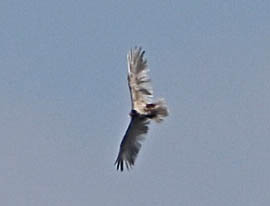
Leucistic Turkey Vulture – Greg Lawrence

Although Broad-winged Hawks always make up the bulk of these flights it often gets to the point where it is hard to spot anything else amongst them so I am sure the odd miscellaneous buteo gets lost in the bunch (again Red-tailed Hawk numbers on this day seemed comparatively low). Not that there wasn’t other stuff out there to enjoy, highlights including: five Sandhill Cranes, possibly the days weirdest bird – a heavily leucistic Turkey Vulture (a crop of the distant bird above), an astounding 47 Bald Eagles (which helped to push us towards another season record) and 11 Golden Eagles (a good show as it was almost a quarter of the whole season flight). Particularly nice was adding 12 Roughlegs to the total to what was a generally disappointing year for this arctic buteo. In fact the Golden’s and Roughies show that you can come to Braddock and pick up some ‘northern’ specialties even whilst you hit the motherload of Broad-winged Hawks. We also had a nice Goshawk and a couple of Peregrines to round out a 15 species of raptor day, and with a little luck one might have added another couple of species to that .

A hard day to be a counter for sure, and the rewards of such a day are only apparent a few days after the fact. Still one can take pleasure in the enjoyment that those visiting are getting and I always do my best to get people on the interesting birds where and when possible – it’s certainly easier when you have help like Mike and Greg to assist with that. Still it’s hard to in the moment really take everything in and much better to reflect on when things have calmed a day or so later. Exhausting! As I noted on my prediction for the next day on hawkcount: ‘Lying in a darkened room with a towel over my face!’

The hawkcount data for the day can be read online here!

Broad-winged Hawk Kettle – Steve Beale

It was interesting to note that on such an incredible day down at Braddock things were somewhat limp under a 100 miles away over at Derby Hill. With the way the birds work their way east around the lake (and the birds supposed dislike for crossing water) and Derby’s position right on the eastern tip of Lake Ontario it would seem likely to the laymen that Derby Hill would rack up similar if not better hawk numbers on this kind of mega flight. And yet looking at the data below you can see that incredible days at Braddock rarely seem to be reflected down the lake at Derby.

Date                      Braddock Bay                  Derby Hill

4/16/12                   37,415                             3431

4/27/11                   42,235                             6319

4/23/07                   16,976                             1660

4/23/01                    23,885                            11,414

4/26/96                    33,019                            2923

4/27/87                    41,168                            2534

The reason for this seems to be all down to the willingness of these birds (especially the Broadies) to take a ‘pelagic’ route across the lake before swinging north en route for Canada. The following links from the  days radar highlight this nicely. Tom Carrolan of Hawksaloft fame (check out the blog here) is really into the use of radar for tracking flight and shared the following loops to people at both Derby and Braddock (view here).

Unfortunately there isn’t a Nexrad Radar in Rochester but the following links nicely illustrate the blossoming of migrant hawks as they take off near Buffalo and then track the flight as it initially hugs the shoreline and hits Derby before disappearing off shore later in the afternoon.  It’s cool to see the flight in action. It seems like radar isn’t just great for watching nocturnal migration. Anyway fascinating stuff and fun to look at.

An amazing day at Braddock struck early this season. Although it was the raptor blowout for the season there were plenty more memorable days to enjoy and I may make a note of them here at a future date.