Hawkwatching basics 1: When and Where

9 03 2014
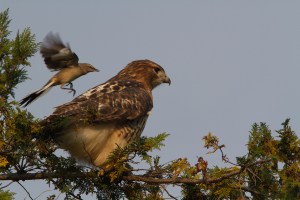
Red-tailed Hawk - Luke Tiller

Red-tailed Hawk – Luke Tiller

As a seasoned hawkwatcher this is a conversation that I have had sadly all too often: on a deathly slow day someone shows up at the watch and asks ‘how is it going’. After you’ve relayed the bad news about winds from the wrong direction and a band of blocking rain to the south they say something like “but it looked like you had a great day yesterday”. 

A quote I once read started ‘yesterday is a memory, tomorrow is a dream…’ and that’s the truth about hawkwatching. To get the most out of the hawkwatching experience you need to become something of an amateur meteorologist (or at least look at the weather forecast once in a while). Like much birding during migration, weather is going to play a key part in your success. Though I have been relayed charming stories about the early years of hawkwatching, that were spent looking for birds on previously set dates each fall regardless of the fact that it was perhaps pouring with rain that day, we now understand that there is a slightly more scientific approach to actually seeing some birds at a hawkwatch.

The rest of the quote I referenced above runs ‘…today is a gift.’, so even if you find yourself at the watch on one of those slow days don’t despair. You might still make the best of it by learning some stuff from the hawkwatcher or others there at the watch. It’s generally much easier to glean some information from hawkwatchers on slow days, when they will be thankful for some company, than on madcap days when they are trying to keep up with a huge flight. On those days it might be best advised to not talk to them at all 😉 Also even on the slower days, you never know what might show up. I always say it only takes one bird to dramatically change the complexion of how a days birding ‘went’.

Merlin - Luke Tiller

Merlin – Luke Tiller

To cover the basics of Spring migration, each watch will have its own ideal wind and weather conditions. To generalize though, you are looking for southerly winds (blowing from the south – sometimes that isn’t clear to people) to bring birds northwards and hopefully past your watch. Sometimes a watch might do better on south west winds sometimes south east depending on the location. In fact, once you become more expert, sometimes the way winds are blowing might sway which local watch you decide to visit on a certain day. It’s certainly something we will take into consideration during the Raptor ID Workshop I am co-leading this Spring at Braddock Bay (details here).  You may also want to check whether rain might dampen the flight. That said, rain is not a reason not to head out, I have sometimes had some good days watching between light showers and often huge flights can be formed ahead of a storm system.

Weather discussions perhaps assumes that you even know where to go looking for a regularly staffed hawkwatch site? To find a local spring site you can check out the hawkcount website map and click the individual states (link here).  Some counts happen in spring, some counts are in fall and some are both. You can click on the individual site link to find out general information about each site. If you click the “migration timing” tab you can get a feel for the usual peaks and troughs of the sites season and by clicking “latest count data” you can usually gauge how regularly the watch is covered.

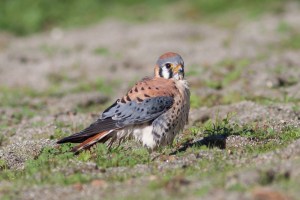
American Kestrel - Luke Tiller

American Kestrel – Luke Tiller

If you want to find out what the forecast for the hawk flight is like for the next day you can sometimes read this on the individual daily reports from reporting sites (example here). These individual reports are viewable on the front page on Hawkcount (link here). As I write this post it’s currently pretty early on in the season so only a handful of sites are regularly reporting right now. Having had to write those forecasts myself and knowing how unlikely they are to be 100% accurate I understand why counters sometimes feel reluctant to complete that section, but they usually do when it at least looks promising.

Keep an eye on the blog as I will be posting more articles aimed at cluing in beginner and intermediate level hawkwatchers on how to get the most out of the hawkwatching experience over the next few weeks. If you want to know when to get up to Braddock Bay, south west winds are the best (though all southerly elements are good) but with a wind speed of at least ten mph. Ideally you want the speed to be a little more than that to keep the breeze kicking in off of the lake and scattering the flight line south of the lake.. 


Pasadena – Swainson’s Hawk

7 02 2014

Pasadena - Swainson's Hawk

Swainson’s Hawk – Luke Tiller


Worlds colliding

26 11 2013
Street Art - Stephen Tiller

Street Art – Stephen Tiller

The birding world is a small one in the US. In fact it’s almost impossible to go to an event like the Rio Grande Valley Birding Festival without running into multiple people that you know both personally and from their online presence. Coolest of the random run ins over the weekend for me was when I bumped into a regular from some of the local tours that I ran in Connecticut. It was funny because we’d called over one of the official tour groups from the festival to see a couple of Altamira Orioles that we had discovered whilst on an early morning stop at Estero Llano and I recognized her voice as one of my previous participants quicker than she recognized mine. I guess to be fair there does tend to be a few British accents at these birding events.

Street Art - Steve Tiller

Street Art – Steve Tiller

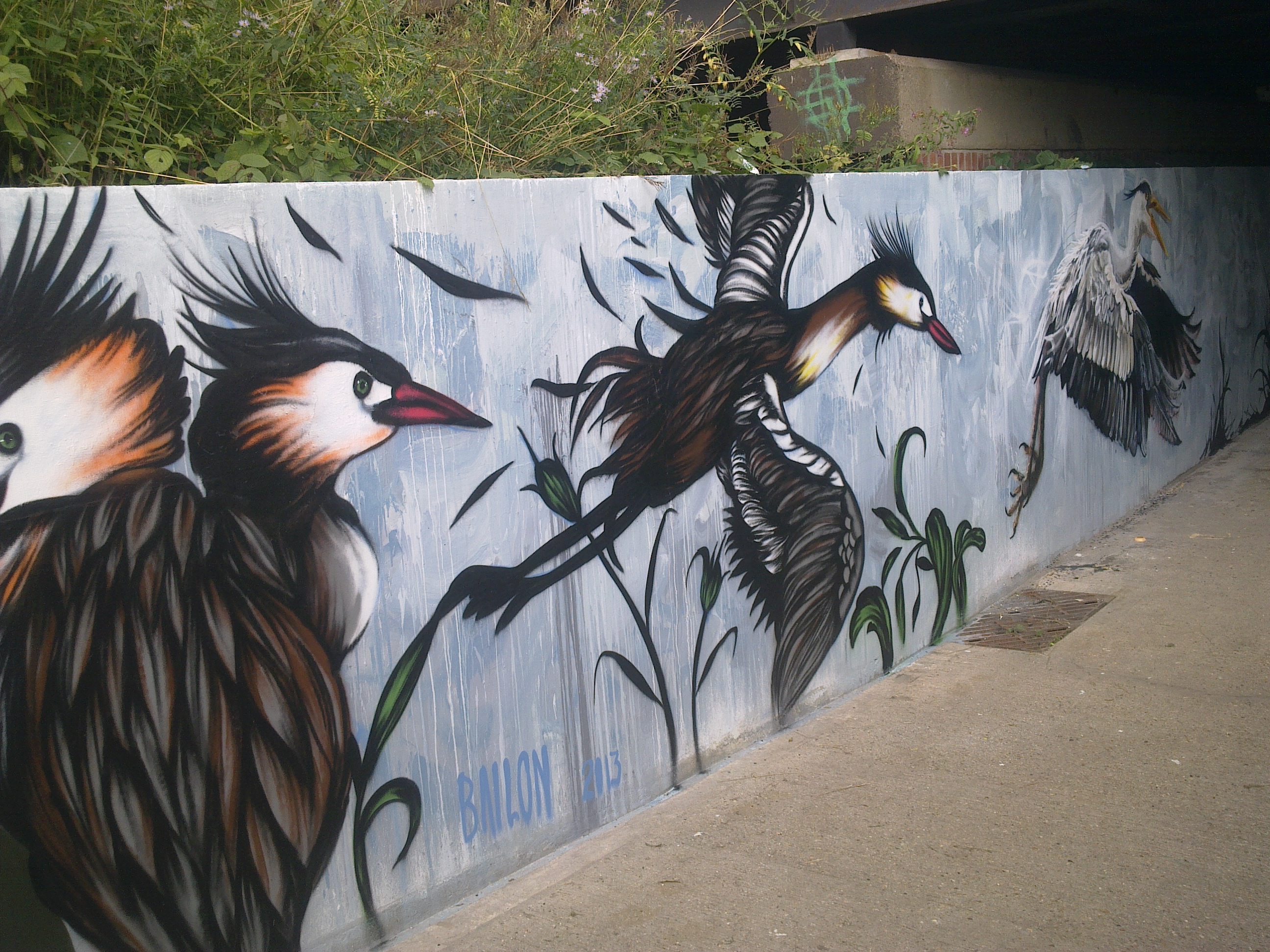
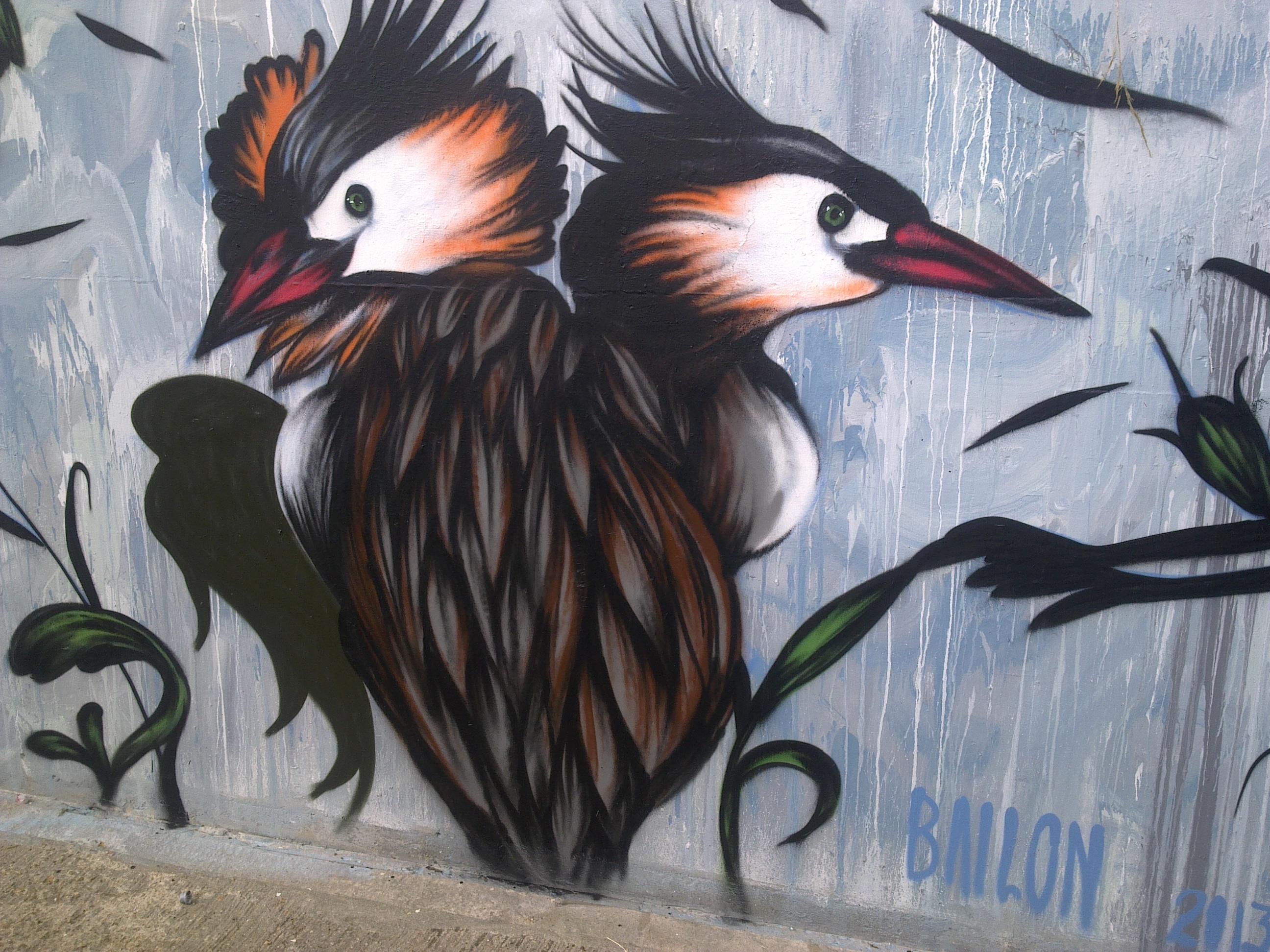
Talking of worlds colliding a couple of months ago my dad sent me some awesome photographs from a mural that had recently been put up to cover some rather boring concrete at a local spot along the River Lee in London where I often go for a walk and look for birds. It’s perhaps not the capitals’ birdiest spot, but it’s close and accessible by bicycle. Of course my dad started my interest in birds and my brother was once a renowned street artist – before he became a photographer and music impresario. I recall my brother once getting paid to teach inner city kids how to become graffiti artists. I’m not sure who decided that was a great idea, but you never know, perhaps he helped spawn the next Banksy or Jean-Michel Basquiat

Street Art - Steve Tiller

Street Art – Steve Tiller

My favorite piece from the event are the Great Crested Grebes created by a Brazilian artist Mateus Bailon (website here). My girlfriend Catherine had just been in Brazil a few months before for the Brazilian Bird Fair (website here). Not only had she fallen in love with the country and its birds, but she had been really impressed by the breadth and depth of an event that included as well as birders and ornithologists, musicians and contemporary artists too amongst others. It’s hard to imagine something quite the same happening in the US or the UK at a birding festival? You can see some of the other murals from the London mural project on the Inspiring City Blog (here). Cool to see the sketches that Mateus worked from and street artists that use nature as a theme of their work. I’m looking forward to getting back to London this Christmas and seeing some of this stuff in person – weird how everything comes together sometimes.


Los Angeles – SMORES beginner birding

31 10 2013
SMORES Program - Helen Wong

SMORES Program – Helen Wong

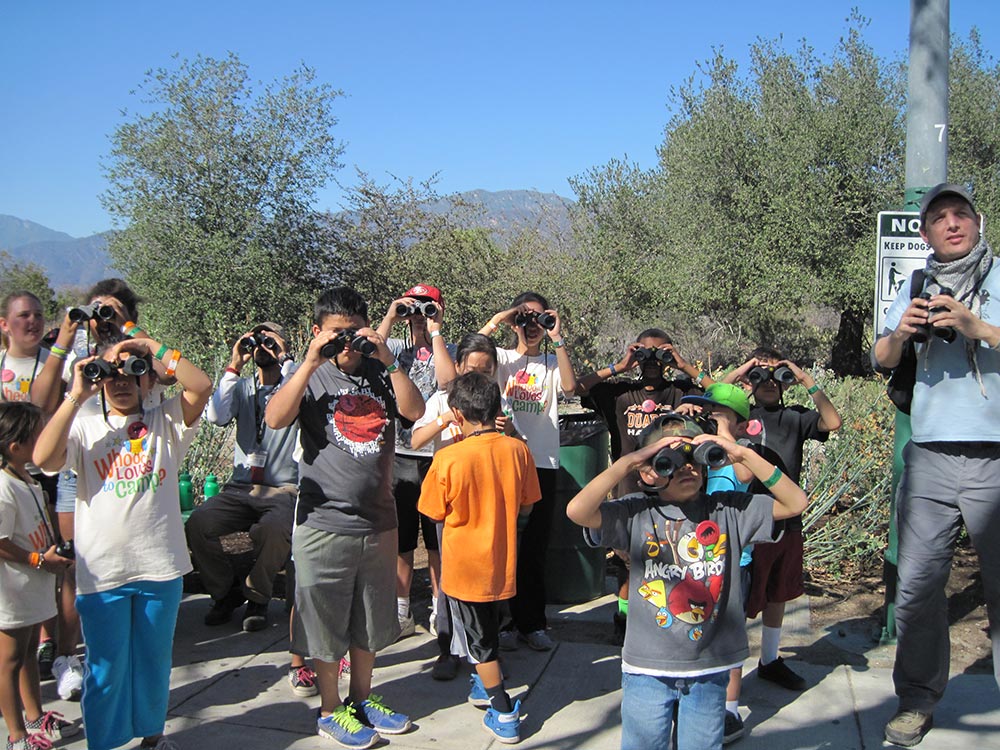
October the 19th I was lucky enough to be able to get involved as a volunteer with the County of Los Angeles Department of Parks and Recreation run and Habitat Conservation Fund funded SMORES Program. To quote their own publicity material: ‘Smores is an overnight camping program designed to provide youth of Los Angeles County the opportunity to make personal connections to nature.’ The staff and volunteers at Eaton Canyon Nature Center were heavily involved on the day and Pasadena Audubon Society (the local bird club) helped to provide the birding experts for the event.

Birding was just one of the elements of the two day event which also included Day and Night Hiking, Learning to fish, Entomology, Astronomy, Outdoor Cooking, Kayaking and Overnight Camping so we had some tough competition in the fun stakes! The kids (who were aged between 4 and 18) had come in from across the county from out the other side of the mountains in the Antelope Valley to just up the road in Duarte. Only a few of the kids had ever used a pair of binoculars before and even fewer had ever done any birdwatching.

SMORES Program - Helen Wong

SMORES Program – Helen Wong

First up we needed to get the kids to get to grips with the bins by getting them to focus on something inanimate. Half of the problem with getting beginner birders hooked is trying to actually get them on some birds. Anyway, everyone seemed to get the grasp of it fairly quickly and at least a few birds were cooperative enough that we barely needed to use the bins.

We had quickly added a few lifers to the participants list in the shape of a some White-crowned Sparrows and Yellow-rumped Warblers before a Northern Mockingbird stole the show – both because it was accommodating and vocal but also because it resonated with many of the older kids who recognized the name from Harper Lee’s book. Of course the real scene stealers arrived in the shape of a perched Red-tailed Hawk, some soaring Ravens and a couple of Ospreys that were working the nearby lake. To my mind (and own biases) it just goes to show the importance of cool birds like raptors in getting kids excited about birds – though I must admit the California Quail were a big hit too.

SMORES Program - Helen Wong

SMORES Program – Helen Wong

Though I have led tours and spoken to adults about birding a number of times, it’s always more frightening to talk to kids about it. It just strikes me that they are less likely to nod politely if they are bored out of their minds 😉 Anyway, the kids were great and I really enjoyed taking out the three groups I had scheduled, while they rotated through the activities. The highlight of my day was definitely the little kid who said: ‘I thought birdwatching was going to be boring, but wow that was really fun!’ Job done as far as I’m concerned!!!!!

All in all they were a great groups of kids, and I hope that they enjoyed their weekend activities. Obviously I’m biased and I hope that they all have some interest in the birds around them for the rest of their lives, but if they get hooked on fishing or hiking or just being outside and enjoying nature in some way  that’s good too. To me, making sure that as many people from as many backgrounds get to share the enjoyment that I get from being outdoors is the key.

Next week the Focus on Diversity conference is happening down in McAllen TX (link here). I’m sure it’ll be a great event. It feels like there is still much to do with regard to diversifying the base of North American birding scene. Hopefully both of these events will have a positive effect in that direction.


Red-tailed Hawk – Harlan’s or Dark Western?

23 10 2013
_MG_8270

Red-tailed Hawk – Luke Tiller

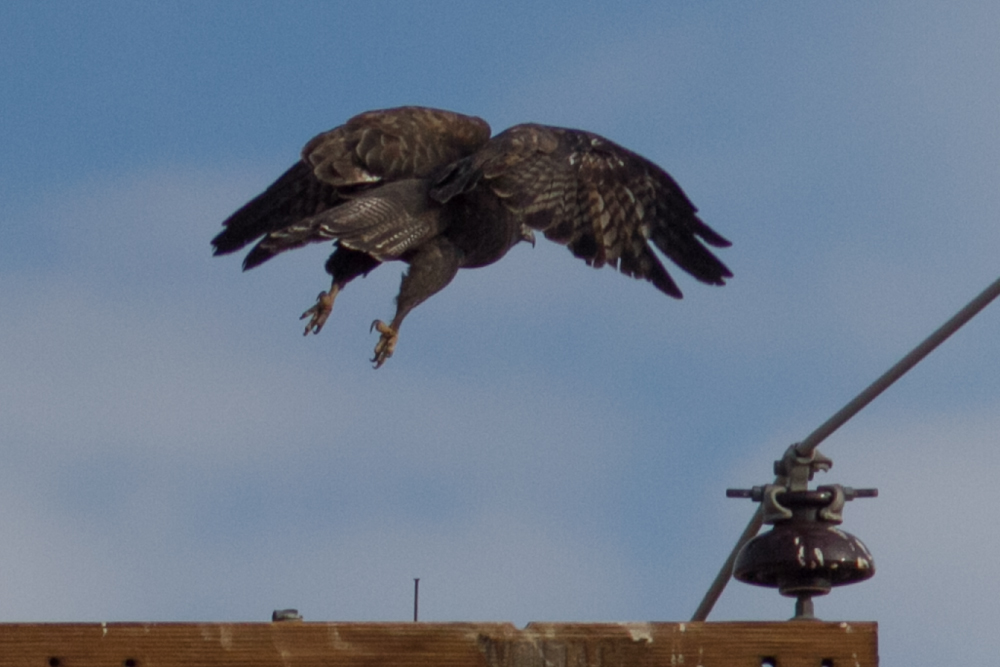
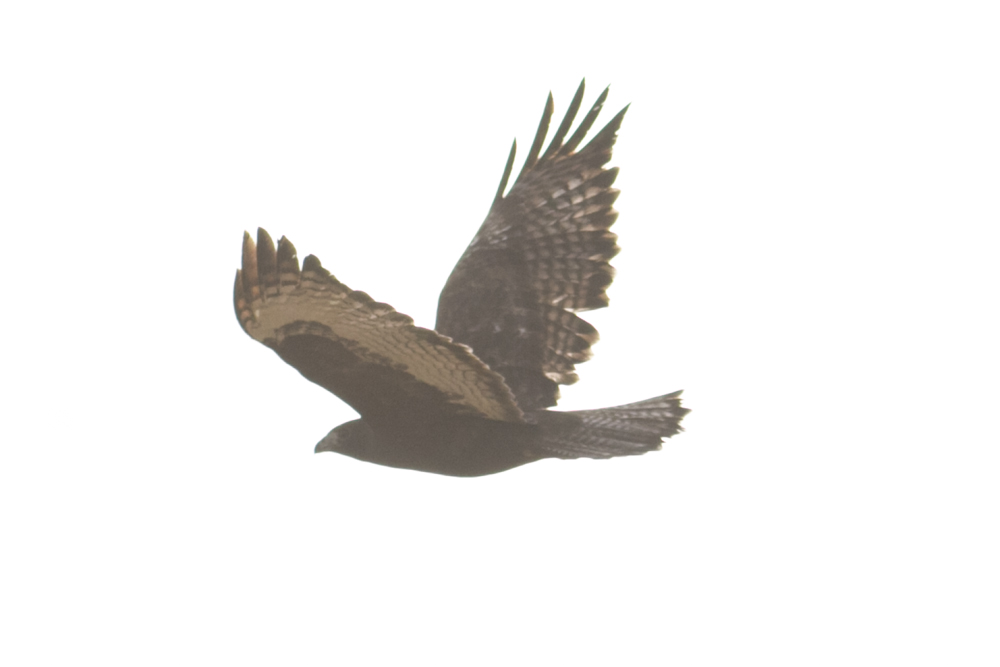
Yesterday (October 22 2013) I spent some time out in the Antelope Valley near Los Angeles doing some birding with friends. Whilst out there we stumbled on this incredibly dark Red-tailed Hawk. So the big question in my mind was is this a Harlan’s or not. I’ve done some background reading on Harlan’s Hawk but it often seems somewhat amorphous as to what you are looking for to clinch the ID. That said tail and barring through the primaries looks promising?

Red-tailed Hawk - Luke Tiller

Red-tailed Hawk – Luke Tiller

The bird was at least initially pegged as a dark western bird, and at least a couple of observers thought they saw a hint of rufous in the tail – but it is certainly not evident in the pictures. I think we all agreed it was about the darkest individual we had ever seen if it was just a western type bird; being almost completely black. The above photo of the upper tail shows how dark it looked perched.

_MG_8262

Red-tailed Hawk – Luke Tiller

The above shot gives you a better view of the undertail and underwing markings. Obviously these shots were taken in extremely low light conditions pretty much right at dawn. Not really done much with them in processing – just a little cropping really.

_MG_8271

Red-tailed Hawk – Luke Tiller

Whatever it is as far as subspecies is concerned I think it’s an incredibly cool looking bird. Just wondering what others thought, so any thoughts certainly appreciated.

Probably the best resources online with regard to this discussion are all published by the American Birding Association: William S. Clark’s article on Harlan’s Tail Variation (here), Liguori and Sullivan’s article on Western and Eastern Red-tailed Hawk vs Harlan’s (here) and the Liguori article from the same publication on Dark Red-tails (here).

EDIT: All of the authors of the above articles have seen pictures of this bird and are happy that it is a Harlan’s Hawk.


Eaton Canyon – Black-throated Sparrow

25 08 2013
Image

Black-throated Sparrow – Catherine Hamilton

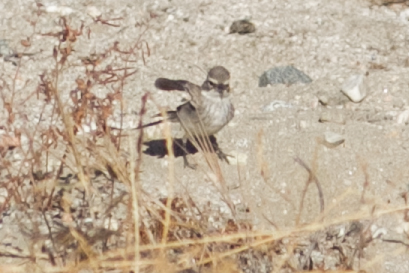
Pleased to find this Black-throated Sparrow down in the wash at Eaton Canyon yesterday evening. Popped back today with Catherine Hamilton and ran into Darren Dowell who was looking to add it to his Big Year list. I have to admit this isn’t a plumage I am used to seeing after connecting with them solely in breeding plumage in Colorado etc.

Black-throated Sparrow is uncommon to rare in the LA Basin. It just seems to rarely get down on this side of the mountain even though it is relatively common once you get out into appropriate habitat just the other side of the San Gabriel Mountains. You can see this nicely on eBird (here).  Of any places this side of the San Gabriel Mountains it would seem the Eaton Canyon flood basin is the best place to find one. This individual seems relatively early: the second earliest record I can find among eBird records.

Image

Black-throated Sparrow – Catherine Hamilton

The thing that is funny about this bird is that although it is a great bird for this side of the mountains because Los Angeles County stretches over the mountains into the sparrows breeding habitat (around Lancaster) it’s not that special for the county. I’m starting to learn some interesting stuff about both migration and distribution out here, it certainly seems much more complicated than back in Connecticut and New York. With Black-throated Sparrow itself it seems that movements (as with many desert species) are not completely understood and the eBird occurrence maps (here) show an early season range expansion but a fairly complicated picture after that until a pronounced retreat late fall or early winter. 


Now for something completely different…or not

20 07 2013
Lake Ontario - Luke Tiller

Lake Ontario – Luke Tiller

So with my time running out at Braddock Bay I finally got around to doing some real fishing out on Lake Ontario. I had been promising our neighbor Ron that I would try to make it out with him a number of times and yet we’d only once really found time to hang out on his deck and put a couple of lines in. When I woke up I actually wasn’t feeling 100% but I had had to bail a couple of times on doing some fishing before and didn’t want to be flaky again. When Ron said we were going to head out on a friends boat and try for some Salmon instead of messing around on his dock I was excited but also a little nervous that I might not be holding onto my breakfast.

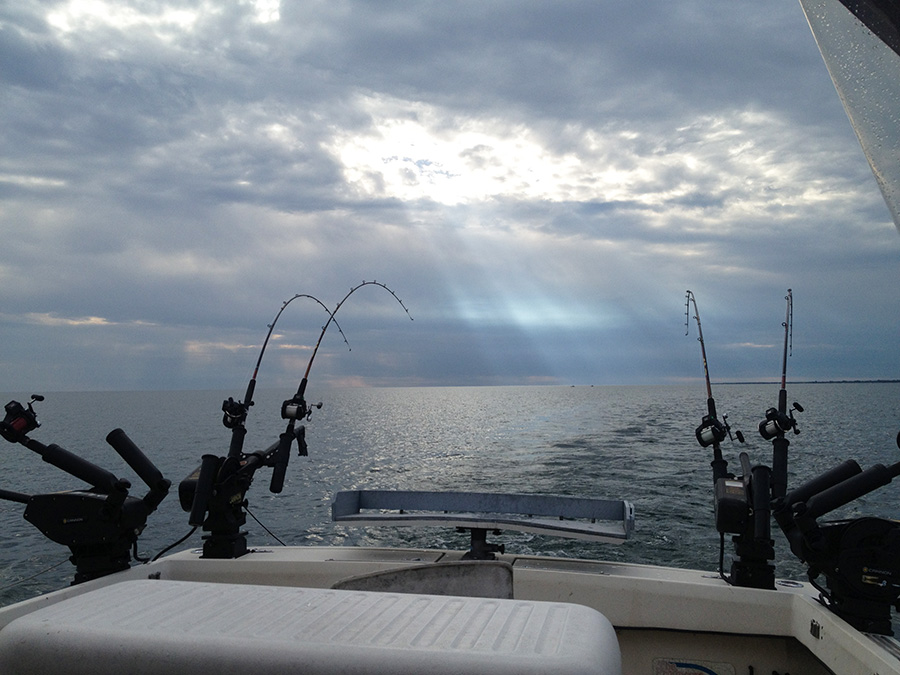
When we got out on the lake however I was relieved to see that it was pretty much flat as a pancake and shrouded in clouds, with just a little breaking sun it made for some great photography. It was something of a surprise to me that we were heading out on the lake but thanks to Ron, local charter captain Terry Dingee had let us come join him whilst he marked a few Salmon for some forthcoming charters (I hope any terms I am using are correct here – birding not fishing is my area of expertise). To be honest I wasn’t expecting us to run into any fish as it was early in the season and the generally cool water wasn’t concentrating our quarry.

Still it was fun to be sat out early morning on a boat enjoying the scenery as well as getting to talk to Captain Terry Dingee about Salmon fishing on the lake. As a birder I love to talk to people who have a similarly passionate interest in something, especially if it involves nature. It soon became obvious that Terry both knew and loved his fish but also had a intimate knowledge of the lake itself.

Ron Logory and Terry Dingee - Luke Tiller

Ron Logory and Terry Dingee – Luke Tiller

Now you’ll have to excuse any technical errors here (as I said, I’m not a fishing expert) but we essentially were trolling using downriggers, dipsy divers and spoons. As well as Ron’s local expertise, his expertise on how exactly to present the bait, which baits to use and where to try there were an incredible number of fantastic and expensive electronic bells and whistles on the boat to help us locate fish and measure water temperature amongst a myriad of other things.

The King or Chinook Salmon  that we were looking for are native to the Pacific and are stocked in the lake. For me fishing is really all about relaxation, even more so than birding, it’s a way to just be somewhere pretty and relaxing and turn your mind off for a while. Plus you can bird while you do it – note my Swaros in the pics. I wasn’t really expecting for us to hit any fish so was really just enjoying being out on the boat and taking in the atmosphere and good company, so when the first fish hit the bait it was pretty exhilarating. Fishing with a downrigger a bite is detected when the taught rod and line suddenly springs back as line breaks free from the rig and starts to roll off of the reel.  As I was just the guest on the boat I didn’t realize that I was going to be first up on the rod once we had a bite, but I didn’t take much convincing to give it a try. With Terry and Ron providing expert guidance on the technique required to fight the salmon I was soon well into the fight. My only experience like this thus far was movies or TV. Anyway nothing had quite prepared me for how tiring hauling in a few hundred feet of line might be with a strong fish on the end of the line. The general technique is to pull up the rod into a vertical position and then lower it to the horizontal, all the while trying to reel as quickly as possible in order to gain line. The first fish was very nice, hardly a monster, but I think I was exercising muscles that I hadn’t given a workout in a good number of years.

King Salmon - Luke Tiller

King Salmon – Luke Tiller

After what felt like ages, the fish broke the surface and I could see the tail out back behind the boat. Now I at least  had an idea of how far I had to reel the fish in. I guess it was probably just another few minutes and the fish was right out the back of the boat, though the fight was grueling enough that it felt much longer. Having fished before I knew that the old saying: ‘there’s many a slip ‘twixt the cup and the lip’ held true and that the netting is often one of the parts most fraught with danger. With some clear directions from Terry though we soon had the fish in the net and swiftly it was on board.

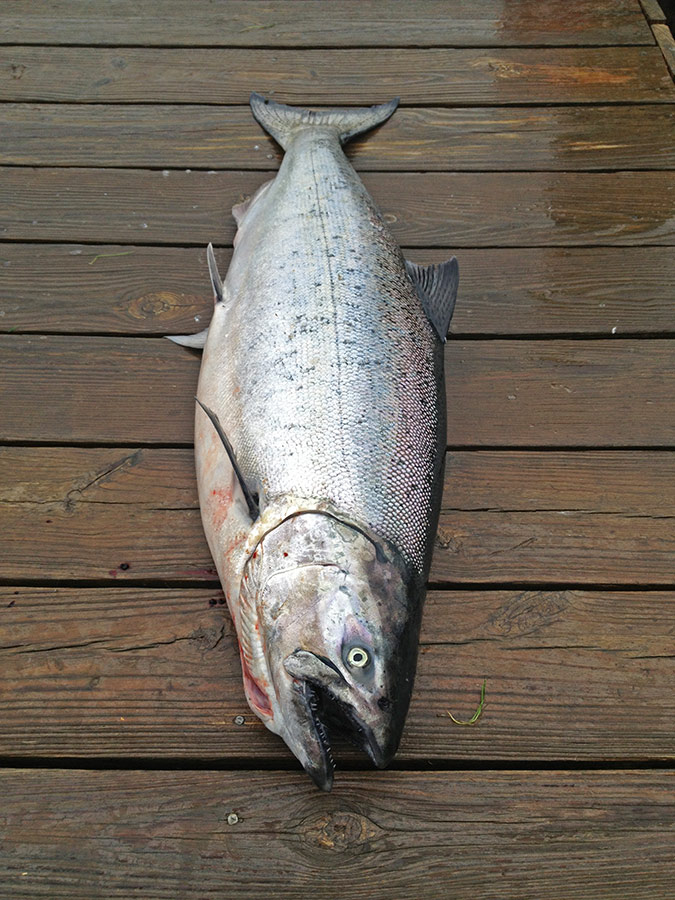
Personally this was the biggest fish I have ever caught and in fact at about 14lbs was about 6 times bigger than anything I have ever landed before. Before I have always caught and released fish, but this guy was destined for the fridge freezer. I have to say that there was a little tinge of sadness as he met his maker, I kind of perhaps momentarily had a wish to send him back of into the wild blue yonder with a pat on the back as a reward for a noble fight, however the fact that Ron was going to put him to good use felt equally gratifying. Unless you are a vegetarian you can’t really get moralistic about taking your meat straight from the wild.

King Salmon - Luke Tiller

King Salmon – Luke Tiller

We only had a couple of hours on the lake thanks to my busy schedule that day and I imagined that the first fish was probably going to be it for the day. However much to my surprise as we took another run, the rod pinged again and we were into another fish. Now the description of screaming reels feels like something of a cliche but that is literally what happened as the second fish of the day bit. As the fish hit it started to run and the line was disappearing off the reel at a very rapid rate and Terry’s expert experience already had him pegging this one as a good one. Thanks to all the gizmos on the downrigger and reel we could tell that the salmons first run had eaten up about the length of a football field – pretty stunning.

This fish wasn’t going to be brow beaten quite the same way that the first was and it seemed to be much more reluctant to let us gain line, let alone be brought to the surface. Gaining line initially seemed pretty tough and with my muscles still aching from the first fight Ron and I took turns to tag team this fish to the boat. It was clear when it broke to the surface that this was a much more impressive fish overall. After a bicep and extensor busting battle and another nervy approach to the net the fish was again on board. It was immediately obvious that this was a much better fish, in fact it was double the size of our first. I was so exhausted by the time we got it on board I could barely hold it up for pictures. It was an incredible feeling. Again I could’t help but feel a little sorry for the fish, just because it had provided such a challenge. Still at this rate Ron was going to have a pretty stocked freezer and probably had his allotment of Salmon for the year. I guess the one good sign is that the NY DEC now consider that one meal a month of these lake caught fish is OK – it used to be that the lake was so polluted that it was advised that these fish shouldn’t be eaten at all.

King Salmon - Luke Tiller

King Salmon – Luke Tiller

It was a great way to finish off my time along Lake Ontario and one I would heartily recommend. Terry was a great captain and his enthusiasm and knowledge really added to the fun of it all. Just another reason to go to Braddock Bay – great birding, great people and great fishing – the good life! If you want to contact Terry about charters you can contact On-Terry-Oh! Charters at onterryoh@yahoo.com He’s old school and busy enough that he relies solely on word of mouth – so I’m happy to be part of that. Thanks to Terry and Ron Logory for a great start to my last day at Braddock Bay.


Dark buteos of Braddock Bay…

10 07 2013
Dark Rough-legged Hawk - Braddock Bay Raptor Reasearch

Dark Rough-legged Hawk – Braddock Bay Raptor Reasearch

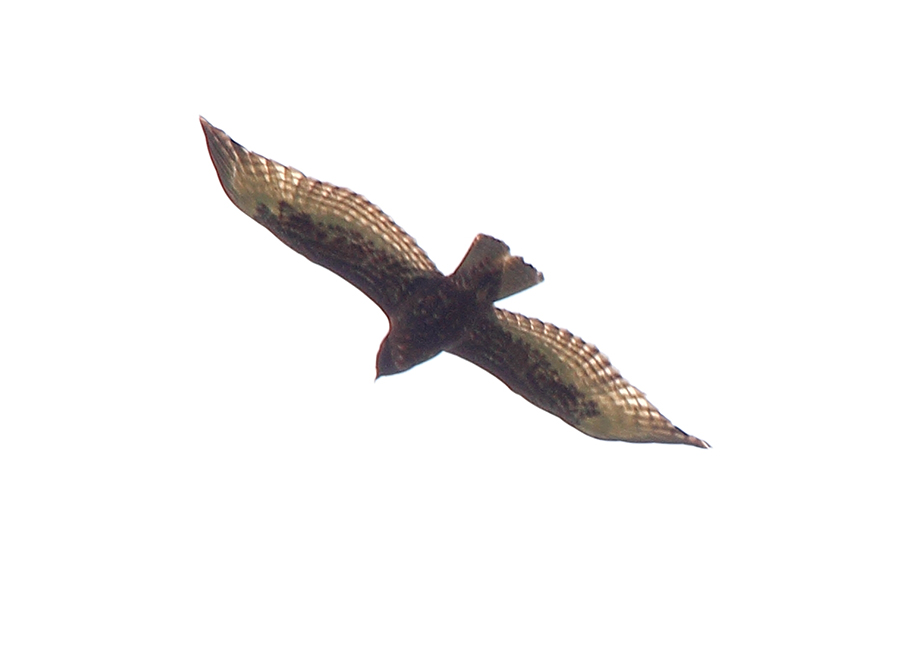
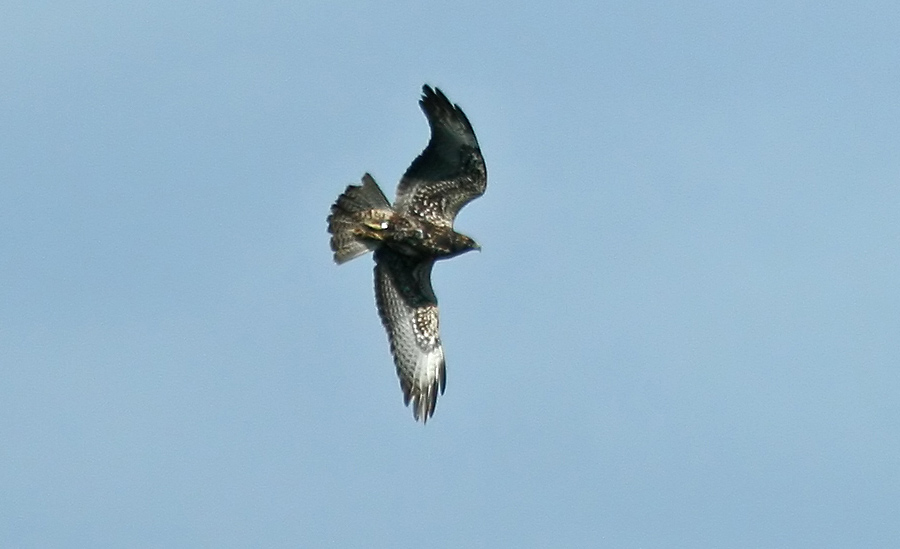
Dark Buteos. Whats not to love about them – unless you are trying to identify one a few hundred yards away from you at a hawkwatch. With that in mind, a combination of factors lead to the ‘mystery bird’ below heading out to the local Western New York textserve initially identified as a Swainson’s Hawk on May 16th 2013 – oops! In my defense there were a couple of mitigating circumstances at least: a Swainson’s Hawk had been called in from out west of the watch a little before, I only had brief views of the bird before turning over the scope for others to have a look at the thing, and the bird basically spent the whole time soaring low out a half mile or more away to our left with a very distinct dihedral and never ‘actively’ flying – which might have helped with some keys to the birds identity (these pictures were taken much later when the bird was almost right overhead). Still as much as I like pie, a good serving of humble isn’t my favorite..

Dark Red-tailed Hawk - Dominic Sherony

Dark Red-tailed Hawk – Dominic Sherony

That said the hawkwatching rule has always been that if you correct yourself before anyone else does then it’s not really a mistake, and as soon as the bird disappeared back over the tree line I was questioning my initial conclusion, as there was just something not quite right about the plumage. As the bird reappeared over the horizon a few minutes later I realized the flight feathers and tail both at distance seemed to be almost completely pale – which doesn’t totally tally with Swainson’s Hawk. That said, I do remember noting as we watched the discussed bird that dark Swainson’s Hawks can often appear to show pale flight feathers and tail in certain lighting circumstances: a feature the flight shots of the only banded (and photographed?) Swainson’s Hawk from Braddock Bay seems to exhibit. The photo below is a shot of a bird that was first banded then photographed as it passed over the hawkwatch on May 4th 2009.

Dark Swainson's Hawk - Braddock Bay Raptor Research

Dark Swainson’s Hawk – Braddock Bay Raptor Research

With the dark Swainson’s, the typical ‘black in the back’ doesn’t stand out the same way, but there was still something that even with my relatively inexperienced eyes I noted  on our mystery bird that didn’t seem quite right for Swainson’s. I think the conversation went something like this – from: ‘is it bothering anyone how pale the flight feathers are on that bird?’ to ‘is it bothering anyone that this ‘Swainson’s’ is kiting like a Red-tailed Hawk!!!!!’. Thankfully the bird had put in two appearances on the day to ensure that we finally got the identification right. The two Swainson’s earlier in the season had afforded somewhat better views (especially the one on May the 1st which gave killer views low over the platform).

Dark Swainson's Hawk - Braddock Bay Raptor Research

Dark Swainson’s Hawk – Braddock Bay Raptor Research

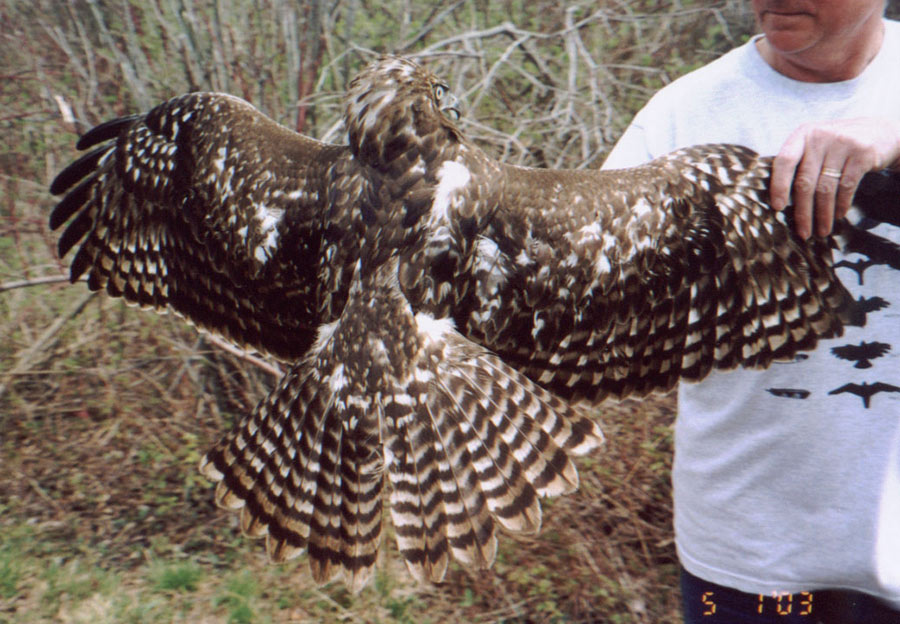
The above shot is of the same dark Swainson’s Hawk from Braddock Bay in hand whilst it was in the process of being banded (on International Migratory Bird Day aptly enough). As with many of the more prosaic raptors at the watch our ‘mystery bird’ was eventually successfully identified as much by flight style as much as plumage or structure. Eventually the bird put in a few more appearances over the day allowing some much better shots to be obtained by Dominic Sherony. These shots were then passed on to a few people for confirmation and a couple of noted experts on raptor ID were good enough to even get the identification down as far as subspecies, with this bird being pegged as a first spring rufous morph Calarus. Apparently the fairly light banding in the flight feathers and the unbarred outer primaries apparently help rule out a Harlan’s.

Dark Red-tailed Hawk - Braddock Bay Raptor Research

Dark Red-tailed Hawk – Braddock Bay Raptor Research

Of course there are no dark ‘Eastern’ Red-tailed Hawks, but being out on the western fringes of New York its not unknown for some “Western’ birds to put in an appearance at the watch. That said, in my time at Braddock I have had seen exactly one dark Red-tailed Hawk, which compares unfavorably to the two Mississippi Kites and three Swainson’s Hawks. I know that a few people had a dark Red-tail once when I was getting some lunch during the first big day of my first season, but even then you get some idea of the relative rarity. To give you some other perspective, out of the 9,549 Red-tailed Hawks that were tallied over my three seasons at Braddock only two were definitively identified as dark birds.

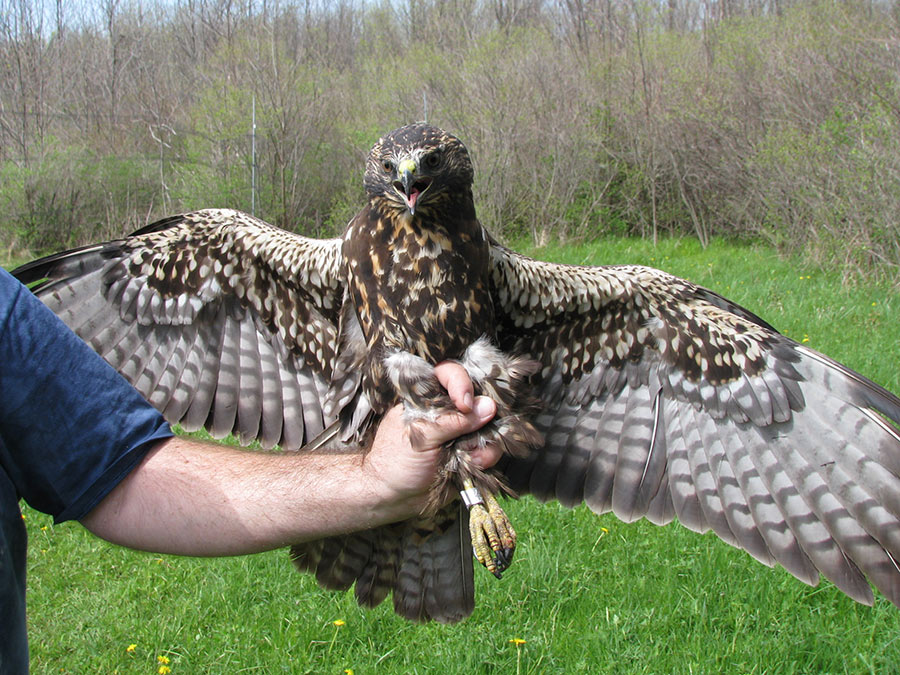
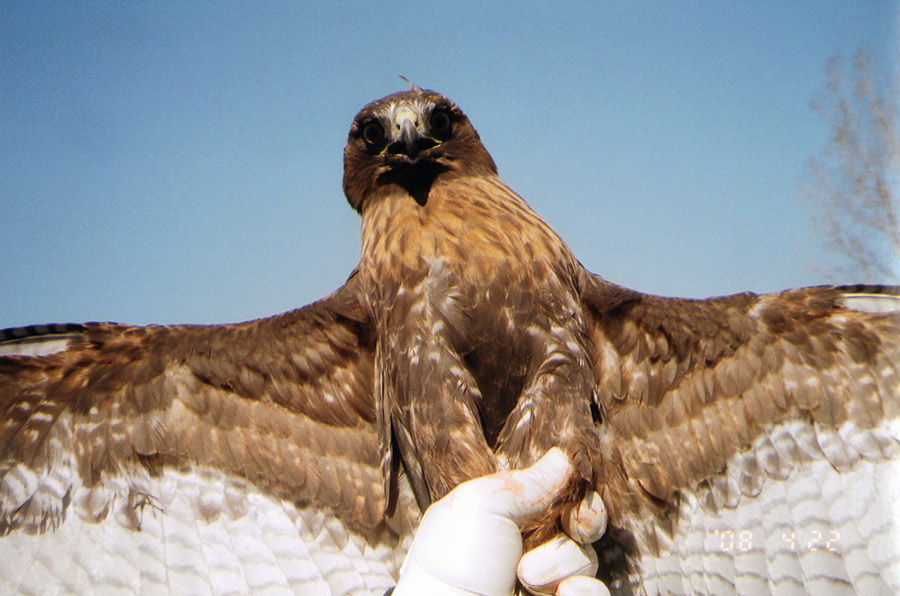
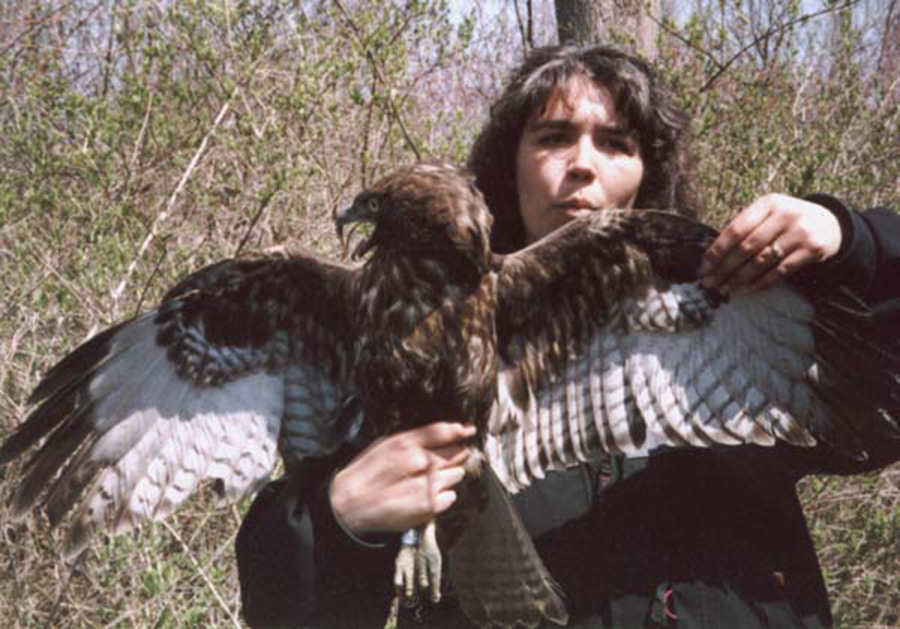
Though dark Red-tailed Hawks are certainly rare at Braddock they have (like the Swainson’s) been banded by BBRR and on more than one occasion. The above snap of the rufous bird was taken on April 22nd 2008 and the images of both the back and front of the same bird below were taken at BBRR on May 1st 2003. One would assume that these birds are of the Calarus subspecies but I’d certainly be intrigued to hear any dissenting views on the following two pictures – though I would assume Harlan’s could almost be ruled out on date?  EDIT: The two pictures below have been identified as Harlan’s Hawk. Note the breast streaking and tail pattern.  Thanks to Jerry Liguori for feedback on that.

Dark Red-tailed Hawk - Braddock Bay Raptor Research

Harlan’s Red-tailed Hawk – Braddock Bay Raptor Research

The shot below has to be one of my favorite pictures ever of a banded bird  from Braddock Bay, as not not only is it a cool looking bird in and of itself but it is also in a pretty incredible pose. Anyway I’m not totally sure what the idea of this post was apart from to maybe highlight how tough in flight identifications can be even for relatively seasoned observers, to caution taking care to identify unusual birds from a couple of field marks and to have the opportunity to stick up some super cool looking raptors that have graced the skies (and banding stations) of Braddock Bay over the years.

Dark Red-tailed Hawk - Braddock Bay Raptor Research

Harlan’s Red-tailed Hawk – Braddock Bay Raptor Research

I’ve always had a reluctance to try and identify subspecies of Red-tailed Hawks from the watch simply because it seems so fraught with potential to make errors unless you can obtain definitive shots. Seeing as I got the mystery bird wrong initially it seems safer to just stick to trying to get the species and where possible the age right. Finally, here is my favorite of all the dark Red-tailed Hawk shots and really just because it is of my boss and head of BBRR, Daena Ford. Here she is in a slightly younger incarnation nicely modelling a dark Red-tailed Hawk which had showed up during one of her hawk banding tour demonstrations I believe – Awesome timing.

Dark Red-tailed Hawk - Braddock Bay Raptor Research

Dark Red-tailed Hawk – Braddock Bay Raptor Research

Thanks to Dominic Sherony and to Braddock Bay Raptor Research for the loan of the pictures for the blog post, much appreciated.


What is it good for…

7 02 2013
American Kestrel - Luke Tiller

American Kestrel – Luke Tiller

So I just confirmed that I will be back in Braddock Bay this spring to count ‘raptors’ in migration (take that Ted Floyd!) As with birding in general, one question one constantly gets asked is: why do you do it? Of course getting a rough baseline on how raptor populations are fairing is the main reason for doing any count, but to me there are a lot of other reasons that hawkwaches are important too- and not just that they train you to recognize that a few Canadian film students aren’t as good at CGIing Golden Eagles as they think they are.

For me, one of the most vital things about running a hawkwatch is the educational aspect. Depending where your hawkwatch is located, be it mountain top, local park or nature preserve it affords the opportunity to interact with members of the public that probably rarely think about conservation. What could be a better tool to get people excited about birds and bird conservation than a passing Bald Eagle? Lets face it, as much as I like sparrows (and I like them a lot) your average punter isn’t going to be turned on by a discussion of junco subspecies.

Probably one of the most magical experiences I have had at a hawkwatch was showing a 90 year old World War Two veteran his first Bald Eagle through my scope at Braddock Bay. He was both amazed and moved by the experience and for me that is part of the joy of any kind of birding: the sharing of love and passion for the birds that we so admire.

Another favorite was towards the last couple of days of the season at Braddock last year when we showed a young family a collection of late Broad-winged Hawks as they circled over Braddock Bay with the odd eagle and other late migrant wedged in between. It was a scorcher of a day, so we had retired under the line of trees behind the hawkwatch platform and were joined by a picnicking family. We started by offering them our bins to view the few hundred passing raptors, but fairly soon it was obvious that I was going to have to run to my car for the loaner pairs (thanks Eagle Optics!) Over the next hour the two adults and three kids sat with us absolutely engrossed by the passage of these magnificent birds as we all shared sightings and identification tips. Again some passing eagles really stole the show (when don’t they), but they were simply amazed by the whole experience and if anything were sorry that they didn’t know about the phenomenon before that day. Hopefully we’ll see them back to catch more of the show this year.

Red-shouldered Hawk - Luke Tiller

Red-shouldered Hawk – Luke Tiller

Whilst we are talking conservation: most of the time when we are talking about conservation it’s all tales of woe. Frankly it’s pretty depressing. The thing I love about raptors is that you have some positive stories to share with people too. A documentary filmmaker I like did a short piece on what he called ‘oh-dearism’ and sometimes talking about bird conservation feels a bit like that: the idea that it’s kind of sad, but what are you going to do about it? The great thing about raptors is that they often show that where there is a will, there is a way for human beings to do something positive. All that it takes is working out what the problem is and then taking the necessary steps to tackle it (like banning DDT).

Like many pastimes, it seems that birders continually fret about where the next generation of birders will come from. Hawkwatching in my experience is the perfect place to start off kids. First there is the wow factor of the hawks themselves, second is the fact that there is always someone on hand to help out with encouragement, sorting out ID’s and all the kinds of stuff which might not be something a parent or guardian has the experience or even the desire to do. Look at all the young birders who have been influenced by their time hanging out at the Quaker Ridge Hawkwatch: Shaun & Stefan Martin, Ryan MacLean, Ben Van Doren, Eamon Corbett etc etc

It’s not just a great place for neophyte birders either. As a beginner birder at a hawkwatch you have the opportunity to get to hang out and interact with great birders and learn some stuff – for free!  Any given day at the hawkwatches in Connecticut you’ll get to rub shoulders with people like Nick Bonomo, Julian Hough, Greg Hanisek, Frank Mantlik and Charlie Barnard amongst others. Just don’t be the ‘twenty questions guy’ and you’ll soon find yourself being accepted into the fold. It’s not just about big names though, in fact there are people that you have never heard of on the local listserve who show up at hawkwatches who know a lot more than you do about raptor ID. In fact often significantly more. Chances are they might know a lot more about other birds: flight calls for example or what the difference is between the look of a distant flock of blackbirds, or ID marks for a solo loon going over.

Whatever your experience level though, there is always something new to learn. There is nothing hawkwatchers, in my experience, love more than sharing a good sighting with someone or equally tips on how to identify birds. As someone who is fairly apathetic about listing, one of the things I really enjoy about twitching birds is that it’s a great way to catch up with birding friends as well as to put faces to names that you’ve probably only heard of via the local listserve. A hawkwatch in full flow becomes a great place to do exactly that, kick back with a load of other birders and get to just hang out and shoot the breeze (especially if you aren’t the one actually counting!)

Red-tailed Hawk - Luke Tiller

Red-tailed Hawk – Luke Tiller

Even if you are a pretty decent birder, after standing at a hawkwatch for seven seasons now I can tell you one thing: you aren’t as good as you think you are with raptor ID. Identifying hawks in flight is still at the cutting edge of your average birders skill set. I think it was Socrates that once said: “All that I know is that I know nothing”, and every now and then I wake up and look at my first accipiter of the day and feel the exact same thing. I remember my first day at Quaker and being what I considered a decent birder feeling pretty cocky about how easy it was going to be. I mean you’re only dealing with a maximum of about 10 species after all on any given day; what is it they say about ignorance…

It strikes me that beyond the science, hawkwatches and hawkwatchers have a lot to offer the world of birding and conservation. If you’ve never been to one to witness the magnificence of hawk migration in full swing you really don’t know just what you are missing. Get out there and enjoy the spectacle, learn something and bring your kids or your grandkids to enjoy the show!


Bathing Kestrel…

26 12 2012
American Kestrel - Luke Tiller

American Kestrel – Luke Tiller

Today I was treated to a fantastic photo opportunity whilst going out trying to snap some pictures of the various White-crowned Sparrow subspecies that hang around down in Eaton Canyon: pugetensis and gambelii. Not much luck as usual (why do they love shady spots so?), but I did manage to spot a rather stunning American Kestrel hanging out on a nearby Lamppost.

It has rained here fairly significantly the last few days so the paddock that he was hunting in down at Eaton Canyon Equestrian Center was pretty wet and full of little mini puddles. After hunting for a few minutes he decided it was time to cool off and dropped down into the puddles for a nice refreshing bath (I hope that you can make out the droplets of water in the next shot!)

American Kestrel - Luke Tiller

American Kestrel – Luke Tiller

I slowly worked myself into the right angle for the sun and crept a little closer to the bird. He was so intent on bathing he barely noticed me and by the end of the shoot I found myself lying on the somewhat soggy ground using the bars of the paddock as an impromptu camera rest (top tip I have been given by a few great bird photographer friends – get down to their level). I hope that no-one was watching me at this point, as they probably would have thought I was crazy. Still, I think it was worth while looking a bit ridiculous after looking at the results.

American Kestrel - Luke Tiller

American Kestrel – Luke Tiller

After taking a little time to dry out in the warming sun (allowing me time for a couple more pictures), the kestrel flew up to the phone wires to carry on his days routine. He seems to have been hanging out for a few weeks in the local vicinity so hopefully more opportunities come along to shoot him, I’m not sure I am going to get so lucky with the setting though. I guess it raining isn’t such a pain after all.