Sunrise Birding Walk – Dec 5th

8 12 2009

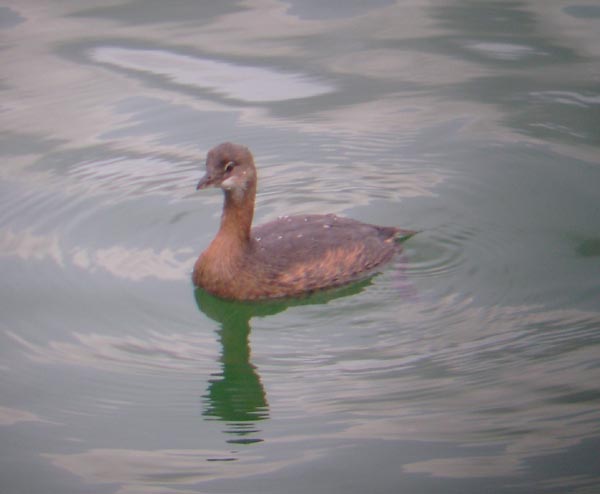
Pied-billed Grebe - Luke Tiller

Saturday I met up with a group of hardy birders for a tour of a few of the local Reservoirs in hopes of finding some interesting waterfowl. Instead of waterfowl we managed to mainly stumble upon a rather strange mix of raptors.

We started our tour at a vantage point over the Hemlock Reservoir where things initially seemed quiet, our first stop point landing us one American Crow and that was about it! However the next stop proved to be a nice and productive one when an adult Bald Eagle took flight across the reservoir as we studied a flock of distant ducks which included a couple of Buffleheads and a flotilla of Hooded Mergansers. The eagle was getting harassed by a group of local crows and therefore put on a bit of a show as it zigzagged across the reservoir looking for a quiet perch. Although I’ve seen huge numbers of Bald Eagles this year at the hawkwatch it never ceases to amaze me how much excitement a Bald Eagle sighting engenders even amongst the hardiest of birders. When you get the chance to share that first Bald Eagle moment with a group of kids or even non-birding adults at the hawkwatch it really is priceless.

Next stop we were on to the Aspetuck Reservoir. This really is probably amongst my favorite waterfowl birding spots as it always seems to provide something of interest. It didn’t disappoint Sunday either. We arrived to find a very late immature Osprey perched up in one of the trees I regularly see eagles in and even better it was in the process of chowing down on a rather large fish giving us plenty of time to observe it and note the pale fringes to the back and wing feathers that gave it the scalloped look of a young bird. Just a few trees along another unexpected raptor. This time in the shape of a rather out of place seeming immature Peregrine Falcon. The falcon was interesting to watch as it seemed to be rather intrigued by the number of waterfowl on the reservoir but rather than actually attacking them it seemed to be making rehearsal sorties out low over the water as if it was testing out its desire to fly low enough to try and snatch a duck off of the water. Whatever it was doing it was cool to watch this awesome bird of prey in simulated attack flight. There wasn’t a great deal of variety on the water however just a few American Black Ducks, Mallards and Ring-necks  to add to the already observed species.Next stop was at the far end of the Reservoir. Again the waterfowl mix was somewhat limited but we did manage to add a rattling kingfisher to our tally as well as a few Red-breasted Nuthatches that were calling from the surrounding pines which added to the  nice northerly feel to this beautiful spot (it’s the spot the banner photo was taken for my website!)

The third reservoir stop was at the Saugatuck in Redding. The nice thing about these three reservoirs is that they are all in close proximity to each other and also seem to attract different birds. The Hemlock is usually the least productive but both it and the Saugatuck seem to provide deep enough water for serious diving ducks (Common Mergansers) and even the odd sea duck or loon. The Aspetuck on the other hand seems to provide better puddle duck action – although it too can often have a nice mix of aythya’s on it – including Redhead. As we stopped at the Saugatuck we were not overawed by the number of ducks on the water, however we did manage to add a nice little grouping of Ruddy Ducks as well as a couple of rather pretty Pied-billed Grebes.

Final stop of the day was Saugatuck Falls for an explore of the Cedar stands. No sign of owls there this year so far it seems although we did find some white-wash and skunk remains that would lead one to think a Great Horned might be on the prowl in the area. A seemingly rather fruitless stop was enlivened by a little raucous mixed flock of birds that included a Brown Creeper or two just as we were about to leave.

Trips Species List: Pied-Billed Grebe – Mute Swan – Canada Goose – Mallard – American Black  Duck – Ring-Necked Duck – Bufflehead – Hooded Merganser – Ruddy Duck – Turkey Vulture – Osprey – Bald Eagle – Red-tailed Hawk – Peregrine Falcon – Herring Gull – Mourning Dove – Belted Kingfisher – Red-Bellied Woodpecker – Northern Flicker – Downy Woodpecker – Blue Jay – American Crow – Tufted Titmouse – Black-capped Chickadee – BROWN CREEPER – White-breasted Nuthatch – RED-BREASTED NUTHATCH – Carolina Wren – Golden-crowned Kinglet – American Robin – Cedar Waxwing – Song Sparrow – White-throated Sparrow – Dark-eyed Junco – Common Grackle – House Finch – American Goldfinch



Quaker Ridge Hawkwatch Season Roundup Talk – Dec 9th

1 12 2009

Quaker 'Tail - Luke Tiller

After an amazing season at Quaker Ridge, I’ll be giving a presentation on the highlights of the year at Greenwich Audubon on December 9th at 7.00pm. More in their newsletter (online here). I’ll be talking a bit about the migration process, as well as some of the highlights that were seen over the three months that I was carrying out the count. As well as highlighting some records and interesting sightings I’ll also take a little look at some of the status of some of the key birds that migrate overhead. I hope to see some of you there.


Sunrise Bird Walk – November 29th

30 11 2009

American Robin - Luke Tiller

After the howling winds of Saturday it was nice to get out and do some birding with a number of Sunrise Birding regulars and a new face or two. It was a beautiful day to be out with sun shining and temperatures rapidly climbing into the high 50’s. It appears to have been an odd November and fall thus far with no real sign of a big frost at all. At the hawkwatch we were wondering whether the lack of big movement of  some raptors was down to this balmy weather, and lack of big fronts, causing some lack of impetus for the big flight. Although I have been tied up enough to have missed out on a daily sojourn to Allen’s Meadows it seems to have been a fairly quiet fall all around for even relatively common migrants (I still haven’t seen an Orange-crowned this year!!!!) apart from Greg’s notable loon find. Perhaps the influence of some heavy northeasterly winds driving migrants off the coast early in the season?

Everything somehow seems to be either behind, to have slipped past or perhaps not to have arrived yet. With warm temperatures and open water to our north there doesn’t seem to have been the big push of waterfowl as of yet and so things are all seemingly in that rather quiet transition period. It’s also worth noting that their appears to have been an abundant wild food crop this year and so it seems unlikely that any irruptive species will be making the kind of huge forays into our territory that we have seen in recent years such as White-winged Crossbills, Red Crossbills and particularly Pine Siskins. This abundant food crop probably means that the prey species of many raptors is fairly bountiful so there hasn’t been any notable movement of some of these other hoped for species.

Still after a wonderful Thanksgiving with friend and Sunrise Birding leader Joe Bear and his family, it was nice to get out and walk off a few pounds of turkey and Fran’s amazing apple cake! Joe joined us for the walk as well- you can tell it’s warm if he’s out in November – usually he’s hibernating by this time of year and waiting for the warblers to reappear in April 😉   The birding was not the most thrilling of all time but there was much catching up to do with friends who had just returned from the Sunrise Birding tour of Brazil’s Atlantic rain forests, and so good conversation filled in the moments between birds.

A sprinkling of sparrow species at Cove Island turned up a Field and an American Tree Sparrow and a latish Ruby-crowned Kinglet was of some note. Things were pretty quiet though and highlight was a pair of Peregrine Falcons streaking across the sky together as they headed westwards.  We got a nice little workshop on Accipiter identification with both Sharp-shinned and Cooper’s Hawks providing decent perched and in-flight views. No sign of the eagle flight that Tina Green had noted the previous day – perhaps they just like it that windy?

We then decided to take a quick run to Greenwich Point Park. Again things were a little quiet but we were starting to amass a decent collection of waterfowl on the day – especially after we had a little flock of 25+ Snow Geese somewhere out midsound – perhaps on their way to Jamaica Bay. Also slightly unexpected on the sound were a little pod of Ruddy Ducks that were huddled together in a tightly massed formation. Long-tailed Ducks seemed to be around in decent numbers and a few mergansers of both the Hooded and Red-breasted varietals put in an appearance. A nice day to be out, even if not mind-blowing birding wise. It was all rounded out with a rather fantastic slap-up meal at the City Limits Diner in Stamford where we retired for essential coffee and more catching up on news and tales of Thanksgiving exploits.

Trip species list:

Red-Throated Loon – Common Loon – Great Cormorant – Double-crested Cormorant – Mute Swan – SNOW GOOSE – Canada Goose – Brant – Mallard – American Black  Duck – Long-Tailed Duck – Bufflehead – Red-breasted Merganser – Hooded Merganser – Ruddy Duck – Turkey Vulture – Sharp-Shinned Hawk – Coopers Hawk – PEREGRINE FALCON – Ring-Billed Gull – Herring Gull – Great black-backed Gull – Rock Pigeon – Mourning Dove – Monk Parakeet – Belted Kingfisher – Red-Bellied Woodpecker – Northern Flicker – Downy Woodpecker – Hairy Woodpecker – Blue Jay – American Crow – Tufted Titmouse – Black-capped Chickadee – White-breasted Nuthatch – Carolina Wren – Ruby-crowned Kinglet – Hermit Thrush – American Robin – Northern Mockingbird – European Starling – Cedar Waxwing – American Tree Sparrow – Field Sparrow – Song Sparrow – Swamp Sparrow – White-throated Sparrow – Dark-eyed Junco – Northern Cardinal – House Finch – American Goldfinch – House Sparrow


Yellow-bellied Sapsucker

24 11 2009

Yellow-bellied Sapsucker - Luke Tiller

Wandering around the property at the Audubon Center today I was happy to see a few Yellow-bellied Sapsuckers. Although I probably got a couple of sharper shots I liked this one just for the crazy wing action.


Reflections on The Season – Quaker Ridge 2009

22 11 2009

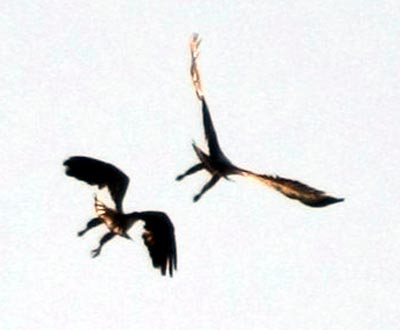
Bald Eagles - Michael Ferrari

It seems like it was just a short time ago that I was standing out on the lawn at Greenwich Audubon in a t-shirt picking up the first migrating raptor of the season as temperatures soared up into the 90’s. We started our watch on August 20 and three months later we are at the close. What a season it has been though, records have tumbled, rarities have been sighted and most importantly we have gathered another seasons worth of data which will help scientists determine the health of North America’s raptor population.

Highlights of the year have been legion, with a total of nine beautiful Sandhill Cranes on the season, including a remarkable group of five that were tracked by observers all the way from Wareham MA to the Scott’s Mountain Hawkwatch on the border of NJ and PA and perhaps eventually as far as Georgia (see post below). Other interesting sightings have included two Mississippi Kites that appeared together on October 14 (a species that has only recently been found nesting as far north as New England) and 11 Golden Eagles on the year.

We have also been breaking records all around, for example Nov. 18 with just two days to go we finally broke our seasons best record for Bald Eagles (thanks to Stefan Martins eagle eyes – bad pun intended). It has been a great year for these magnificent birds and it’s amazing to witness an environmental success story like this in action and heartening to see that armed with the right information and desire to make a difference we really can make a positive impact on the lives of these creatures.

Merlin numbers (a rather feisty little member of the falcon family) also peaked at an all time high this year (150) reflecting their burgeoning numbers and spreading breeding range. Conversely American Kestrel numbers,although not shockingly low, were not as high as past years and there is still much concern for this birds future, especially in our own state. Early date records were set for Golden Eagle (Sept. 12) and late ones for Osprey (Nov. 18 – by just one day).

Counting all of the 17,000 birds that have passed overhead would of course have been impossible were it not for the dedicated team of volunteers who have helped man the watch, pick out birds that would have otherwisehave been missed and simply helped get me through the birdless days. There are too many to mention by name but they know who they are, and it has been a pleasure to have met and worked with such a nice group of people. If you didn’t manage to get along to the hawkwatch or join us for the amazing Greenwich Audubon Hawkwatch Festival this year, make sure you add it to your diary for 2010.


Saw-whet Owl Banding

17 11 2009

Saw-whet Owl - Luke Tiller

It has taken a while to rescue my camera from New York City where I left it after an evening out with my ex-flatmate Tabitha, so hence the delay in cute photo’s from the banding trip. New York was as entertaining as always and it was great to catch up with one of the gang from London. As much as I love London, and all of my friends there, it’s hard to imagine moving back to that or to any other city for that matter, as I am not sure how I would manage to get my daily fix of nature living in a concrete jungle. Saying that though, I can’t quite imagine ever wanting to be so far from civilization that I could move right into the middle of nowhere and live in the woods or the desert or something, so perhaps the ‘wilds’ of Fairfield County strike something of the perfect balance.

Anyway on to the owls. I was joined for the evening by blogger and artist birdspot (as she had her eye on some cool owl photos for her latest artwork). The initial excitement of the evening however was being sorely tested by the traffic out of the city on a Friday night and we were running late for the first check of the banding nets by the time we were even on the road for New Paltz. After some horrendous traffic we made an unsavory stop at the Roy Rogers on the New York Thruway (fries vaguely edible, most everything else almost unpalatable) and filled up on food and gas before striking out into deepest and definitely darkest New York State. I always call the area upstate New York, but to me anything north of Westchester qualifies as upstate so who knows what the right term really is.

Anyway, after managing to miss out on the banding last year, thanks to downpours over the final weekend, I was really looking forward to getting to go along and see some birds. After an aborted plan to visit the prior weekend (unsavory weather) we were finally (albeit rather tardily ) heading on our way to hopefully see owls. I rushed off a quick call to Chrissy from the service station and found out that thankfully we hadn’t missed out on anything on their first run around the owl nets. As we crossed into New Paltz and took the roads up into the Mohonk Preserve I called Chrissy to have her talk us through the final twists and turns of the directions and found out that by now they had one of those little cuties in their clutches and that if we were there in the next few minutes then we might get to see one of the owls before they finished processing the bird and let it go.

Anyway after a little bit of nifty driving, we were there at the small hut that was owl banding headquarters. Squeezed into the little shack were the banding team, a couple of eager visitors and one exceptionally cute little owl – the first capture of the night. We got to ooh and ahh a little before the owl was taken outside to be released. During release, the bird is given a couple of minutes, sat in one of the banders hands, for its eyes adjust to the dark before it is released. With an almost silent flutter it was off back towards the black tangle of tree limbs, ready to resume its nightly activities.

We learned a lot over the evening and eagerly watched the banders as they jotted down the birds ages, took down various measurements of size and weight and a couple of DNA samples. They also removed, collected and studied the various pests which call the birds home. It was fascinating to see how the birds are successfully aged (including an amazing example of how a black light can determine the age of feathers – new ones glow bright orange under the UV). The banding station was part of two, one in the Mohonk Hills and another comparative site down in the more suburban settings of the college, which was allowing them to compare the little owls migration habitat preferences. To find out more on banding check out Chrissy’s various posts on 10,000 birds. You can also find out more about Saw-whet banding across North America at Project Owlnet

I have to say that while it was fascinating to watch the guys busy at work banding (we had about 20 owls over the course of a couple of hours) I was at first reluctant when offered the chance to let one of the little birds go. Not because their occasional bill snapping was reminding me of the time I got a good hard bite from a banded Blue-headed Vireo on Block Island, but just because I didn’t want to get in the way of the banders work. Anyway after a little cajoling I finally decided I’d have a go at releasing one of the birds.

Watching birds is an amazing experience but holding them really is something else. Having rescued a few birds from the gardeners nets in Allen’s Meadows, and having been banding a couple of times over my life it really is quite amazing to have them up so close, look into their eyes and feel their warmth and the amazing softness of their feathers. The owl was the same. I’ve learned from past experience that the key to holding birds is that you need to be careful, but firm so that they don’t try to move around too much. So with my fingers locked over his legs and my hand smoothing down his back, in a way I hoped would be somewhat comforting, I took the bird outside for release. I waited for the little guys eyes to adjust to the light for a couple of minutes and then eased my grip on the owls little legs. At first nothing, almost as if he didn’t realize he was now a free bird,  but then within a few seconds a little flick of the wings and the lightweight owl was fluttering up and off back to the safety of cover – an unbelievable moment and one that will stay with me (like so many birding experiences) forever.

You can click the tags at the bottom to find more of my posts on Saw-whets and I hope that birdspot will be posting some of her beautiful sketches from the evening on her blog soon.

EDIT: See birdspots incredible saw-whet owl drawing inspired by the evening (here).


Owl Banding and Mississippi Kites

8 11 2009

Me + rather cute owl!Thought I’d stick up a picture of the owl banding from Friday. Apparently I look like an extremely happy ten your old with a new toy in the picture (sounds about right!). Anyway it was an amazing experience and one that i’ll get round to writing about after the weekend.

Having just read it myself, I also wanted to steer my readers towards Benjamin Van Dorens post about our Mississippi Kite day (here) . Ben’s one of the regulars at the hawkwatch and is an excellent younger birder, he also writes a great blog about his birding travels (flick back through his posts to read about the day they found the first Brown-backed Solitire for North America – pending acceptance). The post about the Mississippi Kites (and mice!) sums up nicely the fun of hanging out at the hawkwatch (until you find yourself wandering around the orchard as a pair of kites fly over).


Tracking Birds part 1 – 5 Sandhill Cranes

3 11 2009
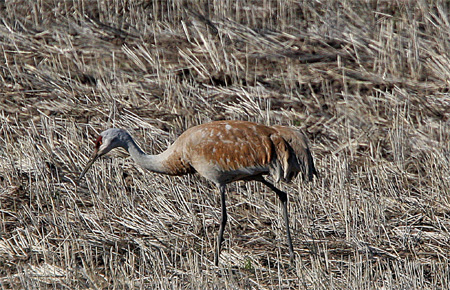
Sandhill Crane - Gary Howard

Sandhill Crane - Gary Howard

It was fascinating to be a small part of what has turned into something of a phenomenon across the Northeast. At about 2:15pm on Thursday October the 29th Stefan Martin picked up a small flock of large birds heading Southwest towards the hawkwatch. To our collective amazement it was a group of 5 Sandhill Cranes – a pretty decent east coast rarity and a group of 5 would be pretty much unprecedented in the state (at least in recent times) I believe.

The fun continued when Don Morgan noted on the CTbirds listserve (link) that these birds had been seen out in Wareham on Cape Cod and had been seen departing earlier in the morning at 9:30am. Later in the Morning they were picked up en route to Quaker Ridge by Paul Champlin who had seen them first in Fall River MA and then followed them down into Rhode Island to Portsmouth. From there the birds next sighting was at our humble little hawkwatch, and it was a watch and life bird for Stefan which was even better. I’d already had two Sandhills pass by me at the watch earlier in the season and had picked up my first state birds at good old Allen’s Meadows last fall. After their brief appearance they were discovered over in New Jersey almost at the PA border as they took off from Merrill Creek Reservoir and flew past the guys at Scott’s Mountain Hawkwatch.

Pretty amazing to have a flight and timeline of these rather distinctive group of birds. I have attached links of photographs taken of the group by Frederick Wasti in Wareham (here) and the one snapped at Scott’s Mountain (here) and I have put together a little map showing roughly the sighting points along the route (here). Anyway interesting (at least to me) to see just where these Quaker Ridge birds come from and where they are going to.

I guess it’s pretty easy when you have a distinctive group of birds like this. It gets harder when it’s just one hawk amongst many, although this year we did manage to spot a Bald Eagle (amongst the 159 so far) that had something very distinctive about it that we are hoping might allow us to find out more about where the birds that pass by Quaker Ridge come from and go to. More about that in the next post….

EDIT: It seems that there is a possibility that the group of five birds was picked up on their way through Georgia, (thanks to Sara Zagorski for passing on the information) however I am not sure that the evidence that it is our particular 5 birds is very strong. Here’s the Massbird posting on the issue out of interest s you can form your own opinion (here).


Sierra Club Event

28 10 2009
350sierra club

Sierra Club Walk - Patrice Gillespie

Last Sunday I lead a walk in Wilton for the State Chapter of the Sierra Club as part of their Climate Days of Action. Of course planning events in October is always taking a chance with the weather and we were greeted by heavy rains on Sunday morning. Still the Sierra Club members are a tough crowd and a number of them ventured out for a morning checking out Allen’s Meadows in Wilton. It was also great to get introduced to local State Senator Toni Boucher.

I am by no means an expert on climate change but it seems likely that the kind of projected changes that most of the scientific community agree upon would be disastrous for bird life as we know it. Even in our own fair state the plight of such birds as Saltmarsh Sharp-tailed Sparrow (which has perhaps 1/3 of it’s population nesting in the Nutmeg State) would be thrown into serious jeopardy by projected sea level  rises. Another threat to the Saltmarsh Sparrow is the fairly rampant development of coastal sites, of course Allen’s itself has always been under threat from development: ball fields, dog parks, DPW site but overriding all of that is that the piece of property is essentially owned by the DOT as part of the swathes of land bought up for the Super 7 project. Super 7 is kind of like a horror movie bad guy – just when you think it’s dead and buried it rises from the grave all over again.

Though the raindrops we managed to actually see some nice birds including an Americal Kestrel a couple of Coopers Hawks, a White-crowned Sparrow and a couple of Vesper Sparrows. I invited the club members to join me next Sunday Nov 1st for a free walk at Allen’s that I am running for Sunrise Birding when I hope to show them just how beautiful the spot can be when it’s not raining and raw!!!! A little piece on the event and more about the days events linked here.


Chinese Mantis 2

22 10 2009
Chinese Mantis - Ken Mirman

Chinese Mantis - Ken Mirman

Not sure what it is about Quaker Ridge but the place seems to be covered in mantis. Having seen exactly one that I remember previously, I have seen about a dozen or so here this fall. Pretty cool stuff, especially if you have an ace macro attachment on your camera. Thanks for the picture Ken, and for keeping me remotely sane through the slow days at the watch.